
Robert P. Burns
The Death of the American Trial
The second chapter of the book provides a broad historical account of the importance of the Anglo-American trial and the fierceness with which the Founding Fathers defended it. The story begins in England, where “the English jury is as old as the English state itself.” The early jury exercised enormous “law-finding” powers in an atmosphere where “true law” and “right reason” were thought to be largely congruent. In the seventeenth century, the English jury proved to be the staunchest defender of English liberties against the encroachment of the King. On the other hand, the practical reality of English criminal trials thereafter showed them often cruel, grim, and often unfair. English civil cases were strangled by layers of hypertechnical rules and procedures. Reform eventually came to England. But the American trial had been, even in colonial times, much more self-consciously democratic, less distorted by the English class system and its aristocratic bench and bar. Americans interpreted their inherited “rights of Englishmen” according to the shared morality of ordinary citizens gathered in juries to decide criminal and civil cases. Legal formalities were less constraining. Right to counsel was more universally available.
In the political conflicts with George III, the American jury became “a symbol of the colonists’ struggle for self-government.” After independence and the ratification of the Constitution, the jury trial became “the paradigmatic image underlying the Bill of Rights” featured in three separate Amendments (the Fifth, Sixth, and Seventh). Jefferson pronounced famously, “Were I called upon to decide whether the people had best be omitted in the Legislature or the Judicial department, I would say it is better to leave them out of the Legislative.”
These views retained vitality well into the nineteenth century, though important social and political changes manifested themselves in important changes in the details of trial procedure. Democratic “true law” was yielding to the “law of rules,” though never completely. By the third decade of the twentieth century a new balance had been struck that gave us the trial as we know it, one brilliantly adapted to our contemporary needs. This is what the death of the trial would mean for us:It would eliminate a forum where equitable considerations moderate the rigor of the law of rules.
It would deprive us of a distinctively American forum where a citizen can tell his or her own story in public and offer the evidence to make it effective.
It would destroy a space where serious attention is paid to simple factual truth.
It would reduce serious citizen participation in self-government and likely damage the authority of the entire judicial branch.
It would roll back the hard-earned enfranchisement of women and minorities.
It would transfer power to political and technical elites.
It would distort the norms for settlement and corrode our sense of real freedom to reach compromises.
It would destroy the traditional relationship between face-to-face proceedings and the notion that legal proceedings are somehow about justice. By squeezing drama out of those proceedings, the death of the trial would impoverish the range of cognitive capacities we deploy in the law. We would both feel and see less.
The death of the trial would compress into a monolith the variety of and tensions among our modes of social ordering. They could not longer qualify or “redeem” each other. We would have less freedom to address pressing issues in different ways.
The death of the trial would render our economic systems more automatic and beyond qualification by ordinary moral norms.
It would end our ability incrementally to adjust our basic structure by norms that have their homes in other parts of our social world.
It would create a more bureaucratized world.
It would also create a world in which judges could exercise more raw discretion in the interstices of complex legal rules unstructured and unqualified by the objectivity of the real social norms that the trial realizes.
It would mean the end of an irreplaceable public forum.
It would mean that more of the legal order would proceed behind closed doors.
The death of the trial would deprive the American public of an important source of knowledge about key issues of public concern.
Editor: Erind Pajo

The Death of the American Trial
Robert Burns The Death of the American Trial University of Chicago Press 200 pages, 9 x 6 inches ISBN 978 0226081267
Available here →June 1, 2009
20090601-burns-robert-death-american-trial-3
A close-up
The rest of this thread
Jim Ziv
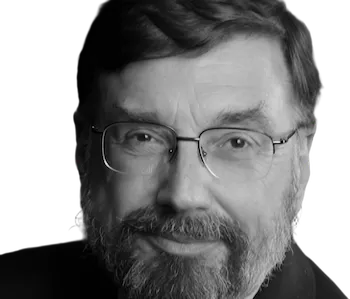
Robert P. Burns
Robert Burns has practiced in the federal and state courts and agencies in Chicago for thirty-five years. He teaches evidence and procedure at the Northwestern University School of Law. His previous books include A Theory of the Trial (Princeton) and Evidence in Context (NITA).
Pull this thread
The American trial is dying from the bureaucratic and market structures around it, and that death is not inevitable.
Know something the rest of us don't?
Most threads on Rorotoko begin with our invitation. Any thread can begin with a proposal: you write it with the same prompts every thread answers, and we review it.
Propose a thread →