
Stephen F. Cohen
The Victims Return
The story of survivors of the Jewish Holocaust is widely known. The story of surviving victims of Stalin’s 25-year terror is virtually unknown in the West—and even in Russia itself. The Victims Return tells that story. I focus on a wide array of survivors—including many I knew personally in Moscow in the 1970s and 1980s.

Photograph of an NKVD execution squad in 1936. (From<a href="http://www.amazon.com/gp/product/1903427150?ie=UTF8&tag=r0a98-20" target="_blank" id="">David King’s Ordinary Citizens</a>, reproduced in the book on page 45.)
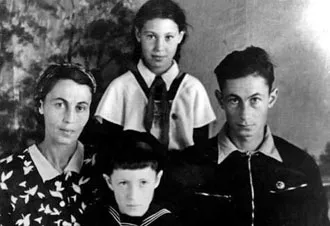
Anna Larina (the widow of Nikolai Bukharin, who was executed in 1938), with their son Yuri, whom she had not seen in nineteen years, and her two younger children, Nadya and Misha, by her second husband, at her place of Siberian exile, 1956. The photographs reproduced on page 50 show Anna Larina’s aging during her years in the Gulag, and Yuri’s in the orphanage.
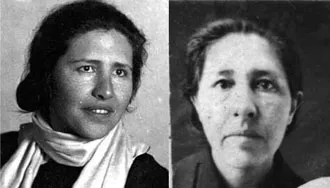
Left, Olga Shatunovskaya before her arrest, in 1936; right, in a Magadan camp, 1945. After her release in the early 1950s, Shatunovskaya became a member of Khrushchev’s inner political circle and, in that capability, helped to free millions of other victims from labor camps and exile.
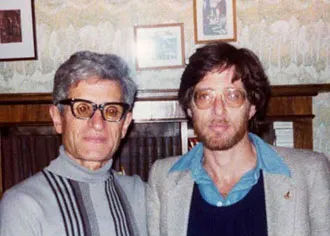
A 1980 photo of the author with Anton Antonov-Ovseyenko.
Editor: Erind Pajo
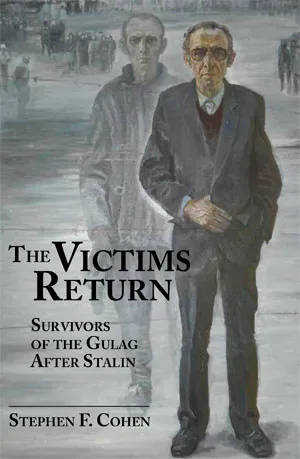
The Victims Return
Stephen F. Cohen The Victims Return: Survivors of the Gulag After Stalin Publishing Works 224 pages, 5½ x 8½ inches ISBN 978 1933002408
Available here →February 14, 2011
20090710-cohen-stephen-on-soviet-fates-lost-alternatives-new-cold-war-1-1
In a nutshell
The rest of this thread
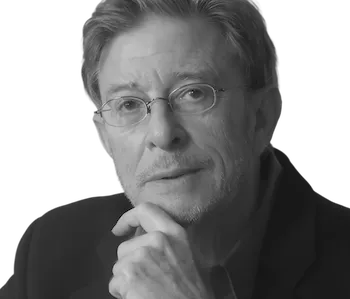
Stephen F. Cohen
Stephen F. Cohen is professor of Russian studies and history at New York University and professor of politics emeritus at Princeton University. He is a contributing editor to The Nation and a frequent guest on the Charlie Rose Show and other broadcast media. In our conversation leading to this book interview for Rorotoko, he described Soviet Fates and Lost Alternatives as reflecting “almost my entire intellectual career.” EP
Pull this thread
pulls againstpulls alongside
Half of Russians still call Stalin a great leader because freed Gulag victims returned to live among their victimizers.
Nearby LT · Silence is a political technology in its own right, and it outlives the regime that installed it.
Nearby LM · UNESCO's heritage work was forged by the colonizing powers as the last gasp of the civilizing mission.
Nearby MS · The 1976 bicentennial was a decisive event of the 1970s, where national political realignment actually ran.
Nearby EB · The Statue of Liberty had essentially nothing to do with immigration when it went up.
Nearby AB · Asking what Jefferson or the founders would do is mostly an illegitimate question.
Nearby RW · Lee's raid on Washington to take or kill Lincoln was a genuine last gamble, and it nearly worked.
Know something the rest of us don't?
Most threads on Rorotoko begin with our invitation. Any thread can begin with a proposal: you write it with the same prompts every thread answers, and we read it.
Propose a thread →