
Farzana Shaikh
Making Sense of Pakistan
Many of the key questions posed in my book are encapsulated in the third chapter, “The Burden of Islam.” The chapter offers a bird’s eye view, a panorama of how politics in Pakistan came to be sacralized as the country’s leaders struggled to make sense of the nebulous association between Islam and the state. I trace this struggle from Pakistan’s early years, when the country’s lawmakers endeavoured fruitlessly to frame a modern constitution within the parameters of Islam.
This long and arduous process brought to the fore the depth of uncertainty about the constitutional place of Islam in a country still unsure about its religious and political foundations. Since its creation Pakistan has had three constitutions and all without exception have been mired in controversy over their Islamic texture – a controversy that continues to rumble on to the present day.
It was this climate of enduring uncertainty that made Pakistan especially vulnerable to the programme of Islamization launched in the 1980s by a military regime that sought to address, by force, the ambiguities that surrounded Pakistan’s putative Islamic identity. While the legacy of this “reform” was particularly damaging to the status of women and to religious minorities, it also revealed the formative weaknesses of both the Pakistani state and the country’s national identity.
These weaknesses, the chapter demonstrates, were rooted in the contradictory expectations embodied in Pakistan: on the one hand, the affirmation of a universal Islamic community, whose geography remains, in the minds of many of South Asian Muslims, open to question; on the other a Muslim “nation” circumscribed by territorial boundaries.Yet to be resolved, the tension between these contrasting visions is now taking a violent toll on Pakistan and its people.
There are few today who doubt that Pakistan has emerged as a pivotal state: what happens there will affect millions beyond its borders. Yet there are risks in regarding Pakistan strictly through a strategic prism and treating it as no more than a security issue. To do so is gravely to under-estimate the complexity of this diverse country.
For while today Pakistan is indelibly associated with terrorism, Islamic fundamentalism, and nuclear proliferation, this is only half the story. My book is an attempt to think about Pakistan on its own terms.
The country clearly stands at the crossroads. Although deeply troubled by the lack of a clear identity, it is by no means certain that Pakistan has exhausted all its resources in terms of seeking to develop a future grounded in rules of political negotiation rather than in the questionable assumptions of a ready made Islamic consensus. The time left to ensure its survival may be short but Pakistan has withstood many a bruising battle and survived.
The country is in the throes of change — changes that point to the determination of its people, if not of its governing elite, to be more receptive to new ways of imagining their country’s identity. By recasting its enduring quest for consensus in the light of a heritage rooted in the more syncretistic traditions of Indian Islam, Pakistan may yet succeed in projecting an identity that reconciles Islam’s universalist message with respect for the rich diversity of its peoples.
Editor: Erind Pajo
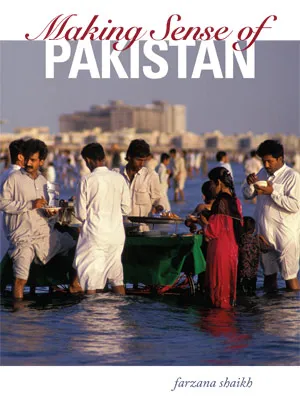
Making Sense of Pakistan
Farzana Shaikh Making Sense of Pakistan Columbia / Hurst288 pages, 9 x 6 inches ISBN 978 0231149624
Available here →July 27, 2009
20090727-shaikh-farzana-making-sense-pakistan-3
A close-up
The rest of this thread
Emile Chabal
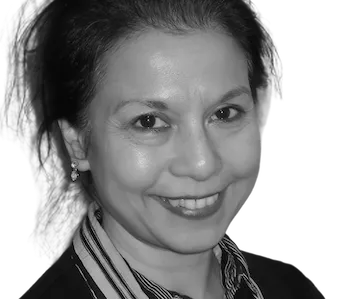
Farzana Shaikh
Farzana Shaikh is an Associate Fellow at the Royal Institute of International Affairs in London, where she directs the Pakistan Study Group. A former Research Fellow of Clare Hall Cambridge, she is the author of Community and Consensus in Islam: Muslim Representation in Colonial India, 1860-1947 (Cambridge University Press, 1989) and has published widely on Muslim South Asia. She has been a Visiting Professor at the University of Pennsylvania and most recently was a Visitor at the Institute for Advanced Study in Princeton.
Pull this thread
Pakistan's decline comes not from Islam but from its unresolved relation to Islam as a political ideology.
Know something the rest of us don't?
Most threads on Rorotoko begin with our invitation. Any thread can begin with a proposal: you write it with the same prompts every thread answers, and we review it.
Propose a thread →