
Serena R. Zabin
Dangerous Economies
In Dangerous Economies, I explain a shocking moment in eighteenth-century America. 250 years ago, New York was gripped by a terrible fear: that resident slaves were conspiring to torch the city, murder its white inhabitants, and hand over the smoldering burg to the Catholic king of Spain. Based on the testimony of one sixteen-year-old girl, New York’s Supreme Court burned thirteen enslaved men at the stake, hanged seventeen more, along with two white men and two white women, and banned nearly 100 people from the colony.
The force that drove this eighteenth-century witch-hunt was not so much racism as the newly unleashed power of capitalism. By looking at economic growth as a cultural phenomenon, and not just a fiscal one, I explain how the colony’s courts could come to believe this fantastic story.250 years ago New York was enjoying an economic boom as impressive as the one of the 1990s—complete with confidence artists and unrestrained consumption—and everyone tried to exploit a corner of the market. The result was the creation of a scandalously dangerous economy: one with multiple opportunities, great risks, and sometimes devastating consequences.
Editor: Erind Pajo
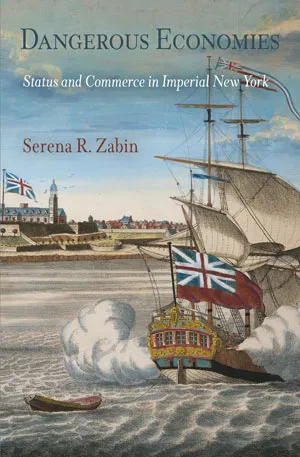
Dangerous Economies
Serena R. Zabin Dangerous Economies: Status and Commerce in Imperial New York University of Pennsylvania Press 216 pages, 9 x 6 inches ISBN 978 0812241600
Available here →October 2, 2009
20091002-zabin-serena-dangerous-economies-status-commerce-imperial-new-york-1
In a nutshell
The rest of this thread

Serena R. Zabin
Serena Zabin is an associate professor of history at Carleton College, where she teaches the history of early America and the Atlantic world, as well as American Studies. Her new work is a cultural study of the military occupation of Boston that culminated in the Boston Massacre.
Pull this thread
New York's 1741 conspiracy panic was driven by the newly unleashed power of capitalism more than by racism.
Know something the rest of us don't?
Most threads on Rorotoko begin with our invitation. Any thread can begin with a proposal: you write it with the same prompts every thread answers, and we review it.
Propose a thread →