
Carol Becker
Thinking in Place
I would hope that readers “browsing” would first look at the book’s cover. It is a dreamy image of water taken on the Hudson River by artist Ellen Kozak. I would want them to allow themselves to dream and wander and then to read the Prologue, which is called “Wandering Monks and Peripatetic Birds.” It begins,” Thinking in Place: Art Action and Cultural Production is the result of the past decade of wandering.”
If people read that and then go on to read about the range of places I have visited—Vietnam, Cambodia, Laos, India, Africa, Germany and sites such as the Wannsee House (where the “Final Solution” to the “Jewish Question” was determined), they would know a lot about me and how deeply place affects me, how everything begins in sense and then becomes response. Response then translates into ideas that then become philosophical constructs that then seek to be written. They then would know how much process matters to me; I think about writing as artists think about art making.
The readers would come to understand that the book is also about them, about how they think, and they could then reflect upon their own method of thinking in place as I have reflected on mine.
Because I was educated to be a literary critic and came up during the time of modernist and postmodern theory, I have had to find ways of writing that communicate how I think in ways that are translatable to others. I want the writing to be elegant, poetic, seductive, because deep within it there are ideas, which, if adopted, believed, cherished, could transform consciousness.
These are not my ideas alone; they are the ideas of centuries of utopian thought. I want these ideas to permeate people’s consciousness—ideas about the importance of art for human well-being, the end to war as a solution to conflict, the importance of community and the public sphere to a democratic society, and so forth.
These ideas are not presented as political messages; they are presented as the struggle for humanity’s survival. I want these ideas to saturate people’s desire as they have mine. And I want the writing to be so engaging that people remember why they love this world and therefore want to protect it and its inhabitants across national and international boundaries. Simply, I always write for people—not for the art world, literary world, sociological world and so forth. I hope the book can cross many boundaries. This is not easy since all books are “shelved” somewhere, whether physically or virtually.
But thinking does not fit easily into such categorizations. And the problems of the 21st century will not be solved by “disciplines” but by ideas and by the willingness of people to extend beyond themselves and their own culture, to recognize themselves in the Other, as part of a species whose evolution should be considered, whose future can be consciously determined.
Editor: Erind Pajo

Thinking in Place
Carol Becker Thinking in Place: Art, Action, and Cultural Production Paradigm Publishers 184 pages, 9 x 6 inches ISBN 978 1594515972 ISBN 978 1594515965
Available here →November 11, 2009
20091111-becker-carol-on-thinking-in-place-art-action-cultural-production-3
A close-up
The rest of this thread
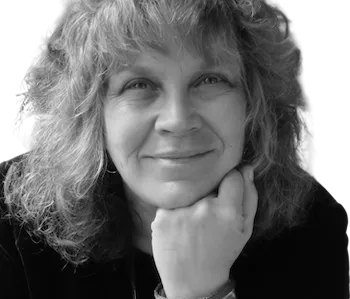
Courtesy of Mayumi Lake
Carol Becker
Carol Becker is Professor of the Arts, and Dean of Columbia University School of the Arts. Before taking this position, she was Dean of Faculty and Senior Vice-President for Academic Affairs at the School of the Art Institute of Chicago for many years. She lectures extensively and is the author of numerous articles and several books, including, The Invisible Drama (in seven languages), the edited edition The Subversive Imagination, Zones of Contention, Surpassing the Spectacle, and, most recently, Thinking in Place. She grew up in Brooklyn, New York and now lives between New York City and Chicago.
Pull this thread
Thought is not portable, and wandering is a legitimate way of organizing knowledge.
Know something the rest of us don't?
Most threads on Rorotoko begin with our invitation. Any thread can begin with a proposal: you write it with the same prompts every thread answers, and we review it.
Propose a thread →