
Nancy Um
The Merchant Houses of Mocha
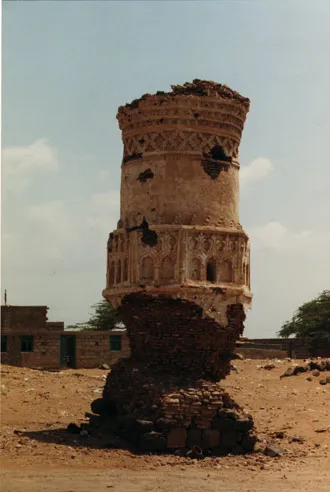
This book intervenes in one of the long-standing issues in Middle Eastern studies regarding the shape and analysis of the Arab city. Urban scholars agree that the conception of the Arab city as a uniform and distinct spatial type with consistent features is inherently flawed, over-essentialized, and drawn from limited examples—the product of the limitations of early Orientalist scholarship.The Merchant Houses of Mocha was written with the understanding that the Arab city is an evolving concept that must be understood through a diversity of cases and with a focus on the historic and regional specificity of each example. But the goal, particularly in Chapters 5, 6, and 7, was not just to present a counter model to long-standing ideas of a uniform and standard Arab city, but also to provide new avenues to analyze the shaping impulses behind the construction, use, and meaning of urban form in Arab and Islamic cities. As a key port city on the southern fringe of the Arab world, in communication with the Indian Ocean, Mocha presents an important set of spatial and architectural principles that contribute to our understanding of historic urbanism in the Middle East. It should be added that these regions, the Indian Ocean littoral and the Arabian Peninsula, are often excluded from the scholarship on urbanism in the Arab and Islamic world, which usually focuses on key well-known examples from North Africa and the eastern Mediterranean.My treatment of Mocha looks to the ways in which this city was shaped over time to accommodate the practices of the trade, which included the everyday exchange of goods, but also the social activities of merchants and the representation of status and creditworthiness as necessary attributes for merchants who worked in foreign lands. To that end, the city was laid out in a diagrammatic manner, which was read differently by those who arrived from land and by sea.Surprisingly, Mocha lacked traditional public structures of trade, caravanserais and funduqs. Houses, which are often cast as the protected private domain of the family, became sites for trade transactions for major merchants. Additionally, while the city was divided along ethnic and religious lines, with the Somali and Jewish communities settled in quarters outside of the city wall, Baniyan merchants were exempt from spatial segregation because of their centrality in the trade.While Mocha should not be taken as a paradigmatic example of an Arab city, a port city, or an Indian Ocean city, it does present a fascinating case of how the processes of trade shape city form and intersect with the politics of urban functionality in coastal regions.In the age of the early modern Indian Ocean, Mocha was at the center of a vast maritime network, with a number of cross-regional spheres overlapping in and around the port. Some of the city’s main necessities, such as water and firewood, came from across the Red Sea. Some members of the city’s elite, such as the famous Indian shipping magnate Abd al-Ghafur, never even set foot in Mocha, but were known locally through their ships and ship captains that frequented the port. Commodities that left Mocha were destined for Basra in Iraq, the port city of Surat in Gujarat, Dutch Batavia in Indonesia, and even St. Malo on the coast of Brittany. This was an era when the merchants and officials of Mocha communicated and traded with their cohorts from Asia, Africa, the Middle East, Europe, and even Central America, directly and indirectly.The Merchant Houses of Mocha appears at a time when the lines that divide global spaces appear to be less rigid and more porous than ever before. New technologies allow us to traverse vast spaces that in the past required the commitment of extended and arduous journeys to cross. In this age of globalization, we often marvel at the ways in which geographic space has been compressed by technologies of communication and transportation.With the emergence of these new networks, however, Mocha and also Yemen have lost their centrality in global matrices of trade, exchange, and interaction. Mocha’s trade migrated to other neighboring ports and Yemen, after losing its global monopoly on the coffee bean in the eighteenth century, has not discovered the oil riches of its neighbors. Mocha’s contemporary geographic marginality is underscored by the decay that the city has experienced over time. Although its ports played a key role in cross-cultural trade networks since antiquity, Yemen has been peripheralized and left out of the story of contemporary global interconnectivity, with all of its perceived achievements. With this contemporary context in mind, it is increasingly important to redraw the historic international vectors of maritime movement and cultural exchange to represent a moment in time when Mocha and Yemen were major players in the global sphere.
Editor: Erind Pajo
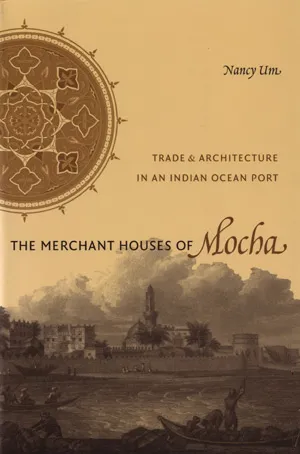
The Merchant Houses of Mocha
Nancy Um The Merchant Houses of Mocha: Trade and Architecture in an Indian Ocean Port University of Washington Press 270 pages, 9 x 6 inches ISBN 978 0295989112
Available here →November 20, 2009
20091120-um-nancy-merchant-houses-mocha-trade-architecture-indian-ocean-3
A close-up
The rest of this thread

Chris Focht
Nancy Um
Nancy Um is associate professor of art history at Binghamton University. She holds a Ph.D. from UCLA, and is the recipient of fellowships from the Getty Foundation, the National Endowment for the Humanities, Fulbright, and the American Institute for Yemeni Studies. She has published on Yemeni architecture in the seventeenth and eighteenth centuries, Arab domestic architecture, and Indian Ocean visual and built culture. Her reviews and articles have appeared in the Journal of the Society of Architectural Historians, Art Journal, Comparative Studies of South Asia, Africa, and the Middle East, and African Arts.
Pull this thread
The protocols of cross-cultural trade set Mocha's hierarchy, layout and architecture, which is why it had no caravanserais.
Know something the rest of us don't?
Most threads on Rorotoko begin with our invitation. Any thread can begin with a proposal: you write it with the same prompts every thread answers, and we review it.
Propose a thread →