
Philip Pomper
Lenin's Brother
In the book’s last chapter, I try to explain Vladimir’s development, showing how family history shapes people and how parents and siblings interact in complex ways.The Ulyanov family and its members, like all of us, encountered history and were shaped by it—even though they in turn shaped history more than most families. The wounds created by anti-Semitism forced the family into a false posture. The Ulyanovs’ marginality—part Jewish, Swedish, German, possibly Kalmyk—created special problems. They conveyed the psychological stigmata produced by the surrounding culture’s hatred. In very gifted people—and the Ulyanovs were gifted—the consequences can be large. The small window of opportunity created by the Russian Enlightenment following Russia’s defeat in the Crimean War quickly closed, but not before Ilya Ulyanov had been ennobled by a regime that, for a time, had appreciated enlighteners. Many gifted marginal people came to the fore in the 1860s and 1870s Russia, and many of their progeny became important revolutionaries.In order to modernize, the Russian regime had to use despised minorities, but when it came to writing history, certain things had to be hidden. The Lenin cult prevented revelations about the family’s ethnicity until the late 1980s and glasnost. Stalin quite cynically suppressed any information that might taint Lenin’s image. While writing Lenin’s Brother, I was mindful of how ethnicity, nationality, group psychology, and individual psychology, produced lethal results in modern history. The small theatre of Lenin’s Brother opens into a much larger one.Lenin's Brother also sheds light on the contemporary theatre of suicide terrorism.It is often said that terrorism is the weapon of the weak. The story of “The Terrorist Faction of the People’s Will” tells of an asymmetry of power between the Russian security apparatus and a small group of terrorists. It’s a common enough story, but the players differ and so do the stakes. Today’s stakes seem immeasurably higher, but to Ulyanov, human progress was at stake. One of the things that drew him to the narodnik theorist Lavrov was the notion of duty. Marxism downplayed ethics, to a point where one has to work hard to understand how it inspired young people. Some of Sasha’s comrades who chose terrorism did so because of an ethical foundation that they didn’t find in Marxism.For Marxian true believers the answer lay in history: the dialectic of history would produce a just outcome. Marx and Engels assumed that the requisite consciousness was bound to appear, that revolutionaries would multiply. But they pushed things along in their way, and Lenin did in his.Sasha, however, thought more like contemporary suicide terrorists, although he had a “scientific” basis for his act of self-sacrifice for the revolutionary cause. He was, after all, a biologist, and looked to Darwin for authority. Sasha got this justification for self-sacrifice and subordination to the group from Lavrov, too. Natural selection worked at the group level, not at the level of individuals. The very best people sacrificed themselves for the group and the group, itself a historical product, in turn produced the next stage of history. The epigraph for Sasha’s junior thesis was “What is real is historical.”Today, not science and historical progress, but religion and nostalgia justify suicide terrorism. History is full of surprises, not always good ones.
Editor: Erind Pajo
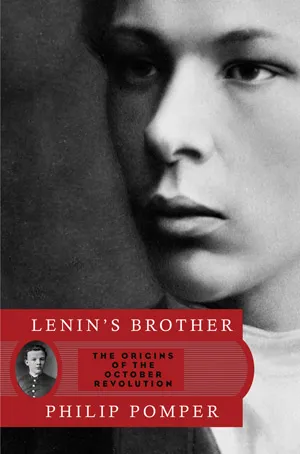
Lenin's Brother
Philip Pomper Lenin's Brother: The Origins of the October Revolution W. W. Norton 304 pages, 9 1/2 x 6 1/2 inches ISBN 978 0393070798
Available here →January 22, 2010
20100122-philip-pomper-lenin-brother-origins-october-revolution-3
A close-up
The rest of this thread
John Wareham
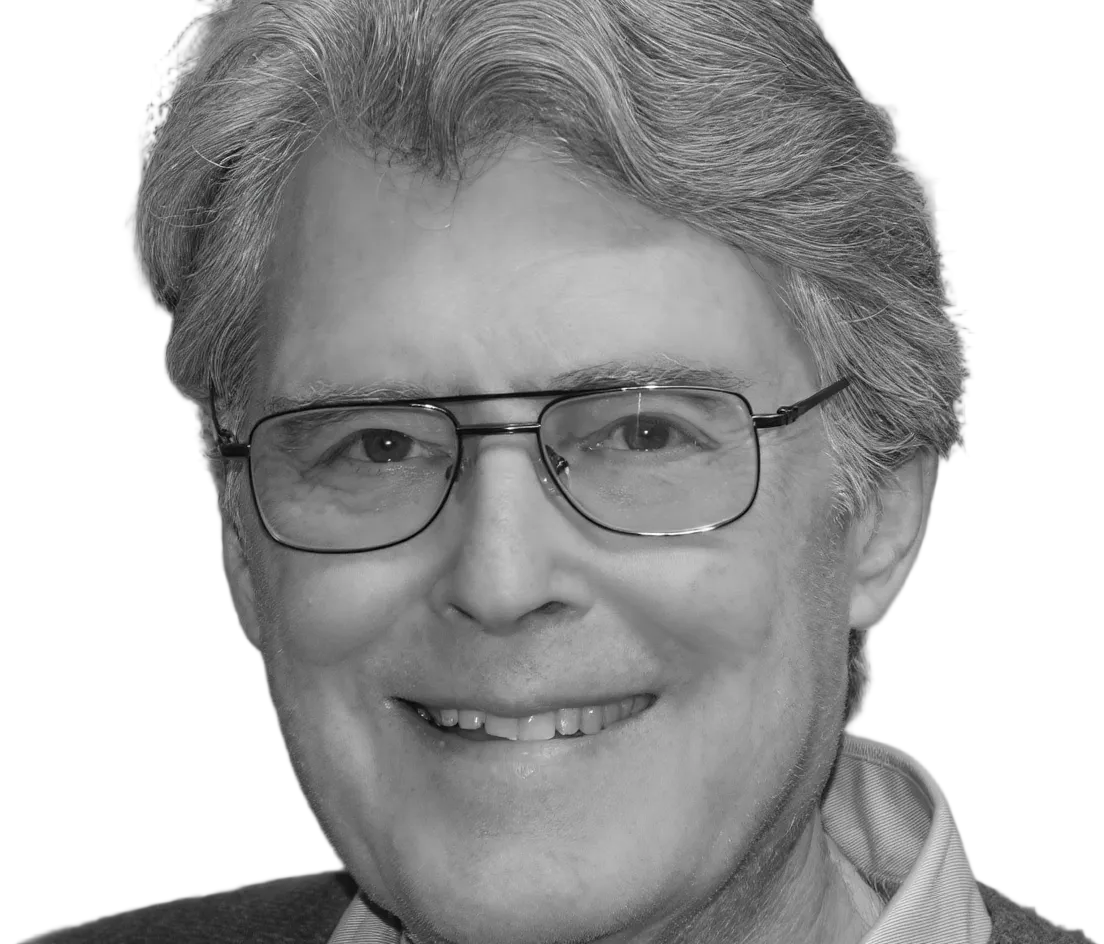
Philip Pomper
Philip Pomper is the William F. Armstrong Professor of History at Wesleyan University. Before coming to teach at Wesleyan in 1964, he studied at the University of Chicago, from which he received his Ph.D. He has been an Associate Editor of the journal History and Theory since 1991. In addition to Lenin’s Brother, he has authored five books and co-edited four others. Professor Pomper has also written on Russian history for several journals and on theoretical issues for History and Theory. He is grateful for the grants he has received.
Pull this thread
Without Sasha there might have been no Lenin, and the mechanism was family rather than doctrine.
Know something the rest of us don't?
Most threads on Rorotoko begin with our invitation. Any thread can begin with a proposal: you write it with the same prompts every thread answers, and we review it.
Propose a thread →