
Peter Y. Paik
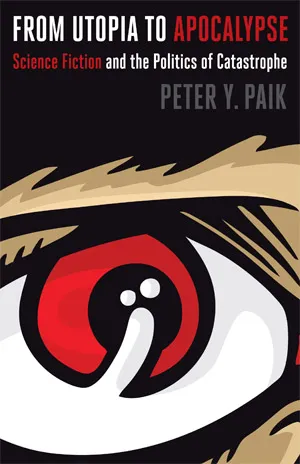
From Utopia to Apocalypse
Is mass violence justified if it brings about a better world? This question has been raised frequently in relation to communism, as crimes of Stalin and Mao exposed the murderous core of this utopian ideology. But with the end of the Cold War, a rather startling reversal took place: utopianism migrated from the revolutionary Left to the neo-conservative Right.Indeed, the justifications for the invasion and occupation of Iraq convey the impression that much of the rhetoric of revolutionary socialism is being straightforwardly deployed on behalf of a radical program to extend democracy and free markets throughout the globe. The endemic strife that has overtaken Iraq compels us to question what it means to be regarded as a potential beneficiary of utopian violence—to question the experience of a person who is forced to accept the gift of freedom and all the horrors it has thus far entailed: terrorist bombings, ethnic cleansing, and a brutal insurgency that may trigger a civil war.In the South Korean film Save the Green Planet, an erratic and violent young man kidnaps the wealthy and famous CEO of a chemical company, who he believes is an alien from the Andromeda galaxy leading a mission to destroy the earth. The protagonist, named Lee Byung-Gu, is unhinged by a lifetime of devastating suffering and has compelling reasons for carrying out a brutal vendetta against the industrialist. He was once an employee of the company run by the supposed alien, and his girlfriend was beaten to death during the break-up of a workers’ strike. His beloved mother, who also worked for the same company, lies in a deep coma from chemical poisoning. The CEO is a brusque and venal boor named Kang Man-Shik, who has recently won a suspicious, very public acquittal from charges of stock fraud. Aided by his girlfriend, a trapeze artist named Sooni, Byung-Gu overpowers an inebriated Kang returning home from a drunken night out.What ensues is a series of horrific tortures, inflicted by Byung-Gu on Kang, to force him to reveal his identity as an alien agent and to set up a meeting with the alien prince. Kang, after a failed escape attempt, finally admits that he is an alien, but that his mission is not to destroy humanity but to save it from its most dangerous impulses, which now threaten the entire planet with annihilation. But the only way to save humanity is to single out a few individuals for experiments that test their capacity to endure suffering. Byung-Gu’s mother was singled out as an ideal test subject because, as the alien executive explains, “physical and mental suffering stresses organisms, forcing them to adapt and develop more quickly.” Indeed, Kang reveals that Byung-Gu and his mother were deliberately subjected to agonizing torment and misery in order to bring the experiments to more advanced stages.Stunned by the obscene essence of the injunction underlying Kang’s speech—“Forgive me for the suffering and death of your mother, and you and your kind will be rewarded with peace and plenty!”—Byung-Gu reacts to Kang’s words by shooting out a mirror reflecting the face of his prisoner, and then opens fire against his own desk. Although one may account for his acting-out as a kind of admission of failure, since the aliens are revealed to be far less one-sidedly malevolent as Byung-Gu believes, this scene can also be understood as a demonstration of his resistance to the persuasive force of Kang’s argument for the salvational correction of the human species.What is the value of studying hypothetical transformations and imaginary upheavals overtaking fictitious individuals and societies? The speculative context enables the mechanisms that measure and sanction political violence to become properly visible.The interpretation of serious literary works is more liable to arouse the reader’s moralistic impulses, whereby political violence is likely to be grasped as inexplicable acts of inhuman evil. But when one encounters fictional atrocities, when the victims belong to imaginary societies or to alternate realities, the perspective of the perpetrator, as well as that of the beneficiaries of his or her violence, assume an uncomfortably human proximity to the standpoint of the reader. This is not to relativize actual atrocities or to excuse inhuman acts, but rather to seek a deeper understanding of the persistence of violence in human history, especially in an age that distinguishes itself from the past by its unequivocal condemnation of cruelty and by its embrace of humanitarian values.Such understanding can only come about by engaging in a speculative activity that has been condemned as imperialist and rendered taboo under the ascendancy of post-structuralist deconstruction: the work of imaginatively inhabiting a certain perspective and seeing the world according to its terms.The ability to inhabit another perspective is crucial to grasping the mechanisms of political change, for what is being transformed is a specific outlook. The science fiction narratives I study are especially productive of this kind of reflection, as they show how an idea or action plays out within a concrete temporal sequence. We are taken from one distinct point to another, as well as shown the consequences of the action that unfold. As such, these texts evoke the experience of unwilled change that ensures the passing of one epoch into something new and different.The pressure of tragic necessity is felt in the dangers that confront us in the present: the scarcity of vital resources, catastrophic climate change, and the inertia that afflicts our political and economic systems. The contemporary critique of capitalist society by contrast depends on the health of the economic and political status quo: an oppressive authority that is “strong” is far easier to condemn than one that is weak and caught in the process of dissolution. By contrast, tragedy, as the study of making decisions and suffering consequences, enables us to take the measure of what is intractable and what is transformative.
Editor: Erind Pajo
From Utopia to Apocalypse
Peter Y. Paik From Utopia to Apocalypse: Science Fiction and the Politics of Catastrophe University of Minnesota Press232 pages, 8 ½ x 5 ½ inches ISBN 978 0816650798ISBN 978 0816650781
Available here →March 22, 2010
20100322-paik-peter-on-utopia-apocalypse-science-fiction-politics-catastrop-3
A close-up
The rest of this thread

Peter Y. Paik
Peter Y. Paik is Associate Professor of Comparative Literature and Director of the Religious Studies Program at the University of Wisconsin at Milwaukee. His articles have appeared in Postmodern Culture, Theory and Event, and Religion and the Arts. He is currently working on a study of world-making in literature, philosophy, and the new media.
Pull this thread
Science fiction is a better instrument than serious literature for thinking about political violence.
Know something the rest of us don't?
Most threads on Rorotoko begin with our invitation. Any thread can begin with a proposal: you write it with the same prompts every thread answers, and we review it.
Propose a thread →