
John Calvert
Sayyid Qutb and the Origins of Radical Islamism
In 1954, Egypt’s new revolutionary regime arrested Sayyid Qutb and hundreds of other Egyptian Islamist following a Muslim Brother’s assassination attempt on President Nasser. Qutb had joined the Muslim Brotherhood, Egypt’s largest Islamist movement, the previous year. One of the most important sections of the book deals with how Qutb’s subsequent imprisonment and torture affected the evolution of his ideas.
During the last years of the monarchy, Qutb attempted to mobilize the Egyptian people in the direction of change within the legal framework of the state. But now, languishing in Tura prison, he understood that advocacy politics were ineffective against a regime that was prepared to eradicate, without compunction, its Islamist and other critics.
As a result, Qutb shifted his emphasis from Islam’s equation with social justice to the fundamental issue of political legitimacy. Accordingly, his demand for an “Islamic order” became emphatic with strong appeals to core doctrines and principles.
In Qutb’s refurbished view, however much Nasser claimed to represent the interests of Egyptians and other Muslim peoples, Nasser’s refusal to implement Islamic law (the Shari‘a) qualified him as usurper of God’s sovereignty, which all the peoples of the world ought to follow.
In fact, said Qutb, so great was the level of cultural, political and economic oppression in Egypt and elsewhere, that only a circle of adepts, a vanguard, could awaken the masses and mobilize them in the direction of change.
In coming to this tactic, Qutb had in mind the model of the Prophet Muhammad and the first Muslims who, from an initial position of weakness, had gradually built up their power so that they could confront head on the oppressors.
But the book also makes clear that Qutb was inspired, at least unconsciously, by modern currents of rebellion and political change. That is to say, Qutb imbibed and repackaged in Islamic form the Jacobin characteristics of the European revolutionary tradition.
Interestingly, Qutb underscored the purported illegitimacy of the Egyptian Republic, and by extension all other non-Islamic regimes and societies, by equating its moral universe with the condition of jahiliyya, “ignorance” of the divine mandate. As in the pre-Islamic era, “ignorance” of God enveloped the contemporary world. A
s a result, the strong oppressed the weak and materialism and individualism were rampant.
Qutb was especially concerned with decadent and immoral behavior, especially of the sexual variety. Muslims may believe in God and his prophet, pray, fast, perform the Hajj, and dispense charity. But as long as their lives “are not based on submission to God alone,” they are steeped in jahiliyya and cannot be reckoned fully as Muslims—a controversial supposition that went against the grain of Islamic theology, which historically advocated inclusiveness and tolerance.
Qutb’s radical ideology confirms the contention that the totalistic quality of revolutionary movements owes much to the authoritarian nature of the regimes against which they operate.
Such had been the case, for example, in nineteenth-century Russia where nihilist and anarchist groups converged on the complete triumph of their idea against the tyranny of the czarist system. It was also true of the savage insurgencies in Egypt and Algeria in the 1990s, which pitted radicalized Islamists against the state. In each case, repressive bureaucratic-authoritarian regimes encouraged the maximal intentions of various jihadi groups.
Seen in this light, Qutb’s gravitation to ideological totality anticipated, and in part inspired, the “friend-enemy” distinctions that drove the Islamist-state conflicts of the late twentieth century.
One cannot deny Qutb’s contribution to the contemporary tide of global jihad.
His practice of sharply distinguishing between those who uphold a true and authentic understanding of Islam and “iniquitous others,” no less than his view of jihad as the obligatory means to eliminate disobedience to God, anticipate aspects of al Qaeda’s discourse.
Yet, if the al-Qaeda threat enhanced Qutb’s public profile, it has also monopolized and distorted our understanding of his real contribution to contemporary Islamism.
In the search for al-Qaeda origins, even well intentioned observers tend to focus on points of similarity between Qutb’s thought and that of Al Qaeda. But they ignore significant anomalies.
And if some students of the jihad are careful to situate Qutb correctly in relation to al-Qaeda, still they often consign him to the position of opening act. Rarely do observers of the Islamist scene address Qutb’s singularity.
Herein lies a lesson. In resorting to short cuts, we pass over a history that is as nuanced as any other. We run the danger of succumbing to a “neo-Orientalist” style that subordinates particulars to an essential and enduring identity, and that ignores complexity in favor of simplicity.
It is this kind of essentialist thinking that has led some to posit a “clash of civilizations,” or to consider all Islamist movements as identical in terms of aims, strategies and tactics. There is a great deal of ideological and organizational difference, for example, between the Muslim Brotherhood and the groups inspired by al-Qaeda.
Researchers need to study Islamist thinkers and movements on their own terms, with reference to their distinctive environment and concerns. Only by regarding Islamist discourses as flexible and historically contingent will we, as outsiders to the phenomenon, comprehend the various challenges put forward by Islamists in the contemporary period.
For this reason, I chose in the book to situate Sayyid Qutb firmly in his Egyptian environment, examining the evolution of his ideas with reference to the tumultuous events of the time.
Editor: Erind Pajo
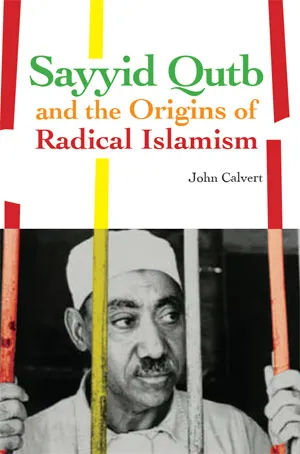
Sayyid Qutb and the Origins of Radical Islamism
John Calvert Sayyid Qutb and the Origins of Radical Islamism Columbia/Hurst 256 pages, 8 1/2 x 5 1/2 inches ISBN 978 0231701044
Available here →September 27, 2010
20100927-john-calvert-on-sayyid-qutb-origins-radical-islamism-3
A close-up
The rest of this thread

John Calvert
John Calvert is the Fr. Henry W. Casper SJ Associate Professor of History at Creighton University in Omaha, Nebraska. Besides Sayyid Qutb and the Origins of Radical Islamism, featured in his Rorotoko interview, he is author of Islamism: A Documentary and Reference Guide (Greenwood Press, 2007), co-editor and co-translator (with William Shepard) of Sayyid Qutb’s A Child from the Village (Syracuse University Press, 2005), and guest editor of a special issue of Historical Reflections/Reflexions Historiques (2004) on Islam and Modernity. Dr. Calvert’s articles on Islamist movements and thinkers have appeared in Orbis, Historical Reflections, Islam and Christian-Muslim Relations, the Muslim World and the Journal of Religion and Society. He has appeared in interviews in major news press and media, including BBC and NPR.
Pull this thread
Qutb would have condemned al-Qaeda, since for him jihad against iniquitous Muslim regimes was always paramount.
Know something the rest of us don't?
Most threads on Rorotoko begin with our invitation. Any thread can begin with a proposal: you write it with the same prompts every thread answers, and we review it.
Propose a thread →