
Marcus Boon
In Praise of Copying
Although I purposefully avoided paying excessive attention to computers, the internet and social media, I think that there is a strong and helpful analysis of those things in my book.
One of the arguments you hear a lot today is that we’re living in a totally new world because of computers—in particular because of the new abilities to copy that they offer us.
While I don’t totally discount that argument I have a particular take on it. Whatever the advances in technology, our minds are still the fastest computers and still crank out more copies than any computer could do. Pornography, spam, symbolic representations of infinity: our minds already make it all.
In the “Montage” chapter (pp. 167-172), I examine digital and analog modes of copying and point out (via the work of techno theorists Brian Massumi and Julian Dibbell) that there is no such thing as a digital copy—because all copies have to be translated into analog form in order to manifest. In other words, processes of digital copying obey the same principles that I set out for other kinds of copying that seem more lo-fi: tactile contagion and a similarity that emerges from nonconceptual sameness.
If I can be allowed to point to a second aspect of the book, it would be the importance of what I call industrial folk cultures.
We know that subcultures, indigenous cultures, peasant cultures and the various groupings of the people are intensely interested in copying, whether it’s through practices such as quilting, the transmission of folk songs or the cut and paste of hip-hop. Often those activities put ordinary or poor people on the wrong side of the law—they’re “stealing,” because they don’t have the economic power to participate in the culture of ownership.
I think there’s an interesting and neglected politics to folk cultures as regards copying—and one that we’ll be hearing a lot more of, as the poor people of the world start to communicate with each other and discover the details of each other’s situations.
I find things like hip-hop, punk or cumbia very interesting in this regard—because people around the world “imitate” those styles in a way that’s profound and empowering. We saw what happened in the 1960s when practices of freedom “went viral.” I think there’s a lot more of that going to be coming up.
I would like people to understand how fully and fundamentally they already participate in “cultures of the copy,” and that the particular legal regime that today globally organizes definitions of appropriate and inappropriate copying has a very particular history and benefits a particular group of people.
Modern industry and the modern state both rely completely on practices of imitation, but they should not have exclusive control over the parameters of citizens’ practices of copying.
I think that scientists, artists, lovers, political activists need to confront the way in which their lives and practices are shaped by copying. Everyone needs to think deeply and act decisively in making the most profound or joyful use they can of our mimetic faculties. In other words, it’s not a question of whether to copy, but how to copy and what.
Editor: Erind Pajo
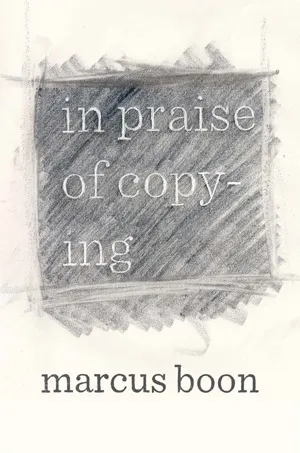
In Praise of Copying
Marcus Boon In Praise of Copying Harvard University Press 240 pages, 8 1/4 x 5 1/2 inches ISBN 978 0674047839
Available here →November 10, 2010
20101110-boon-marcus-on-in-praise-of-copying-3
A close-up
The rest of this thread
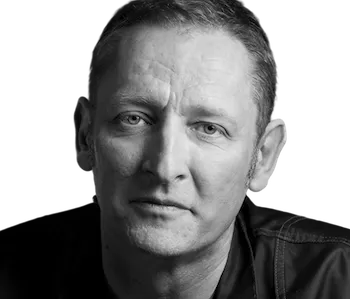
Cylla von Tiedemann
Marcus Boon
Marcus Boon is Associate Professor of English at York University in Toronto. He is the author of The Road of Excess: A History of Writers on Drugs and In Praise of Copying (both from Harvard University Press), and the editor of Subduing Demons in America: Selected Poems of John Giorno, 1962-2007 and America: A Prophecy! The Sparrow Reader (both from Soft Skull). He writes about music for The Wire and blogs at inpraiseofcopying.wordpress.com.
Pull this thread
Copying is constitutive of being human, not a lapse from originality.
Know something the rest of us don't?
Most threads on Rorotoko begin with our invitation. Any thread can begin with a proposal: you write it with the same prompts every thread answers, and we review it.
Propose a thread →