
Mark Driscoll
Absolute Erotic, Absolute Grotesque
This book is primarily an academic historical exercise and I have used some fairly abstract and philosophical language to describe what I see as the three distinct phases of Japanese imperialism.
However, readers interested in more concrete history would probably enjoy flipping around the first part of the book called “Biopolitics” where I discuss in some detail Japan’s colonization of Taiwan, Korea, and south Manchuria.
The middle chapters (5 and 6) feature the first in-depth discussion of Japan’s “erotic-grotesque” modernism, looking at perverse detective novels and left-wing pornography. I also discuss some of the key subjectivities of Japanese modernism like the modern girl, modern boy and detective writer.
The Intertext after chapter 6 analyzes the interesting novels of the popular Japanese detective writer Edogawa Rampo. It also treats the boom in vampires in Japan beginning in the late 1920s—attempting to provide an historical rational for why vampires became so popular at this time.
For readers interested in the lead-up to the second Sino-Japanese War and imperialist war in general, the last section of the book, “Necropolitics,” would be the best place for browsing.
In this section I try to show what happens to some of the main historical actors who appeared in the first section of the book as they become enmeshed in a very different form of imperialist politics. Focusing on Japan’s Manchukuo colony, I argue through Frantz Fanon and Achille Mbembe that the final stage of Japan’s imperialism must be seen as invested in killing and immobilizing. I show the ways in which Japanese imperialists turned to drug and human trafficking in massive numbers, which financed the two-front wars Japan was fighting against China and against the US and UK in the Asia-Pacific.
In addition to over 20 million Chinese killed during this war, an estimated 10 million became drug addicts through Japan’s systematized dealing of heroin and opium. In some areas of Japan’s colony of Manchukuo, 30-40% of Chinese were drug addicts; this in places where drugs had been almost completely eradicated in the 1920s.
Informed readers in the West often are perplexed by the overwhelmingly hostile attitude that most Chinese (and Koreans as well) have towards Japan. Lacking much historical information about what Japanese imperialists did in China and Asia, many Westerners are left feeling that lingering hostility towards Japan can only be explained by a kind of irrationality in the Chinese psychic sensibility. I hope my book will help Western readers better understand this hostility.
Second, I hope that informed Western readers see the horrors of Japanese imperialism as not that different from what English colonialism unleashed in Central and East Asia via the opium trade or from what the US has recently done in Iraq. In this way, I try not to “other” Japanese imperialism as deviant and different but show it was structurally similar to other instances of imperialist aggression.
Editor: Erind Pajo
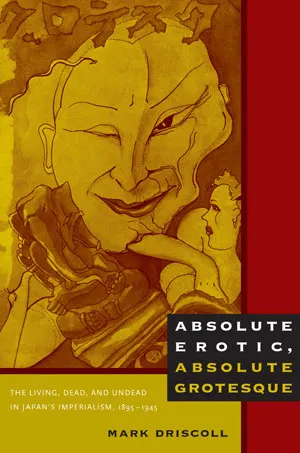
Absolute Erotic, Absolute Grotesque
Mark Driscoll Absolute Erotic, Absolute Grotesque: The Living, Dead, and Undead in Japan’s Imperialism, 1895–1945 Duke University Press 352 pages, 9 x 6 inches ISBN 978 0822347408 ISBN 978 0822347613
Available here →February 9, 2011
20110209-driscoll-mark-on-absolute-erotic-grotesque-living-dead-japan-imper-3
A close-up
The rest of this thread
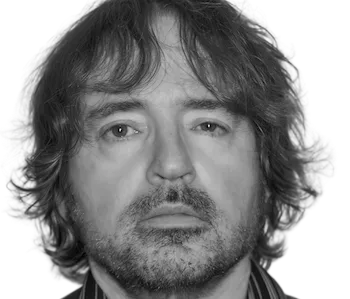
Mark Driscoll
Mark Driscoll is an Associate Professor of East Asian Studies and International Studies at the University of North Carolina, Chapel Hill. Besides Absolute Erotic, Absolute Grotesque, featured in his Rorotoko interview, Driscoll is the author of the forthcoming J-had: Decolonial East Asia’s Martial Arts. He is also the editor and translator of Kannani and Document of Flames: Two Japanese Colonial Novels (Duke, 2004), and other writing in critical race studies and postcolonial studies.
Pull this thread
Pimps, traffickers and twenty million Chinese coolies, not Westernizing intellectuals, were the effective agents of Japanese imperialism.
Know something the rest of us don't?
Most threads on Rorotoko begin with our invitation. Any thread can begin with a proposal: you write it with the same prompts every thread answers, and we review it.
Propose a thread →