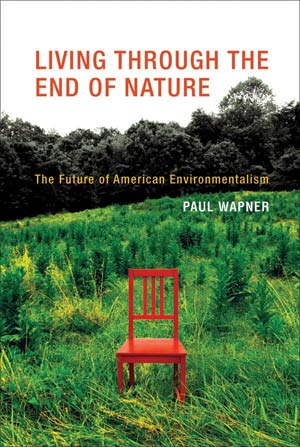
I would want a casual reader to focus on the last chapter, “Being an Environmentalist: Decisive Uncertainty and the Future of American Environmentalism.”Here I explain that, without nature, environmentalism becomes a practice in uncertainty. Without a secure philosophical and empirical foundation, environmentalism must begin to live in a world without gods, a world in which decisions about how best to live are worked out in the midst of collective life. Specifically, they are worked out in the tension that exists between the dual dreams of naturalism and mastery.In the last chapter, I recommend that we work on behalf of environmental wellbeing by fashioning ourselves as parents toward the more-than-human world.As parents, we both mold and behold our children. We shape how they understand and experience the world, and marvel at their own otherness. Our children, then, are an amalgam of their own selfhood and our influence on them—as well as many other things. We should intervene in their lives in ways that enhance their own as well as our wellbeing.Likewise, we should recognize that, whether we like it or not, we are constantly shaping the nonhuman world—and we should do so in ways that both mold and behold that world. We should relate to it in a way that takes seriously the co-evolutionary character of contemporary earthly affairs, and seeks a middle path through the urge toward naturalism and mastery.Living through the End of Nature offers a nuanced look at our contemporary challenges as environmentalists—both collective and personal challenges. So my hope is that environmentalists will read it and wrestle with its implications.I believe the book can provide some solace for those of us who overwork ourselves in a frenzied anxiety to “save the planet,” and inspire those of us who are paralyzed by the immensity of our collective, environmental work to reengage on behalf of all life. Along these lines, the book can help to the degree it provides an honest and humble path toward a green, just future.