
Barry Friedman
The Will of the People
Throughout history there has been one main claim leveled at the Supreme Court: that when it strikes down laws on the basis of the Constitution, it is interfering with democracy. This is the main academic claim to which I respond.
The very same claim can be heard in the political arena—all the time. Lincoln said it about Dred Scott, holding Congress powerless to do anything about slavery. Franklin Roosevelt said it about the many decisions striking down New Deal measures.
Indeed, this is the claim you can expect to hear if the current Supreme Court, headed by Chief Justice John Roberts, were to strike down the new health care law.
But the claim is ironic. Think about it. It is exactly parallel to the claim that the Supreme Court should protect minorities, or unpopular rights. When the Court does this, it often is interfering with the will of the majority.
In truth, people typically love—or hate—the Supreme Court, not based on whether it is “anti-majoritarian,” but based on whether they agree or disagree with what the Court is doing.
In The Will of the People I argue that, most often, the “anti-majoritarian” rhetoric is just plain wrong.
The Court doesn’t always follow popular opinion—nor should it. But in the most contentious issues in society, be it the death penalty, civil rights, the power of the national government, gay marriage, or much else, the Justices eventually come into line with popular opinion.
The real puzzle is why.
I have two main arguments. First, the Justices live in the same world as the rest of us, and are influenced by the same cultural and political phenomena. Second, the Justices have no choice.
We think of the Justices as independent. They hold offices for life, can’t be fired, can’t have their salaries diminished.
But in this book I show that plenty of bad things have happened to the Court. The Court has been “packed” to change outcomes. It has had its jurisdiction to hear cases stripped. One Justice was impeached. The Justices have had their salaries frozen. They have been hung in effigy...The Justices know all this—and they are careful to make sure that for the most part they stay on the good side of public opinion.
Editor: Erind Pajo

The Will of the People
Barry Friedman The Will of the People: How Public Opinion Has Influenced the Supreme Court and Shaped the Meaning of the Constitution Farrar, Strauss and Giroux 624 pages, 5 1/2 x 8 1/2 inches ISBN 978 0374532376 ISBN 978 0374220341
Available here →April 4, 2011
20110404-friedman-barry-will-people-public-opinion-influence-supreme-court-2
The wide angle
The rest of this thread
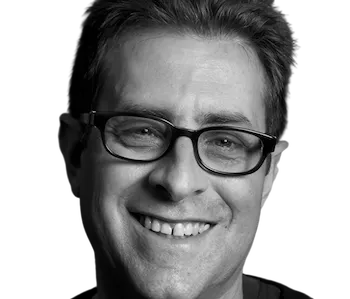
Barry Friedman
Barry Friedman is the Jacob D. Fuchsberg Professor of Law at New York University School of Law. For twenty-five years, he has had one foot in the academy and one foot in legal practice. He has been a clerk with Judge Phyllis Kravitch on the Eleventh Circuit, practiced at Davis, Polk & Wardwell, taught at the University of Alabama, Georgetown University, Vanderbilt University, and now NYU. He has published over fifty academic articles in leading journals, and, along with Steven Burbank, co-edited Judicial Independence: An Interdisciplinary Approach. Friedman has been the affiliate president of the American Civil Liberties Union of Tennessee, and he contributes regularly to The New Republic, The New York Times, The American Lawyer, Forbes.com, and others. The Will of the People, featured in his Rorotoko interview, is his first book.
Pull this thread
Over time the Supreme Court comes into line with public opinion, so the charge of anti-majoritarian judicial review is wrong.
Know something the rest of us don't?
Most threads on Rorotoko begin with our invitation. Any thread can begin with a proposal: you write it with the same prompts every thread answers, and we review it.
Propose a thread →