
Michael B. Katz
Why Don't American Cities Burn?
If you come across this book in a bookstore, I hope you will browse the Prologue, “The Death of Shorty,” and that it will draw you in to the rest of the book. Even if it does not, the story provides a concrete, vivid illustration of all the book’s themes. It shows how complicated and interconnected the issues are, and it reminds readers that the historical and sociological material in the book refers to real people, human beings struggling to survive with some dignity on the mean streets of North Philadelphia and other American cities.
I would point readers, too, to the section on the “management of marginalization” in the title chapter.
For it highlights aspects of everyday experience whose significance is easy to miss. And it limns modern techniques for keeping the peace in the face of persistent, and growing, inequality. This is an area in which America is a world leader.
If you pick up the book, please also browse the Epilogue and think about the wonderful quotation from the brilliant urbanist Anaya Roy with which the book ends. I want readers to understand what the book calls “the existential dilemma of urban studies” and enter the conversation about how we can shape a new narrative that energizes, not depresses, the bright young people who want to help build a better urban future.
I want readers to take away at least four things from this book.- An understanding of urban transformation and its consequences. To comprehend the world in which we live we need to toss out older ideas of city, suburb, and urban.
The exercise is not just intellectual. It is necessary if we are to develop policies to respond to the situation as it is, not as it was not so very long ago.- An ability to criticize statements that attribute poverty to the failings of individuals. By this point in history, it should be clear that the attribution of poverty to personal defect along with the hoary idea of the undeserving poor are intellectually bankrupt and incapable of pointing the way to effective strategies for substantially reducing the unacceptable extent of poverty in America.- An appreciation of the positive role of government and a healthy skepticism about the ability of privatization and policies based on market-models to solve major social problems. The denigration of government is one of the most corrosive public trends in recent American history. Its ugly consequences are all around us. Without strong, effective government, a vibrant, successful democracy is impossible.- A willingness to reject the idea that there is no alternative. TINA, as the late Daniel Singer called the idea, is a powerful ideological control mechanism for disabling protest and creative thinking about possibilities for change and alternative policies. Alternatives always have existed, as they do today; the question is whether we have the imagination and will to make them happen.
Editor: Erind Pajo

Why Don't American Cities Burn?
Michael B. Katz Why Don't American Cities Burn? University of Pennsylvania Press 240 pages, 6 x 9 inches ISBN 978 0812243864
Available here →February 6, 2012
20120206-katz-michael-on-american-cities-3-1
A close-up
The rest of this thread
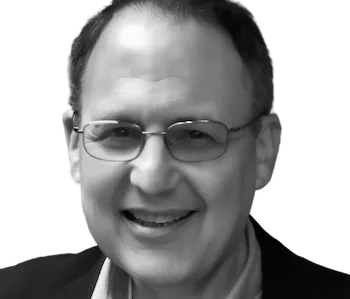
Michael B. Katz
Michael B. Katz is Walter H. Annenberg Professor of History at the University of Pennsylvania. He has written widely on education; urban, social and family structure; poverty and social welfare; and cities. Besides Why Don't American Cities Burn?, featured on Rorotoko, his books include The Price of Citizenship: Redefining the American Welfare State and, with Mark J. Stern, One Nation Divisible: What America Was and What It Is Becoming.
Pull this thread
American cities stopped burning not because conditions improved but because violence turned inward.
Know something the rest of us don't?
Most threads on Rorotoko begin with our invitation. Any thread can begin with a proposal: you write it with the same prompts every thread answers, and we review it.
Propose a thread →