
Iftikhar Dadi
Modernism and the Art of Muslim South Asia
Chapter 3 is devoted to the celebrated artist Sadequain (1930–1987) who introduced calligraphic motifs in his modernist paintings and drawings. Sadequain’s residence in Paris during the 1960s is of fundamental importance for the development of his calligraphic concerns. By the early 1960s, Sadequain’s works foregrounded the artist-and-model genre, which Picasso had earlier explored in the 1930s in his Vollard Suite, and which investigates the reflexive question incessantly asked by the modern artist: What to paint and how? This question is immeasurably more difficult for an artist from the periphery to answer, were Sadequain to depend only upon the conception of modern art as a European formation.
This leads him back to calligraphy and Urdu poetry.
By the late 1960s, Sadequain’s work relays classical, poetic, and textual notions of subjectivity available to Urdu poetry, into the visual, especially in poet Muhammad Iqbal’s Sufi, Nietzschean, and Bergsonian ideas of dynamism and heroic subjectivity. In this process, Sadequain reformulates classical calligraphy as a viable visual “tradition” open to the modern, a maneuver that parallels the rise of calligraphic modernism by other artists in West Asia and North Africa.
Sadequain is also distinctive for continually seeking a broader audience for his works. His zeal in executing large public murals, his roadside displays of art, and his successful popularization of calligraphic paintings created new relationships between the artist and an expanded public.
The chapter also examines these new relationships that emerged during the course of his career.
It is now common to understand contemporary art (post 1990) as global. My study argues that artists’ concerns since the early twentieth century were inextricably transnational. I locate the question of globalization and art much earlier than usually accepted.
The book also discusses the passage of modernism into contemporary practice from the 1970s on—by examining two artists in some detail, Rasheed Araeen and Naiza Khan.
The seriousness of their work relays and transforms modernism’s abiding concerns with subjectivity and tradition into the present. In this sense, both artists are exemplary of critical contemporary art practice that needs to be understood in multiple and overlapping, yet specific historical trajectories, rather than being located simply in an ahistorical, homogenized and spectacular postmodern globalist realm of late finance capitalism.
While artists do participate in broader contemporary dilemmas, a proper accounting of their work still requires a deeper engagement with their specific trajectories. This has remained a challenge for scholarly understanding of much modern and contemporary global art in which historical and intellectual context remains largely unexplored, and which this book hopes to partially remedy by tracing one significant thread in its formation.
Editor: Erind Pajo

Modernism and the Art of Muslim South Asia
Iftikhar Dadi Modernism and the Art of Muslim South Asia University of North Carolina Press 360 pages, 6 1/2 x 9 1/2 inches ISBN 978 0807833582
Available here →March 26, 2012
20120326-dadi-iftikhar-on-modernism-art-muslim-south-asia-3-1
A close-up
The rest of this thread
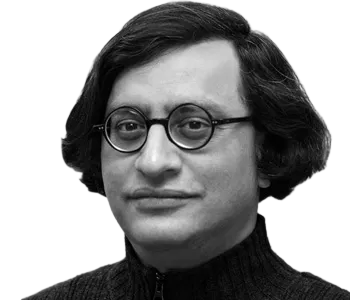
Iftikhar Dadi
Iftikhar Dadi is Associate Professor in the Department of History of Art, and Chair of the Department of Art at Cornell University. Research interests include postcolonial theory, and modern art and popular culture, with emphasis on South and West Asia. He has authored and co-edited numerous books, including Lines of Control: Partition as a Productive Space (2012), and his essays have appeared in numerous journals and edited volumes. Co-curated exhibitions include Lines of Control (2012), Tarjama/Translation (2008-10), and Unpacking Europe (2001-02). As an artist he collaborates with Elizabeth Dadi and has shown widely internationally.
Pull this thread
Pakistan's celebrated modernists belong to a transnational Muslim South Asian modernism, not a national one.
Know something the rest of us don't?
Most threads on Rorotoko begin with our invitation. Any thread can begin with a proposal: you write it with the same prompts every thread answers, and we review it.
Propose a thread →