
Jonathan Gottschall
The Storytelling Animal
You might not realize it, but you are a creature of an imaginative realm called Storyland. Storyland is your home and before you die you will spend decades there. If you haven’t noticed this before, don’t feel bad: story is for a human as water is for a fish—all encompassing and not quite palpable. While your body is always stuck at a particular point in space-time, your mind is always free to ramble in lands of make-believe. And it does.
We read novels. We go to movies. We watch TV serials, and the faux non-fiction of reality shows and pro wrestling. We groove to ultra-short fictions in popular songs. We lose ourselves in video games that make us the rock-jawed heroes of action films (or fleshed-out characters in story-rich games like The World of Warcraft).
When we are not consuming stories made up by others, we are making up our own. Our children play at story by instinct—inventing scenarios and acting them out in Neverland. When our bodies sleep, our restless minds stay awake all night telling fevered stories. And we don’t stop dreaming when the sun comes up.
We spend hours per day spontaneously generating daydreams in which all of our vain, dirty wishes—and all of our secret fears—come true.
Scientists and philosophers have long debated the human essence—the thing that sets us apart most fundamentally from the rest of creation. Is it intelligence (Homo sapiens)? Is it the sophistication of tool use (Homo habilis)? Is it upright posture (Homo erectus)? Is it playfulness (Homo ludens)? Or could it be language or the complexity of our social behavior? These factors are all important, but an equally important factor has been overlooked. Big brains and upright posture set us apart—so does the way we live in Storyland. I give you Homo fictus (fiction man), the great ape with the storytelling mind.

Kung San Storyteller. 1947. Photograph by Nat Farbman.
Editor: Erind Pajo

The Storytelling Animal
Jonathan Gottschall The Storytelling Animal: How Stories Make Us Human Houghton Mifflin Harcourt 272 pages, 5 3/4 x 8 1/4 inches ISBN 978 0547391403
Available here →April 16, 2012
20120416-gottschall-jonathan-on-storytelling-animal-how-stories-make-human-1-1-1
In a nutshell
The rest of this thread
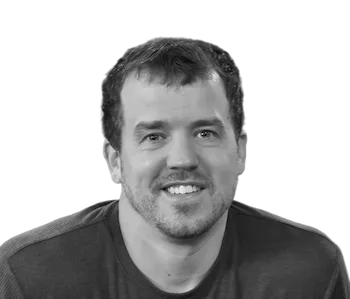
Sam Fee
Jonathan Gottschall
Jonathan Gottschall teaches in the English Department at Washington & Jefferson College, is the author or editor of six books, and is one of the leading figures in a new effort to bridge the humanities-sciences divide. While his Ph.D. is in English, his main dissertation advisor was the prominent evolutionary biologist David Sloan Wilson, and he splits his publishing between psychology and literary journals. Gottschall’s work has been featured and quoted in venues such as the New York Times, The New York Times Magazine, Scientific American Mind, New Scientist, the Chronicle of Higher Education, Nature, and Science.
Pull this thread
Story, not intelligence or language, is what most sets humans apart.
Know something the rest of us don't?
Most threads on Rorotoko begin with our invitation. Any thread can begin with a proposal: you write it with the same prompts every thread answers, and we review it.
Propose a thread →