
Nicholas D. Paige
Before Fiction
No question, the best way to dip into Before Fiction is by skipping the short Preface and getting right to the Introduction. That’s where I lay out and illustrate my big-picture narrative—those three regimes of literary invention I call the Aristotelian, the pseudofactual, and the fictional.In some sense this introduction is really a separate study in its own right: it doesn’t so much miniaturize the argument of the rest of the book as provide a prolegomenon for the individual studies. In other words, the chapters don’t flesh out contentions I make schematically in the Introduction; rather, the Introduction provides the context against which the intricacies of the individual works make sense. I’ll just assume that most people are interested in the big picture, especially since it ranges freely between England and France (and back to ancient Greece), whereas the works I treat in depth are all French.The individual novelists I analyze don’t lead from one to the next, I’ve said; and so while there’s a certain (mostly chronological) logic to the ordering of the chapters, readers wanting more than the big picture can pick and choose from the case studies in accordance with their interests.One of the most popular accounts of the modern novel sees it springing from Don Quixote, the book that (it is said) destroys primitive romance. Readers wondering how my history deals with Cervantes can dig into the only chapter treating a forgotten novelist, a writer who tried to update the Quixote in 1670.Others may recall a famous essay by the historian Robert Darnton that argued that readers of Rousseau’s Julie were so naïve as to believe that the epistolary novel was composed of real letters. My chapter on Rousseau aims to lay this canard to rest and to show why positing fiction as a late development doesn’t at all commit us to seeing earlier readers as somehow congenitally daft or conceptually short-changed.Fans of the supernatural may want to read the chapter on a short novel often advanced as the first example of the fantastic—a genre that tries to shake momentarily the reader’s confidence in reason and the laws of nature. It’s also a genre that, on reflection, seems the perfect embodiment of fiction itself, since it’s bent on seeming real despite the reader’s knowledge that it can’t be. And indeed, Cazotte’s The Devil in Love (1772) is fiction. But I show that this fictional status is rather accidental, and doesn’t in any way hasten the coming of the fictional regime.Such is the case with all the works I look at. If we know—as we do—that fiction’s coming, it’s hard not to look at earlier works that play with their own truth status as harbingers. But they’re not. They buck the system. They don’t change it.Failed hypotheses are a normal part of scientific research—you test a hypothesis, it doesn’t work, you come up with something better. But literary scholars don’t usually design their projects like that. I certainly didn’t: I borrowed a narrative (the rise of the fictional novel), lined up some cases I thought would support it, and hoped for some new insights along the way. In the end, however, I couldn’t make my texts fit the narrative, and so I came up with something that seemed much more plausible—the idea of the three regimes. Unfortunately, this new narrative, by its very nature, was no longer of a sort that could be supported by the very texts that had suggested it. I had spent many years writing about works that no longer added up to anything. The book’s chapters are really orphans.But I’m not sad about that, because I think that the book points forward, toward new ways of studying the evolution of the novel.I very much second the initiative of Franco Moretti, who has been arguing tirelessly that close reading of a few classics will never tell us anything about larger generic systems that come and go. And he points out how much of the literary record is terra incognita: “All literary scholars analyze stylistic structures—free indirect style, the stream of consciousness, melodramatic excess, whatever. But it’s striking how little we actually know about the genesis of these forms. Once they’re there, we know what to do; but how did they get there in the first place? Concretely: what are the steps? No one really knows.”When he says that we know what to do, he means that we’re ready to rush in with interpretations. If you want to know why Austen or Flaubert used free indirect style, you have your pick of clever explanations. But if you want to know how free indirect style might have arisen or spread outside or between such figures, you’re pretty much out of luck.According to my narrative, pseudofactual pretense gave way around 1800 to fictionality. But how do I know this, given my refusal to read such a shift in individual works? I don’t: it’s a hypothesis derived from a number of different coordinates. The real testing remains to be done, and it lies in a serious historical inventory of novelistic forms and devices. We have good figures on the rise and fall of the epistolary novel, for example; but we know rather less about, say, the frequency with which the form is presented as true. Likewise, we don’t know much about the spread of third-person forms of narration that dominate the nineteenth century—forms that don’t have the pretence of truth built into them, as it were. Think of such forms and devices as technologies: people invent and perfect them to do things, later dropping or supplementing them with alternate technologies. That’s what I think we need: a history of the novel’s many succeeding and competing technologies.
Editor: Erind Pajo

Before Fiction
Nicholas D. Paige Before Fiction: The Ancien Regime of the Novel University of Pennsylvania Press304 pages, 6 x 9 inches ISBN 978 0812243550
Available here →May 21, 2012
20120521-paige-nicholas-on-before-fiction-ancien-regime-novel-3-1
A close-up
The rest of this thread
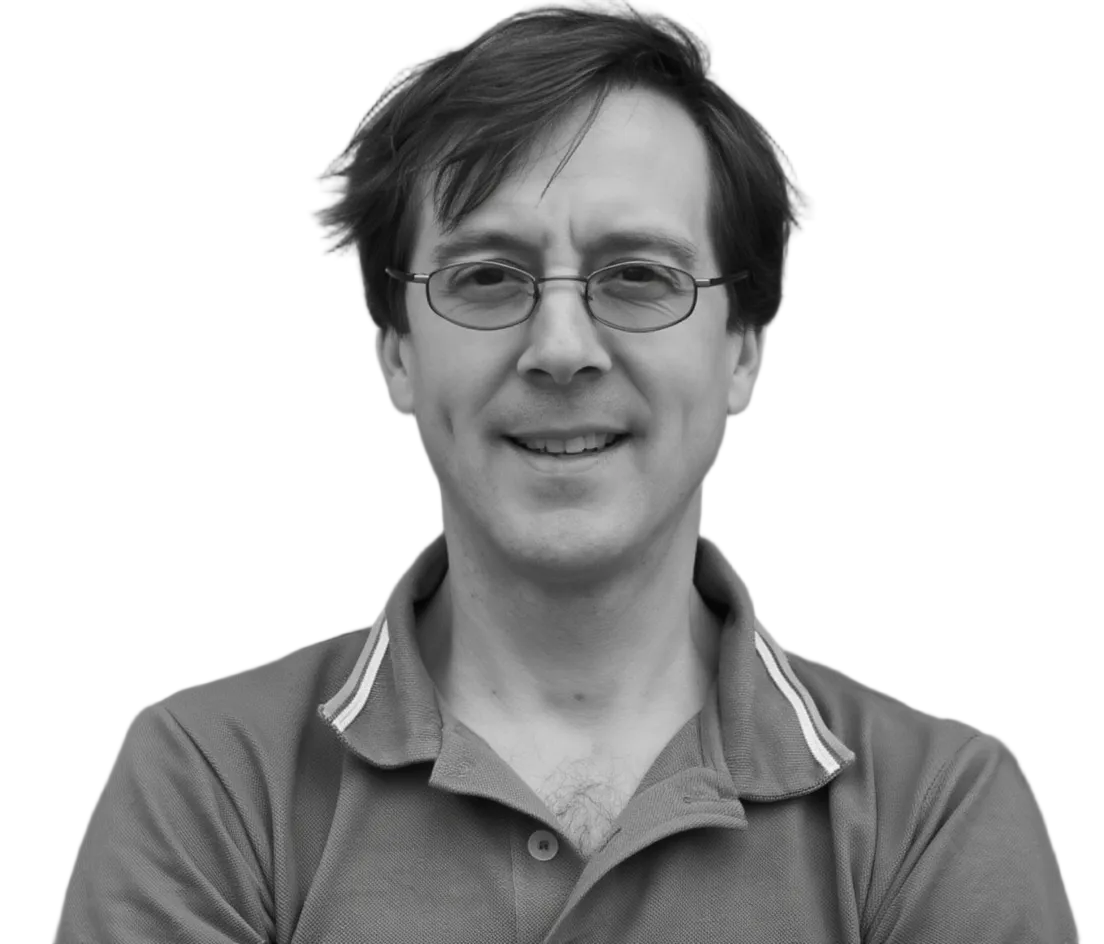
Nicholas D. Paige
Nicholas Paige is Professor of French at the University of California, Berkeley. In addition to Before Fiction, featured on Rorotoko, he is the author of Being Interior: Autobiography and the Contradictions of Modernity (Penn, 2001) and various articles on subjects ranging from early theories of the “fourth wall” to the cinema of Jean-Luc Godard. He has also translated Lafayette’s 1670 novel Zayde: A Spanish Romance (Chicago, 2006).
Pull this thread
Fiction did not rise, and the modern refusal to care whether characters existed is the historical anomaly.
Know something the rest of us don't?
Most threads on Rorotoko begin with our invitation. Any thread can begin with a proposal: you write it with the same prompts every thread answers, and we review it.
Propose a thread →