
Judith Weisenfeld
New World A-Coming
I begin the book with the stories of a number of men who were members of the Moorish Science Temple, the Commandment Keepers Ethiopian Hebrew Congregation, and Father Divine’s Peace Mission registering for the draft in April 1942. Each refused to be classified as Negro and asked the draft registrar to substitute what they believed was the correct religio-racial designator.
These stories are a great entry point for the project because they highlight the high stakes of religio-racial assertions for members of these groups. At this significant moment of military registration, where issues of race, racism, national belonging and exclusion were evident, these men insisted that they be represented as they believed God had created them rather than how the government chose to classify them.
The draft cards themselves showcase the kinds of sources on which I drew to tell the story of average members of the religio-racial movements. While sermons, scriptures, correspondence, and newspaper articles were important sources, I also turned to records like birth and death certificates, marriage licenses, wills, FBI surveillance files, state and federal censuses to track average members. These kinds of documents, that capture moments in everyday life and in public actions from birth to death, reveal the extent and power of members’ embrace of religio-racial identities.I hope that readers will come away with tools to think about the complicated ways that race and religion have interacted with one another in American history.
Ideas about race, racial categories, and racial identities have changed over time, and religion has contributed to how Americans have thought about race, enacted policies that maintain racial hierarchy, and move through the world as racialized beings.
The specific case of the religio-racial movements highlights the complexity of conceptions of race among early twentieth-century African Americans and black immigrants from the Caribbean. Recent discussions of the possibility of a post-racial America assume that race is fixed and that people inhabit obvious categories. The history of these groups shows a more complicated story. Their perspectives may not have become the dominant ones, but their challenge to conventional understandings of racial identity and the role of religion in black life took place in a larger context of discussion about the meaning of blackness.Exploring the histories, beliefs, and practices of the religio-racial movements also encourages us to recognize diversity within African American religious life.
These groups have long been characterized as cults in a way that marginalizes them as illegitimate in relation to religious orientations considered acceptable in the American context. As a label, cult perhaps says more about the assumptions of the person deploying it than about the theological and social characteristics of any particular movement. Describing the groups in a way that I think captures what motivated participants avoids privileging certain religions as authentic and true over against others that are denigrated as invented and false. Rather than labeling the groups cults and attaching assumptions to them, such an approach requires attending to their specific theologies and practices as well as situating them within the broader landscape of American religious life.
Editor: Judi Pajo

New World A-Coming
Judith Weisenfeld New World A-Coming: Black Religion and Racial Identity during the Great Migration NYU Press368 pages, 6.2 x 9 inches ISBN 978 1479888801
Available here →April 19, 2017
20170419-weisenfeld-judith-on-new-world-a-coming-black-religion-3-1
A close-up
The rest of this thread
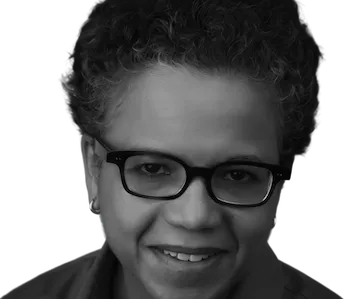
Judith Weisenfeld
Judith Weisenfeld is Agate Brown and George L. Collord Professor of Religion and associated faculty in the Department of African American Studies at Princeton University where she has taught since 2007. In addition to New World A-Coming: Black Religion and Racial Identity during the Great Migration, featured in her Rorotoko interview, she is the author of Hollywood Be Thy Name: African American Religion in American Film, 1929-1949 (California, 2007) and African American Women and Christian Activism: New York’s Black YWCA, 1905-1945 (Harvard University Press, 1997). She is an also editor of the journal Religion and American Culture.
Pull this thread
For their members, Asiatic Muslim or Ethiopian Hebrew was one indivisible religio-racial claim, and Negro a category manufactured in slavery.
Know something the rest of us don't?
Most threads on Rorotoko begin with our invitation. Any thread can begin with a proposal: you write it with the same prompts every thread answers, and we review it.
Propose a thread →