
Stephen Sheehi
The Arab Imago
The introduction is a fruitful place to meander and to get a sense of the book. It covers a lot of ground. It also provides a short, traditional overview of the master narrative of the history of photography of the Middle East. It introduces some enframing issues of photographic portraitures and some teasers to the content of the book. It opens with an unknown vignette about the first photograph of the Prophet’s Mosque in Medina, taken by Muhammad Sadiq, a Khedival topographer and pioneer photographer of the Hajj. The introduction is also the place where I recognize my shortcomings, where I could not go, and the spaces left that we need to explore. Namely, I recognize that most of the photographers I studied are male and that there is a larger unwritten, indeed invisible, history of women’s participation in early photographic ateliers. I recognize the central role of Armenians, which I cannot fully access because of language limitations. I also recognize that there are a number of other photographic genres (group portraits, candid photography, scientific photography, amateur photography, etc.) that emerged between 1860 and 1910 that I could not explore.I believe the implications of Arab Imago are potentially far-reaching, but depend on the field in which it is read. Within Middle East Studies, the book explores the uncharted history of indigenous “Arab” photography, solidly engaging particular photographers as representative of certain practices and certain formalistic features and expressive of important social conditions, realities, and transformations. It locates photography as a social and commercial practice, with political, economic, and cultural effects within the late Ottoman Empire.Within the larger field of photography studies and visual culture, I do believe that reading the “manifest” and “latent” content of indigenista photography reaches across a number of geographies, traditions, and temporalities. I would like to think that the Arab Imago interrogates the Eurocentric nature of the history of photography, projecting all forms of “non-Western” photography as derivative tributaries to the main source in France and England. Without discounting the power and violence of Orientalist and colonial photography, I hope to show that local photographic practices in the Middle East operated within their own particular contexts even though these contexts are always caught in imperialism’s gravitational pull.My hope for the Arab Imago is that it will inspire explorations into indigenista photography of the Arab world, and that it will encourage a conversation not only with European and American scholars of photography, but also with scholars of Asian, African, and South American photography. It is only through this truly collective discussion that we can really understand the true nature, hues, and complexities of the history of photography.
Editor: Judi Pajo

The Arab Imago
Stephen Sheehi The Arab Imago: A Social History of Portrait Photography, 1860–1910Princeton University Press264 pages, 7 x 10 inches ISBN 978 0691151328
Available here →May 24, 2017
20170524-sheehi-stephen-on-arab-imago-social-history-portrait-photography-3-1
A close-up
The rest of this thread
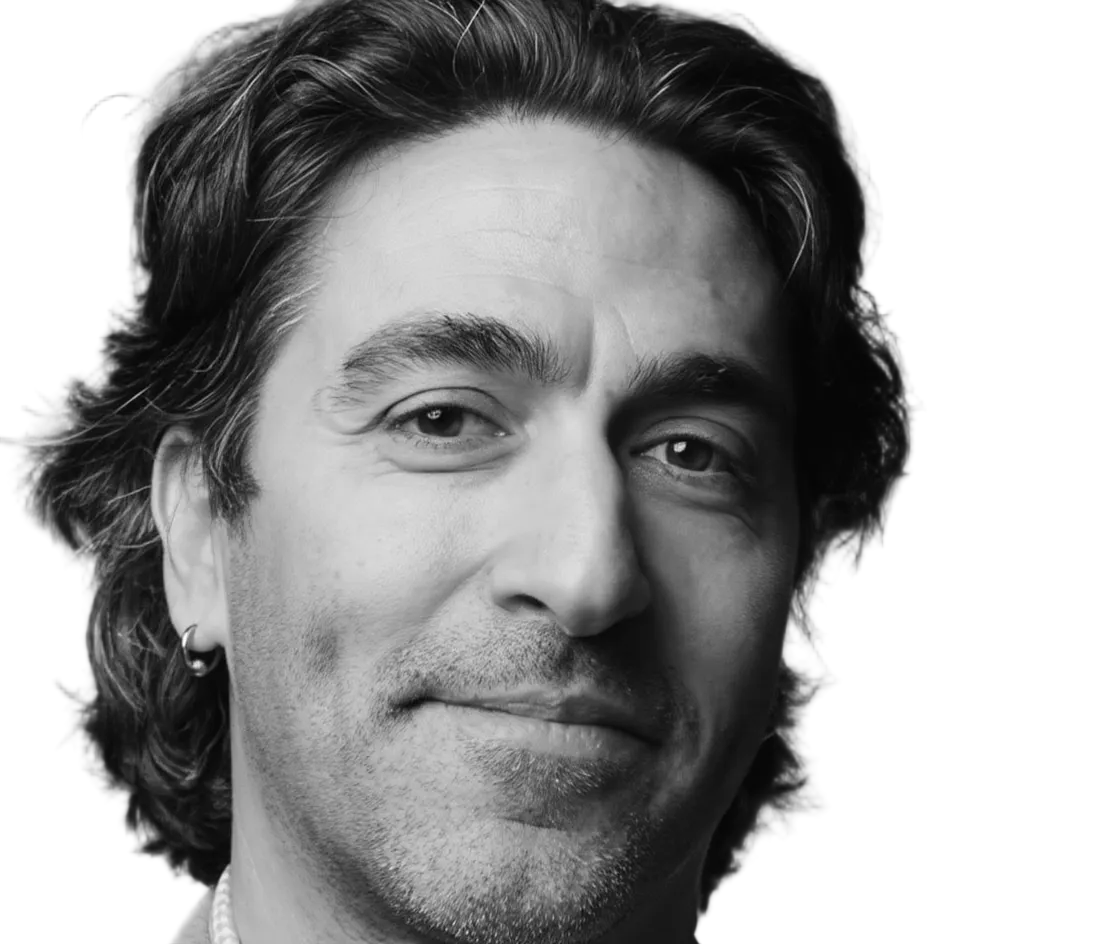
Stephen Sheehi
Stephen Sheehi is Sultan Qaboos bin Said Chair of Middle East Studies, Director of the Asian and Middle East Studies Program, and Professor of Arabic Studies in the Department of Modern Languages and Literature at the College of William and Mary.
Pull this thread
Where Arab Ottoman photography resembles European photography, the resemblance is evidence of shared practice, not imitation.
Know something the rest of us don't?
Most threads on Rorotoko begin with our invitation. Any thread can begin with a proposal: you write it with the same prompts every thread answers, and we review it.
Propose a thread →