
Maha Nassar
Brothers Apart
In the fourth chapter, “Palestinian Spokesmen,” I discuss little-known dimensions of two famous Palestinian writers: Mahmoud Darwish and Ghassan Kanafani. While Darwish is best known for his poetry and Kanafani is best known for his novels, I analyze their journalistic essays from the early 1960s to mid-1960s instead. In doing so, I show that they were part of a generational cohort that was instrumental in the shift toward an intellectually grounded Palestinian national liberation project.For example, I discuss previously unknown essays by a young Darwish in which he insisted that a writer must be engaged with decolonization projects at home and abroad to be of any relevance in the world. These essays, along with his on-the-ground political activism, put into context his early poetry, including his most famous poem, “Identity Card.”
Kanafani, who was exiled from Palestine in 1948 and lived in Beirut, was a champion of the Palestinian literary figures in Israel at a time when no one else had even heard of them. He published an essay about them in the prestigious, Beirut-based cultural journal, al-Adab, in 1966. While Kanafani’s appraisal of them would not get traction among other Arab intellectuals until after the 1967 War, his early work shows the determination of Palestinian intellectuals in exile to bring Palestinians together through literature since they could not physically meet each other.
This chapter demonstrates the centrality of texts in the organic development of Palestinian nationalism among intellectuals who span across different geographic locations. It also highlights the ways in which these intellectuals were deeply involved in politics, activism and political organizing, providing a vivid example of what Antonio Gramsci referred to as “organic intellectuals.”I hope Brothers Apart will help readers develop a more nuanced understanding of Palestinian culture and society.
Palestinians are rarely mentioned in American media outlets unless there is an uptick of violence or heightened tension with Israel. I hope that cultural and intellectual histories like this one will allow for a deeper and more multidimensional appraisal of the Palestinian condition. Central to this appraisal is the role of writings in their history. With a few exceptions like Darwish and Kanafani, Palestinian writers are still largely unknown to non-specialists. But Palestinians have a rich literary tradition that should be understood as part and parcel of Palestinian politics and society more broadly.
A broader implication of my book, which I am expanding upon in my newer projects, relates to the numerous parallels between Palestinian citizens of Israel and Black Americans. Groups like Black for Palestine are highlighting the parallels between structures of oppression facing Black Americans and Palestinians under occupation today.
But there are also parallels that Black Americans and Palestinian citizens of Israel share, such as dealing with police brutality and unequal economic and educational opportunities. Black Americans and Palestinian citizens of Israel also face similar racialized discourses of “criminality,” “laziness,” and “danger.” There is a history to these parallels as well. In a 1966 essay, Darwish wrote that when he read James Baldwin’s book, Nobody Knows My Name, he felt as if Baldwin was speaking directly to his own experiences as a Palestinian in Israel.Finally, I hope this book will inspire a broader rethinking of who is recognized as an intellectual.
Today, we often think of “intellectuals” as part of the social and cultural elite: they hold advanced degrees and have well-paid positions that allow them to demonstrate their scholarly knowledge. But there are many organic intellectuals in America and around the world who are also leaders in social justice and other movements, and often their ideas are not taken as seriously. Intellectuals who are also engaged in on-the-ground organizing have had their ideas put to the test in the most direct way possible. We should be paying closer attention to them.
Editor: Judi Pajo

Brothers Apart
Maha Nassar Brothers Apart: Palestinian Citizens of Israel and the Arab World Stanford University Press 288 pages, 6 x 9 inches ISBN 978 1503603165
Available here →March 12, 2018
20180312-nassar-maha-on-book-brothers-apart-palestinian-citizens-israel-3-1
A close-up
The rest of this thread
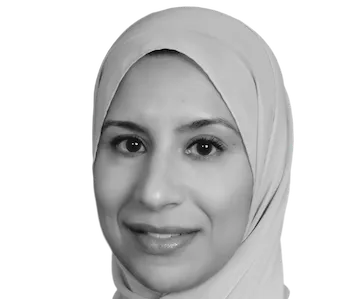
Maha Nassar
Maha Nassar is assistant professor in the School of Middle Eastern and North African Studies at the University of Arizona. She holds a Ph.D. in Near Eastern Languages and Civilizations from the University of Chicago. She is the author of several scholarly articles that have appeared in the Journal of Palestine Studies and Arab Studies Journal, among others. Dr. Nassar is also a Public Voices Fellow with the OpEd Project whose articles have appeared in The Washington Post, The Conversation, and Middle East Report.
Pull this thread
Palestinian citizens of Israel in the 1950s and 1960s were active participants in the Afro-Asian decolonizing world.
Know something the rest of us don't?
Most threads on Rorotoko begin with our invitation. Any thread can begin with a proposal: you write it with the same prompts every thread answers, and we review it.
Propose a thread →