
David Farber
Crack
While Crack is, as books go, on the slim side, it covers a lot of ground. While I hope the chapters on the history of cocaine, the lure of crack, and the crackdown on crack cocaine will captivate readers, I think many will be most fascinated by the chapters in the book that explore the crack trade as a business. To explain how crack distribution worked, I touch on a lot of different places and people, but I concentrate on the history of the crack industry in two cities: New York and Chicago.
Of New York, I tell the story of the “Supreme Team,” which operated in Queens. Led by Kenneth “Supreme” McGriff, this crack crew became notorious for its economic success and for the violence the crew used to protect and expand its business. The Supreme Team became the stuff of Hip Hop myth and legend. In real life, as readers will learn, things went less well for most of the Team’s leadership, many of whom, decades after their criminal organization was taken down, are still imprisoned.
Chicago’s crack distributors emerged out of the city’s well-organized and powerful street gang culture. At the top of the crack pyramid in Chicago stood the Gangster Disciples (GDs), led from prison by the irrepressible Larry Hoover (the man Kanye West asked President Trump to pardon in 2018). The GDs controlled many of the massive public housing projects in Chicago and at one point had tens of thousands of gangsters selling crack cocaine in a highly organized and disciplined network. Along with their main rivals, The P. Stone Nation, the GDs had the city locked up tight. The story of crack distribution in Chicago in the 1980s and 1990s is an alternative history of life in America as it is usually told. It was a difficult history to research, and I think it is the part of the book that will hit readers the hardest.
In part, I wrote Crack to tell a dark story, a historical accounting of the underside of the American dream. We’ve grown inured, I think, to words like economic inequality, racism, and mass incarceration—for many, they have lost their visceral impact. In Crack, I do my best to explore the lived experience of racial injustice, of what it felt like to endure grinding poverty, of how it felt to believe that your only opportunities were ignominious ones. And then to have discovered, as one of the men I interviewed called it, “white gold.”
In much of American society during the Age of Reagan and Reagonomics, disinvesting in inner city communities and denigrating people living in poverty became political common sense. In another part of American society, during that era, selling crack cocaine became an economic lifeline; it became a way to live out dreams of self-worth and material riches. And on the other side of that economic transaction, for too many poor people of color who had become economically dislocated and socially alienated from mainstream society, crack cocaine was a balm that offered solace for their hard lives.
Good history—even recent history—I think, places readers in a different world. In Crack, I want readers to see the world as it existed for many poor Americans, especially poor African Americans, at the tail end of the twentieth century. And I want readers to begin to understand why crack cocaine, as a product both to sell and consume, made sense to some of those people. This book about the crack cocaine industry in the last decades of the twentieth century explores how the go-go economy of that era looked to those on the wrong side of that era’s massive economic divide. It explores, too, how powerful Americans helped create that divide and then built a carceral state to house so many of those who had been left out of America’s bounty.
Editor: Judi Pajo

Crack
David Farber Crack: Rock Cocaine, Street Capitalism, and the Decade of Greed Cambridge University Press 222 pages, 6.2 x 9.2 inches ISBN 978 1108425278
Available here →November 6, 2019
20191106-farber-david-on-book-crack-rock-cocaine-street-capitalism-decade-3-1
A close-up
The rest of this thread
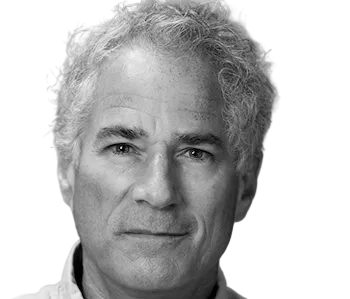
David Farber
David Farber’s books include Chicago ’68; The Age of Great Dreams; Taken Hostage; Sloan Rules; Everybody Ought to be Rich; and The Rise and Fall of Modern American Conservatism. He is currently the Roy A. Roberts Distinguished Professor at the University of Kansas. He and his wife, the historian Beth Bailey, live outside Lawrence, Kansas, on the prairie, in a house with a grass roof.
Pull this thread
Crack dealers were the Horatio Alger boys of a de-industrializing America.
Know something the rest of us don't?
Most threads on Rorotoko begin with our invitation. Any thread can begin with a proposal: you write it with the same prompts every thread answers, and we review it.
Propose a thread →