
Jason Pine
The Alchemy of Meth
If a potential reader were to simply browse the book, I hope they would quickly find a page from one of the meth cooks’ stories. They are sensitive, wounded people who have done things some people may not be able to accept. This tension would then stir up an upsetting feeling, and I would hope that the feeling stayed with the reader all the way, if they were to read the whole book. I originally wanted to publish the book without any introduction because I feel the stories speak for themselves. I wouldn’t want readers to get distracted by the introductory material, but because the book is very experimental in form it’s necessary to guide readers a little bit.
I spent lots of time with each of the cooks, except for Howard Lee, a person I never met and who I represent only through reproductions of the documents I found in his busted and abandoned trailer home.
All of the cooks wanted me to help them or others who might end up like them, or worse. I want a reader to get pulled in like I was and to feel the burden of reading like I felt it while listening. I want them to find a page from the story of Christian, which I found difficult to hear because of its resonance with the story of my own family. I want them to feel how he never had a chance. I want them to notice how I crossed the line while writing about his mother, nearly reducing her to his abuser. Then I want them to find the letter Christian wrote to me from prison, in which he describes his mother’s quirky rock collection and her deep care for animals, and how he loved her dearly. I want the reader to feel that the integrity of the author and of the book is at risk, sometimes barely holding together. Sometimes stories and people and places are laced with sadness, rage, and delusional hope, and that’s what holds them together.What can a book do?
This is the question The Alchemy of Meth poses in the very beginning. Book-writing was the task I was left with after some very distressing fieldwork in Missouri. People on the brink of coming undone pinned their hopes on my work. Maybe a book can influence policy, but what policy would the book target when the problems that underlie the scenes depicted are systemic? Maybe a book can serve as a self-help text, but that’s not my expertise and, at any rate, there’s a lot more that I want to convey.
The question is more pressing in the academy, where uncountable books are published and sold to small elite audiences year after year. The way that many academics write and the poor marketing resources of academic presses limit what a book can do.
The Alchemy of Meth is undoubtedly an academic text. It is grounded in some of the ideas that animate scholarly and artistic work of late. At the same time, it uses these ideas to test the limits of the containers that circulate them—that is, theoretical arguments, books, and intellectuals with composure. It is a decomposition that deforms everything. But all of this is likely more apparent to those readers who are looking for the book’s argument or know some of the literature that helped me write it.
The book is largely literary nonfiction. It is a storybook where readers are invited to identify with the protagonists. They are invited to go far into scenes worked up into strange material constellations, scenes they might not otherwise ever know, yet sense as somehow familiar. Storytelling can deeply affect readers and I hope that readers are moved enough to care about the people whose stories are in the book. And if they care about the people, then they probably will also pay attention to the bigger story of the toxic inheritances of late industrialism in places like northeastern Missouri, where making a decent living can feel forever out of reach. Or the even bigger story of late liberalism throughout the United States, where you can never expect enough from yourself, and where fatigue, malaise, and doubt are regarded as life aberrations that obstruct nonstop individual ‘growth.’ This is a story that we all live, in some measure, and if more of us pay attention to it, more of us might feel like we can actually refuse to live it.
Another limitation on what a book can do is the general decline in readers. I was very happy when Blackstone Publishing bought the rights to turn The Alchemy of Meth into an audiobook and chose me as the narrator. An audiobook might entice some readers back as listeners. It’s like I’ve been given one more chance to share these stories. And if I manage to share them with my most favored readers (or listeners), maybe they’ll feel that they matter a little more.
Editor: Judi Pajo

The Alchemy of Meth
Jason Pine The Alchemy of Meth: A Decomposition University of Minnesota Press224 pages, 5 1/2 x 8 1/2 inches ISBN 978 1517907716
Available here →March 18, 2020
20200318-pine-jason-on-book-alchemy-meth-decomposition-3-1
A close-up
The rest of this thread
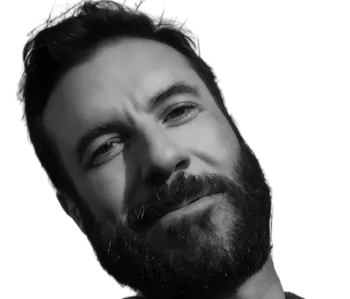
Jason Pine
Jason Pine is Professor of Anthropology and Media Studies at Purchase College, State University of New York. His research straddles the areas of political economy, political ecology, and medical anthropology. His first book, The Art of Making Do in Naples (Minnesota, 2012), is about a Neapolitan pop music scene operating in the margins of organized crime. His work has received the Premio Sila, the Berlin Prize, and support from the Wenner-Gren Foundation and the Science History Institute. Jason also works in other media: photography, video, installation, and performance lectures. In 2020 he narrated the audiobook version of The Alchemy of Meth, distributed by Audible.
Pull this thread
The American Dream is the gateway drug, and meth cooking is a hyperbolic version of coming undone while pursuing it.
Know something the rest of us don't?
Most threads on Rorotoko begin with our invitation. Any thread can begin with a proposal: you write it with the same prompts every thread answers, and we review it.
Propose a thread →