
Michael D. Gordin
Einstein in Bohemia
If you were to flip through the book in a bookstore, you might land somewhere around pages 85-90, or if not there somewhere else in chapter 3: “Anti-Prague.” The chapter as a whole is about Einstein’s daily life in Prague, and follows four different tracks: Einstein’s personal attitudes toward life in the city; the social circle he frequented, the salon of Berta Fanta, and its importance for putting him in contact with many influential figures in Prague’s later history; the deteriorating relationship between the physicist and his wife, which reached a breaking point in this period; and how Einstein negotiated a return to Zurich and eventually left the city. The page range I isolated is related to the first of these.
Einstein complained a lot about Prague. He wrote many letters to friends back in Zurich (and elsewhere), almost all of which denigrate both the city and the Habsburg bureaucrats who ran it. At times the correspondence can be amusing, but mostly it shows someone frustrated that things in his new home are not like Switzerland. The chapter is “anti-Prague” in two senses. First, that Einstein’s feelings toward the city were mostly negative. Second, that he developed his picture of a decaying Prague by contrast with orderly Zurich, which was an “anti-Prague” in the sense that a positron is an anti-electron: almost the same but with the opposite charge.
What were the gripes? Nothing especially shocking if you are familiar with the views of German travelers to the Slavic lands of East Central Europe. The water was bad, and you needed to boil it before drinking. There were bedbugs. Locals didn’t speak German enough or very well. The people were servile, they were “barbarians.” That might sound like strong language, but you should not judge Einstein too severely for it. His was a laundry list identical to other travelers’ complaints, and bedbugs are indeed unpleasant. That they also exist in Switzerland and Germany was not something Einstein noted. He also did not remark that Prague had electric lampposts on the street while Zurich still used kerosene. The contrasts all worked in one direction.
I do not want readers to judge Einstein as priggish and biased. When it came to encountering other cultures, his reaction was a very common one. That’s what I would hope readers took away from this episode: that Einstein was human, and he reacted to the world around him the way many people of his particular background and expectations would have done. Einstein may have been Einstein, but he was also a person.
My basic assumption is that you have heard of Albert Einstein. Most people have. More than that, you can probably even picture him. (A weird thing about this man is that whether the figure in the photo is young or old, people can unerringly identify Einstein.) Perhaps you can approximate a quotation that has been attributed to him. A lot of those are apocryphal or mistakenly assigned to Einstein, but no matter. You come to Einstein in Bohemia with a version of Einstein already there in your mind.
That’s likely less true of Prague. Perhaps you have been there. (If not, you should go when you can. It’s a really interesting place.) But even if you have not, it is a city worth learning about. For roughly a millennium, Prague has been a central node of European culture. Artists of all sorts have flourished there, ranging from baroque painters to opera composers (Mozart wrote Don Giovanni there) to arguably the most canonical author of the twentieth century, Franz Kafka. Although it has been the site of intense and violent conflict—the Hussite wars of religion in the fifteenth century, the Thirty Years’ War in the seventeenth, the Nazi occupation in the late 1930s, the Soviet-led invasion in the late 1960s—it has never been fully destroyed. There are medieval monasteries right next to modernist masterpieces.
What do you get by putting both together? I hope that you end up with a changed picture of both Prague and Einstein.
Prague is often presented as a city of the arts, a city of religion, a city of culture. It certainly was all that, but it has also been for centuries an important city of science. This should not be surprising, since science is part of culture and is nourished by it, but yet the point always seems to take people aback. My goal is that you will think of Prague as a place where knowledge was made, as well as a city that concentrated much of the best and sadly some of the worst of Europe across its long history. Einstein’s collision with Prague illuminates many of those aspects.
Principally, I would like the reader to see a different Einstein, and through him another way of thinking about identification and belonging. For a brief period, Einstein lived in the Austro-Hungarian province of Bohemia. Although he did not realize it at the time, the connections he made there, the thoughts he entertained, followed him throughout his life. Viewing Einstein through the prism of Prague brings certain features of his life into focus—especially his political views and his personality—while situating his science in a community of others.
I want people who read the book to think about what it means to be in a place, and perhaps to reflect on the places they have been, and the mutual impact of those moments.
Editor: Judi Pajo

Einstein in Bohemia
Michael D. Gordin Einstein in Bohemia Princeton University Press 360 pages, 5 1/2 x 8 1/2 inches ISBN 978 0691177373
Available here →April 1, 2020
20200401-gordin-michael-on-book-einstein-bohemia-3-1
A close-up
The rest of this thread
Nick Barberio
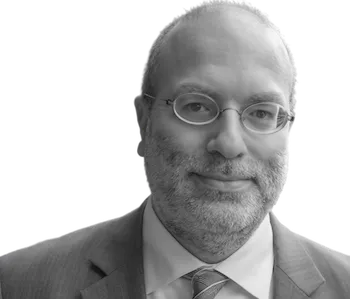
Michael D. Gordin
Michael D. Gordin, a historian of science, is Rosengarten Professor of Modern and Contemporary History and Director of the Society of Fellows in the Liberal Arts at Princeton University. Besides Einstein in Bohemia, featured in his Rorotoko interview, he is the author of five books, including Scientific Babel: How Science Was Done before and After Global English, two books on early nuclear history, a biographical study of Dmitrii Mendeleev, and a history of fringe sciences after World War II.
Pull this thread
Einstein's sixteen months in Prague were not a way station but left a lasting mark.
Know something the rest of us don't?
Most threads on Rorotoko begin with our invitation. Any thread can begin with a proposal: you write it with the same prompts every thread answers, and we review it.
Propose a thread →