
Cathy A. Small
The Man in the Dog Park
There are so many encounters, described in the book, which continue to affect me. Maybe the reader would stumble on one of them and see its poignancy. A strapping, homeless, youth walks with me (a 5’ 2”, 112 lb., female senior citizen) in an upscale neighborhood and turns to exclaim: “I feel so safe with you!” (He likes to look at people’s gardens and homes and feels that, without me there, residents would call the police).
A homeless day-laborer, working a back-breaking 10-hour construction job, is worried only that the other men on the crew will see he has no lunch when it is time to eat. A 44-year-old woman sneaks each night into the 10x10 storage unit she rents, because her minimum wage salary is not enough for an apartment in her town. These are just a few of the people whom readers might meet.
Probably, though, I would most want browsers to begin at the beginning. There (in the preface and the first pages of the introduction) they would see where I personally started with this: afraid of a homeless man I encountered one early morning when I came alone with my dog to a secluded dog park. And I would add: Completely unaware that anyone of the people in the stories above lived the lives they did.
From these initial pages, browsers would also get a sense of where one can go in crossing the boundaries into another world, at least, what it offered me: “not only a greater responsiveness to the human condition but also the delight of living in a world less alien, less hostile, less unloving than it felt before” (Preface, viii).In the opening paragraph of the preface, it reads: “Compassion is described as the quivering of the heart in relation to the suffering of others; it is accompanied by an impulse to relieve the suffering witnessed.” I would hope that the book leads readers to a greater understanding of the suffering that homeless people endure and a greater impulse to relieve that suffering.
A study from the Center for Experimental Research on Fairness, Inequality and Rationality at the Norwegian School of Economics found that people in all political camps—conservative and liberal—want to take corrective measures about inequality when they perceive that being disadvantaged is not “earned.”
I wish that the book can offer readers another way to talk about causation, one that focuses more on the impossibly slippery slope on which people teeter before sliding into homelessness rather than focusing on their choice of footwear. I hope readers will come to see the patience and ingenuity it really takes to live homeless. I imagine they will wince, with me, at the indignities of living with the stigma of homelessness. I wish that the book will bring to light the unseen features of being poor and homeless: the businesses that profit from the poor; the countless hoops and catch-22s in the bureaucracies purporting to help the homeless.
I hope insights will prompt some action, although our book is not prescriptive about the changes we expect. I take heart in whatever a reader might be moved to do. Given our different proclivities and resources and positions, this may vary widely. I was moved to volunteer at a homeless shelter (and write a book!) but others might send donations. Perhaps the action taken will be to put issues on one’s radar, like decriminalizing overnight camping or regulating payday loans, that hadn’t been there before. Maybe a neighborhood or a church group might take on the biggest obstacle to affordable housing in their community: NIMBY (attitudes deeming housing as important but Not in My Backyard).
I dream that those in positions of power might help rouse the political will to squarely address homelessness, and the social and economic inequities at its source. But the most real and tender image I hold is that of multiple readers, some of whom have written me, who carry little bags of snacks in their cars, with maybe a pair of socks, or a toothbrush, or a bus pass, to hand out to homeless people they encounter.
Editor: Judi Pajo

The Man in the Dog Park
Cathy A. Small (with Jason Kordosky and Ross Moore) The Man in the Dog Park: Coming Up Close to Homelessness Cornell University Press200 pages, 5.5 x 8.5 inches ISBN 978-1501748783
Available here →January 6, 2021
20210106-small-cathy-on-book-man-dog-park-coming-close-homelessness-3-1
A close-up
The rest of this thread
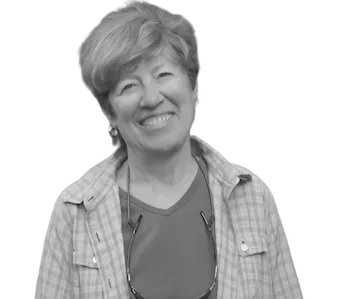
Cathy A. Small
Cathy Small is Professor Emeritus of Anthropology at Northern Arizona University, where she taught cultural anthropology and served as Graduate Coordinator. Her ethnographic work, including three books, has focused on globalization and social change, on U.S. education, and, more recently, on homelessness. She is a National Science Foundation supported scholar for her work in the computer modeling of social systems and a recipient of the national Praxis award for her work in applied anthropology.
Pull this thread
No part of homeless life happens apart from the housed, whose assumptions and blind spots are complicit in US homelessness.
Know something the rest of us don't?
Most threads on Rorotoko begin with our invitation. Any thread can begin with a proposal: you write it with the same prompts every thread answers, and we review it.
Propose a thread →