
Jon Butler
God in Gotham
Browsing readers might try Chapter 5, “God’s Urban Hothouse.” Anyone doubtful about religiosity in early and mid-twentieth-century Manhattan might profitably turn to this chapter, which describes Manhattan as a modern urban spiritual wonderland.
Between the 1920s and the 1960s, Manhattan stimulated an outpouring of individual and institutional religious creativity unsurpassed in any other American locale, urban or rural, and in any century.
Mordecai Kaplan, Abraham Heschel, and Joseph Soloveitchik recast understandings of American Judaism. Dorothy Day, Adam Clayton Powell, Sr., and his son, the congressman Adam Clayton Powell, Jr., asserted religion’s required and necessary role in challenging inhumanity and bigotry. Reinhold Niebuhr, Paul Tillich, Jacques Maritain, and Norman Vincent Peale transformed theological and cultural conceptions of religion in ways that have had enormous, lasting effects.
They transformed modern theology and religious thinking amidst the din of urban life that Weber thought so spiritually hostile.
Manhattan’s vibrancy lured formidable faculties to Union Theological Seminary, Jewish Theological Seminary, and Yeshiva’s Rabbi Isaac Elchanan Theological Seminary, all of them modern, well-financed, bureaucratically organized institutions. If anything, Manhattan publishers actually increased their output of religious books, which Manhattan’s Publishers Weekly publicized to booksellers and public libraries across the nation. Manhattan-born pastoral counseling combined psychology with religious advising, much of it led by the otherwise often criticized Norman Vincent Peale. The remarkably spiritual Alcoholics Anonymous emerged in Manhattan in the late 1930s. Its famous Big Book described how drunks might assemble a “moral inventory,” then turn their “lives over to the care of God as we understand him,” the italicized words revealing how AA adopted an amorphously powerful spirituality that eschewed narrow religious doctrines.
No single “Manhattan theology” emerged from these thinkers and practitioners. Most leaned liberal but in strikingly different, often contradictory, ways. Most addressed their inherited traditions, but all of them found audiences outside these boundaries. Most also were immigrants, like so many other Gothamites. Only Tillich and Maritain arrived with substantial European reputations. Niebuhr, Heschel, Soloveitchik, Day, and Peale all saw the impact of their work amplified by the opportunities Manhattan provided.
Together they fostered passionate new religious visions that changed what God and religious life meant to millions of Americans, plus others across the world, and did so in decades and an urban place that have long seemed inhospitable to things spiritual.
God in Gotham wasn’t written to celebrate religion. But it was written to help readers understand what might have been accomplished by religious people in seemingly strained settings. In this regard, it is implicitly and explicitly critical of two strands in writing about religion in twenty-first-century America.
First, God in Gotham is critical of histories that implicitly and explicitly celebrate the religious commitment of previous rather than recent times. Historians and scholars of religion have spent too much time insisting that before 1500 religion in the West was essentially “axiomatic,” or a given. But after 1500 (yes, it’s not an accident that the Protestant Reformation dates from 1517) it is said that Westerners faced choices that ultimately led to secularization and its steady effacement of religion. Such accounts dismiss the complexity of the past. Religious commitment and adherence were problematic in all ages and all settings, if hardly in the same ways. It was not without reason that before 1500 every European nation attached horrific penalties to those who rejected religion broadly or spurned its specific government- or church-sanctioned forms, including maiming and death.
Second, God in Gotham is critical of histories that treat twentieth-century American life as all but bereft of religion, especially from the 1920s into the 1970s. They often bypass the deep religious dimensions of the post-1945 civil rights crusade, despite the religious affiliations of so many civil rights leaders. Then such histories breathlessly scramble to describe the rise of conservative evangelical politics, deftly avoiding any account of how the movement could have emerged from the seemingly silent religious stage of the previous half-century.
God in Gotham is hardly without criticism of the figures and movements it describes and discusses. Nor does it suggest that success in grappling with urban modernity after 1880 precluded new difficulties such as those that have emerged powerfully since the 1980s—from the sexual abuse scandals in Catholicism and Protestantism to the stark decline in the mainstream denominations and the rise of the religious “nones”, especially among the young, who are indifferent to traditional organized religion. For better or worse, God in Gotham is a distinctly historical book about the fate of organized religion in a specific place during specific decades. It is not a breezy prognostication about religion’s future in twenty-first century America or the world. However potentially interesting, that is a task blessedly beyond the skills of a historian, and certainly beyond the skills of this one.
Editor: Judi Pajo

God in Gotham
Jon Butler God in Gotham: The Miracle of Religion in Modern Manhattan Harvard University Press 320 pages, 6 1/8 x 9 1/4 inches ISBN 978 0674045682
Available here →March 17, 2021
20210317-butler-jon-on-book-god-gotham-miracle-religion-modern-manhattan-3-1
A close-up
The rest of this thread
Jonathan Conklin Photography
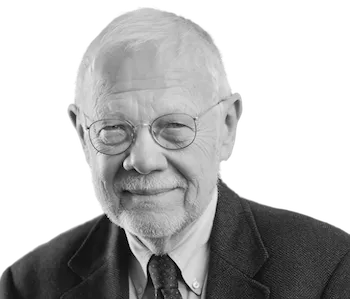
Jon Butler
Jon Butler is a retired Yale historian of American religion. He grew up in a Minnesota farm town (Hector, in Renville County) 100 miles west of Minneapolis and received both his BA and PhD from the University of Minnesota. He taught at California State University, Bakersfield, the University of Illinois at Chicago, and Yale, where he also chaired the American Studies Program and History Department and served as Dean of the Graduate School. His books include Awash in a Sea of Faith: Christianizing the American People and Becoming America: The Revolution before 1776. He lives in Minneapolis.
Pull this thread
Modernity refreshed religion, and between the 1880s and 1940s Manhattan produced more religious institutions than any other American locale.
Know something the rest of us don't?
Most threads on Rorotoko begin with our invitation. Any thread can begin with a proposal: you write it with the same prompts every thread answers, and we review it.
Propose a thread →