
Eric Weisbard
Songbooks
I’d hope that a browsing reader would check out a trio of entries (most are under 1000 words!) and get a sniff of the thing. For example:Early in the book: Emma Bell Miles, first to write about Americana, which she or Harper’s called “Real American Music” in 1904—Appalachian mountain stuff. Split between the city-bourgeois world she distrusted and Appalachians who distrusted her, she caught gender divides shaping cultural ones: “The woman belongs to the race, to the old people. He is a part of the young nation. His first songs are yodels.”
A poem—she scraped to fund a collection; a posthumous one, from 1930, first proved her endurance—contrasted “The Banjo and the Loom”, domesticity and “Possum up a ‘simmon-tree” minstrel scamp. Her story “The Dulcimore”—among those collected in 2016—sketched a mother exiled by love to mountains hardship watching a daughter do the same for a blacksmith who’d made her the lap instrument.Middle: Mystery Train author Greil Marcus. To invoke a fellow critic, the “Ellen Willis test” was to judge sexism by how a singer’s words resonated when you imagined a woman performing them.
The undeclared Greil Marcus test was to take each cultural item, noble or sordid, as it came, and see if the dough leavened, see if the candle kept, unfathomably, burning. Those everlasting flames he collected. Not like most collectors, genre definers. His was a critic’s compendium: songs, film scenes, ad hypes, all sorts of performances that affected him entered in the register and given fitting prose.
Late: poet-philosopher Fred Moten. With Burning Spear’s dub-heavy “do you remember the days of slavery?” filling his head, Moten could connect cultural studies interpellation and vaudeville interpolation, then bluntly demand of black British cultural studies scholar Paul Gilroy, antithetical to U.S. blackness, “Who the fuck you talking to?” Sound to him mattered as “the site of a kind of unruly music that moves in disruptive, improvisational excess … a certain lawless, fugitive theatricality.”
The Universal Machine began: “what you have here is a swarm”. But what particulars swarmed. Who except Moten could link philosopher Emmanuel Levinas’s disdain for dancing civilization to Springsteen manager, Jon Landau, hearing indulgence rather than expansiveness in Curtis Mayfield? He didn’t take sides, he took asides.
The great thing about writing a book that starts with a book published in 1770 and ends with a book published in 2010 is that you get to take the long view—time will tell! In the immediate future, I expect to hear about all the errors I made rushing my way through a 2500 or so book bibliography, all the inherent problems in one person trying to vet a huge literature. But if I’m lucky, this book will work in some of the ways that my first one did, the Spin Alternative Record Guide (1995), which managed to insinuate itself into the listening lives of many people over time. Often, what I’m quickly pointing to in these pages are subjects that I still think have some mystery left to them, a question we don’t so much want to fully answer as keep answering.
I am a strange human being in that I love music writing as much as I do music itself, love the quirky, cranky characters it attracts, love the contradictory nature of the enterprise (serious fun), love seeing how far writers of so many different identities can take particular subjects of so many different kinds. It’s more than clear now that popular music has amassed a literature, in the sense of multiple books on multiple topics. What this book is more concerned to promote is literature in the sense of a sentence or paragraph that makes an impression the way a lyric does, because the viewpoint is so singular, because it imparts a resonance.
All these years after the arrival of vernacular pop, we might feel more posthuman than we do like rock and rollers flocking to what the great critical explainer Robert Palmer called “The Church of the Sonic Guitar”. (See my entry on cyberpunk novels!) I accept that, but now we need to work out what comes next—and how that changes our views of the still powerful writing that came before. My hope is that by outlining American popular music’s literary past, and having the time of my life doing it, I can provide some inspiration heading forward.
Editor: Judi Pajo

Songbooks
Eric Weisbard Songbooks: The Literature of American Popular Music Duke University Press552 pages, 6 x 9 inches ISBN 978 1478014089
Available here →May 19, 2021
20210519-weisbard-eric-on-book-songbooks-literature-american-popular-music-3-1
A close-up
The rest of this thread
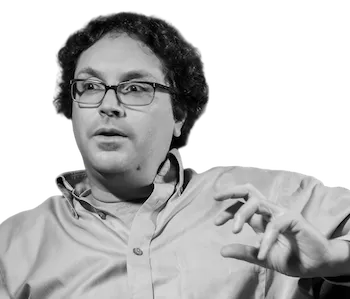
Eric Weisbard
Eric Weisbard is associate professor of American Studies at the University of Alabama and co-editor of Journal of Popular Music Studies. He founded and for many years organized the Pop Conference, editing its collections This Is Pop, Listen Again, and Pop When the World Falls Apart. Before that, he edited the Village Voice music section, wrote for Spin, and edited its Spin Alternative Record Guide. His other books are Top 40 Democracy: The Rival Mainstreams of American Music and Use Your Illusion I and II.
Pull this thread
The best writing about American popular music comes from non-academics and oddballs who invented their own form.
Know something the rest of us don't?
Most threads on Rorotoko begin with our invitation. Any thread can begin with a proposal: you write it with the same prompts every thread answers, and we review it.
Propose a thread →