
Andie Tucher
Not Exactly Lying
The most contentious of the standards and conventions of “real” journalism, as I’ve found in my dual career as historian and journalist, has long been the ideal of objectivity. Having emerged in the early twentieth century, as part of the movement for journalistic reform, it was an ideal both professional and moral, a way for responsible journalists to make clear to the public that they were different from the sloppy, sensational newspapers so many readers were used to.
The whole idea of objectivity, however, has been misunderstood—and deeply controversial—ever since. Most people nowadays would define objective journalists by what they don’t do: they don’t acknowledge their own bias, they don’t go beyond a simplistic striving for “balance,” they don’t think critically. And, most people would add, objective journalists don’t do their job very well. More and more people are arguing that objectivity is disingenuous, artificial, and inadequate to the passion and mendacity of the times.
True enough—but only if by “objectivity” they mean journalists contorting themselves to deny they have emotions or blindly reporting “both sides” as if two sides are always equivalent. But that is not what the earliest supporters of objectivity had in mind.
Most famously described by the progressive journalist and reformer Walter Lippmann in the 1920s, true objectivity is not an attitude but a process. Journalists, he said, should work like scientists, basing their reporting on critical thinking and reason; they should investigate systematically, rigorously test their own assumptions, and work to scrupulously and unemotionally verify the facts, like scientists would. If journalists did their job right, readers would be confident that the reporter had provided all the information they needed, not just the facts that might match the reporter’s own convictions or that the politicians wanted their constituents to believe.
We have now arrived at a paradoxical juncture where the kind of “real” mainstream news organizations that once saw objectivity as the way to reform journalism now find themselves under intense pressure to embrace a more openly subjective approach. That pressure often comes not just from readers and viewers but also from the news organizations’ own staff members. At the same time, many fake journalists have appropriated the language of the “real” news organizations, routinely claiming that they are the only ones presenting fact-driven, unbiased, objective journalism that can be trusted to tell the truth. That’s a dangerous place for a democracy.
Editor: Judi Pajo

Not Exactly Lying
Andie Tucher Not Exactly Lying: Fake News and Fake Journalism in American History Columbia University Press 384 pages, 6 x 9 inches ISBN 9780231186353
Available here →February 1, 2023
20230201-tucher-andie-on-book-not-exactly-lying-fake-news-fake-journalism-2-1
The wide angle
The rest of this thread
Denise Quan
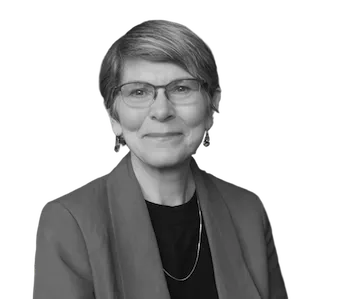
Andie Tucher
Andie Tucher is the H. Gordon Garbedian Professor and the Director of the Communications Ph.D. Program at the Columbia Journalism School. She is also the author of Froth and Scum: Truth, Beauty, Goodness, and the Ax Murder in America’s First Mass Medium (1994); Happily Sometimes After: Discovering Stories from Twelve Generations of an American Family (2014); and other academic and popular works on the evolution of truth-telling conventions in photography, personal narrative, history, and other nonfiction forms. Tucher previously worked in documentary production at ABC News and Public Affairs Television. She holds a Ph.D. in American Civilization from New York University.
Pull this thread
The real danger to public life is not fake news but fake journalism.
Know something the rest of us don't?
Most threads on Rorotoko begin with our invitation. Any thread can begin with a proposal: you write it with the same prompts every thread answers, and we review it.
Propose a thread →