
George W. Breslauer
The Rise and Demise of World Communism
In the course of presenting this narrative interpretation of the rise and demise of world communism, I address some of the key questions that animate debate among both advocates and analysts of the communist experience. Would the Bolshevik revolution have occurred had Tsarist Russia not entered World War I? Was Stalinism a logical continuation of Leninism? Was Stalinism a “rational” strategy of “modernization”? What caused the Sino-Soviet split that blew apart the world communist movement? Could US-Soviet détente have succeeded during the Brezhnev era? What explains the Gorbachev phenomenon? How should we evaluate the role of Mao Zedong in the evolution of Chinese communism? (One chapter is titled: “Maoism: An Accounting.”) How did Deng Xiaoping manage to steer China onto a new economic course after the death of Mao? Is China today, under Xi Jinping, heading toward an economic, political, or international crisis? Has the Vietnamese communist party found a formula for combining economic prosperity with political stability? What are the prospects for the North Korean and Cuban regimes, both internally and in their international relations? How should we think about the foreign relations of the five remaining communist states—both with the capitalist world and among themselves?
The final three chapters of the book, respectively, address matters of explanation, evaluation, and prediction. What were the key driving forces that led to differentiation and conflict among communist regimes after Stalin? How might we evaluate the record of communism more generally: as an achievement or a tragedy? And under what circumstances might new ruling regimes appear in the future, run by communist parties and professing commitment to Stalinist or Maoist policies of comprehensive transformation of their societies?
The book provides a synthesis of existing knowledge; it is not based on new primary-source research. It also makes no effort to be comprehensive or encyclopedic. It concentrates on the main themes and arguments. Hence, it does not provide details of leaders’ biographies, particulars of the policy-making process, regional differentiation within communist regimes, or specific features of many of the “satellite” regimes in Eastern Europe and Mongolia. Rather, this is a study of types of communist regimes, their evolution, and their relations with the communist and outside worlds.
Editor: Judi Pajo

The Rise and Demise of World Communism
George W. Breslauer The Rise and Demise of World Communism Oxford University Press 368 pages, 6 1/8 x 9 1/4 inches ISBN 9780197579671
Available here →March 1, 2023
20230301-breslauer-george-on-book-rise-demise-world-communism-2-1
The wide angle
The rest of this thread
Carleigh Foggiato
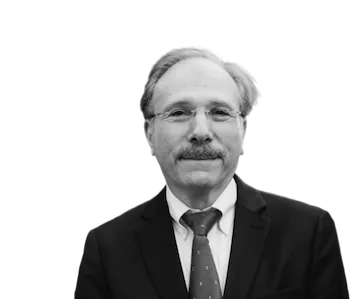
George W. Breslauer
George W. Breslauer has been professor of political science at UC Berkeley since 1971. He has authored or co-authored seven books on comparative communism and on Soviet and post-Soviet politics and foreign relations. He served as executive vice chancellor and provost of the UC Berkeley campus from 2006 to 2014. He has won awards for his teaching and scholarship, and was elected a Fellow of the American Academy of Arts and Sciences in 2014.
Pull this thread
The fates of communist regimes followed from the kind of regime each became after Stalin.
Know something the rest of us don't?
Most threads on Rorotoko begin with our invitation. Any thread can begin with a proposal: you write it with the same prompts every thread answers, and we review it.
Propose a thread →