
Elizabeth Cobbs
Fearless Women
As a novelist and historian, I craft stories in intimate ways that allow readers to feel events of the past: from the experience of the enslaved woman who hid in an attic for seven years to save her children, to the Indigenous woman who braved twenty years in prison for killing a child predator, to Susan B. Anthony’s boisterous campaign to stay out of jail for casting a vote. In Fearless Women, each generation is revealed through the biographies of two people: one who worked explicitly for reform and one who barely survived the hazards of her time. Together, each pair helped nail a new rung on the ladder that lifted us to where we are today.
As a Stanford Ph.D., I did not start out as a historian of women, but a scholar of United States foreign relations. Like many people, I considered the fight for legal rights mostly behind us. It was not until I recognized the concerted efforts of traditionalists and authoritarians around the globe to reverse women’s rights that I thought it might be useful to better understand how one innovation built upon the next, and how such efforts facilitated the economic and political development of the United States generally. For example, few historians recognize that female high school teachers laid the basis for industrialization by educating the workforce, or that feminists got the Thirteenth Amendment eliminating slavery on the floor of Congress, or that former suffragists established America’s social safety net.
When we see efforts to ban women from school in Afghanistan, or force them out of public spaces in Iran, or weaken laws against domestic violence in Russia, or limit access to the workplace in China, or criminalize abortion and birth control in the United States, it is useful to understand the historical evolution of such laws and the wide consequences that may result from reversing them.
Editor: Judi Pajo

Fearless Women
Elizabeth Cobbs Fearless Women: Feminist Patriots from Abigail Adams to Beyoncé Belknap Press 480 pages, 6-1/8 x 9-1/4 inches ISBN 978 0674258488
Available here →February 15, 2024
20240215-cobbs-elizabeth-on-book-fearless-women-feminist-patriots-from-abigail-adams-to-beyonce-2-1
The wide angle
The rest of this thread
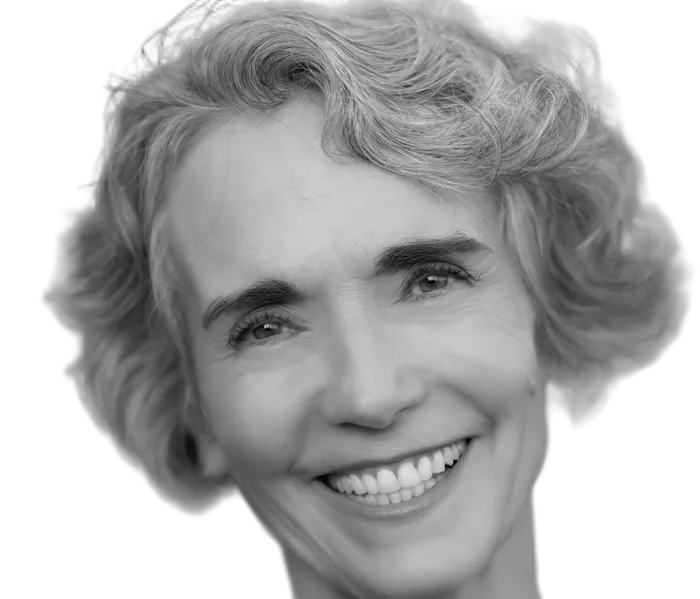
Elizabeth Cobbs
Elizabeth Cobbs is a historian, novelist, and filmmaker who has won prizes for fiction, non-fiction, and film. She has served on the jury for the Pulitzer Prize in History and the Historical Advisory Committee of the U.S. State Department, and written for the New York Times and Washington Post. Cobbs is Emeritus Professor at San Diego State University and Texas A&M. In 2020, the U.S. Army Signal Corps Association named her Brevet Colonel for unearthing the story of America’s first women soldiers. At 23, Cobbs won the Rockefeller Youth Award for “a significant contribution to the well-being of mankind.”
Pull this thread
Feminism has been central to the United States since 1776, not a side topic.
Know something the rest of us don't?
Most threads on Rorotoko begin with our invitation. Any thread can begin with a proposal: you write it with the same prompts every thread answers, and we review it.
Propose a thread →