
Katja Guenther
The Mirror and the Mind
By following the mirror through a range of historical contexts, The Mirror and the Mind offers a new way of understanding the history of psychology. While the standard history of psychology is told as a succession of movements, tracing its beginnings in the experimental psychology of Wilhelm Wundt (1832-1920) through the behaviorist critiques of introspection, to the rise of cognitivism and neuroscience,the mirror test carves a different path through the mind sciences. It did not constitute a tradition as normally understood. Although some mirror experimenters drew on a network of intellectual references, many were not aware of these connections. What holds the actors in the book together is rather a shared set of material practices centered on the mirror as a piece of experimental equipment. As such it guides us along the backroads of psychology, giving new paths linking the major movements, offering us new perspectives on canonical authors, and introducing us along the way to figures who rarely appear in standard narratives, such as developmental psychologist Wilhelm Preyer (1841-1897), or female scientists such as Milicent Shinn (1858-1940) and Charlotte Bühler (1893-1974). It also shows how psychology was connected with neighboring fields in the human sciences: beyond developmental psychology, psychiatry, and psychoanalysis, the history of the mirror test takes us on a tour through robotics, neuroscience, anthropology, and media theory.

Child in front of a mirror. (Open domain.)
Editor: Judi Pajo

The Mirror and the Mind
Katja Guenther The Mirror and the Mind: A History of Self-Recognition in the Human Sciences Princeton University Press 312 pages, 6 1/8 x 9 1/4 inches ISBN 978 0691237251
Available here →April 18, 2024
20240418-guenther-katja-on-book-mirror-and-mind-history-self-recognition-human-sciences-2-1
The wide angle
The rest of this thread
Sofie Baring
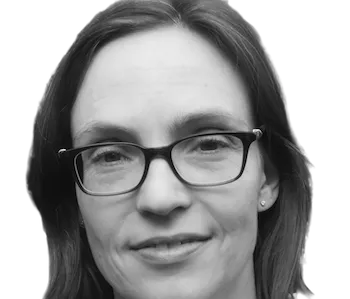
Katja Guenther
Katja Guenther is Professor of History at Princeton University. She is an M.D. with a research degree in Neuroscience and a Ph.D. in the History of Science. In addition to The Mirror and the Mind, she is the author of Localization and Its Discontents (Chicago, 2015). She is currently working on several book projects on the history of mental therapeutics. Her work has been supported by the American Council of Learned Societies (ACLS) and the Institute for Advanced Study (IAS) in Princeton. She was named a Guggenheim Fellow in 2022.
Pull this thread
The mirror test never formed an intellectual tradition, and following the apparatus yields a different history of the mind sciences.
Know something the rest of us don't?
Most threads on Rorotoko begin with our invitation. Any thread can begin with a proposal: you write it with the same prompts every thread answers, and we review it.
Propose a thread →