
Felice Frankel
Phenomenal Moments
I was always interested in science. I am a very curious person, and most importantly, I am a very visual person. And so, I have always asked myself the question what is that? Even as a young child, I was always curious and it has remained with me. That is why I am in the research community. Being at MIT is a gift beyond words. The beauty of being at MIT is that I can ask questions as I am photographing science. And the scientists love to respond to me and answer my questions. But in the end, it was always the curiosity that took over, and partially the reason for this book. Now I am a grandparent of two: one is 12 and one is 18. They joke around with me, because whenever I see something, I say, do you know what that's about? And then they would say, ‘Grandma, come on, stop being a scientist’, but…they really want to hear what I have to say. They are curious. I can see it. There is a curiosity among young people and young adults that somehow has been squashed. So, I am trying to revive that sense of curiosity from their childhood, while also making it cool and appealing. I want young people to ask questions and feel comfortable to wonder about why is this looking the way it is looking? This book probably stemmed from being a grandparent. I think that pushed it further. I wanted this book to bring their thinking into the conversation. As I was working on the book two years ago, I visited my grandson's science class. Will Melman, the teacher, was terrific in allowing me to come to class and showing images that I was considering at the time to include in the book. The students were painfully honest about some of them, which they really did not like. However, it became a guessing game, which is what the book is about. It's a kind of interactive guessing game. And they got into it. They really had fun trying to guess what it was. So the students were instrumental in helping me make selections for what to include in the book. Some of my favorite pictures they didn't like because they weren't colorful enough. Kids want color. The Candlewick/ director, Hilary Van Dusen, was my editor, and she was the one who suggested we have a description of the moment since it was already in the title I thought of, Phenomenal Moments. This is the moment that I decided to take the picture, and the phenomenon is the science part. I'm trying to engage the reader to pay attention, to observe, and see that science is readable and accessible – and it can even be very enjoyable.
.webp)
When the bottom of a copper pan is exposed to heat and air, it oxidizes, forming a thin layer of copper compounds—mainly copper carbonate. This patina develops through ongoing reactions that produce its colors.
.webp)
Students were instrumental in helping me make selections for what to include in the book
.webp)
Chlorophyll helps the leaves extract energy from sunlight, but in autumn chlorophyll is not being replenished. Yellowish and red pigments can now be seen.
.webp)
Silica spheres align over time, creating opal’s rainbow through light diffraction.
Curator: Bora Pajo

Phenomenal Moments
Felice Frankel Phenomenal Moments: Revealing the Hidden Science Around Us Candlewick Press 128 pages, 7.8 x 9.3 inches ISBN 978-1536234893
Available here →December 4, 2025
20251204-frankel-felice-on-phenomenal-moments-2
The wide angle
The rest of this thread
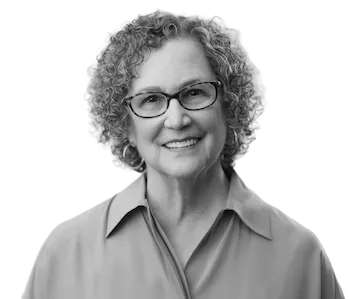
Felice Frankel
Felice Frankel is a science photographer and research scientist in the department of chemical engineering at the Massachusetts Institute of Technology, with support from Mechanical Engineering and Materials Science and Engineering. She began at MIT in 1994. Felice is a Fellow of the American Association for the Advancement of Science and a Guggenheim Fellow. She has served as a Senior Research Fellow in Harvard’s Initiative for Innovative Computing and as a Visiting Scholar in the Department of Systems Biology at Harvard Medical School. Frankel’s work has been featured in Science, Nature, National Geographic, the New York Times, WIRED, Life, the Boston Globe, the Washington Post, The Chronicle of Higher Education, and on NPR’s “All Things Considered” and “Science Friday.” Her limited-edition photographs reside in corporate and private collections and have been exhibited widely, including at MoMA’s “Design and the Elastic Mind,” the Kennedy Center Arts Summit, the New York Hall of Science, along the Champs-Élysées in Paris, and in a Bracco Imaging–supported traveling show across Italy and at NYU’s Casa Italiana.
Pull this thread
Public distrust of science follows from disengagement rather than argument, and jargon is what drives readers away.
Know something the rest of us don't?
Most threads on Rorotoko begin with our invitation. Any thread can begin with a proposal: you write it with the same prompts every thread answers, and we review it.
Propose a thread →