
Gregory Hickok
Wired for Words
If browsing, I'd hope readers encounter some of the case studies I describe to illustrate key concepts. The famous neurologist and author, Oliver Sacks, was a master of using neurological case studies to pull back the curtain on the workings of the mind. This is how I first got interested in neuroscience. I read Sacks’ classic, “The Man Who Mistook His Wife for a Hat”, as an undergraduate and knew I had to make my career in cognitive neuroscience. As a post-doc at the Salk Institute in San Diego, I got to meet Dr. Sacks when he came to the lab to learn about some of my research on Williams Syndrome. It was related to his own work and so we started corresponding. (You can see evidence of this exchange in this paper from 1995) He ended up writing a letter of recommendation for me when I applied, successfully, for my current job at UC Irvine.
My use of case studies derives from Sacks’ lasting influence on me. I also hope a browsing reader might come across a description or two of some of the interesting methods, both classic and new, used in cognitive neuroscience research. These range from the quite dramatic (split brain and WADA methods) to technically brilliant (nuclear physics-based fMRI) to the exotic (direct cortical recording from awake humans and brain computer interface). Finally, the first chapter, What is Language?, starts with a modified quote from the classic movie, The Princess Bride: Language! You keep using that word. I do not think it means what you think it means. This sums up the biggest problem language scientists, like me, face in communicating our field to the public. Language comes so naturally to us that it seems like a simple ability. I mean, even a toddler can learn to do it! How could the science of language, then, be very interesting?
But it only seems easy because we are “wired for words,” which is to say wired for the capacity to learn and use language. Once you look under the hood, you realize there’s some real intrigue to discover.First and foremost, my hope is that the book reveals a new appreciation for our gift of gab, its complexity, its evolutionary origins, and its biology. I love the idea that some readers might truly enjoy learning something new about themselves, a part of their biology that they use indispensably every day yet never gave it a moment’s thought before coming across my book. More poignantly, many of us have or will experience, directly or indirectly, the tragedy of losing our linguistic gift through stroke or neurodegenerative disease. I hope the book provides at least the little bit of comfort that comes with understanding. I’m also hopeful that the progress we’ve made in the field will inspire new therapies for language disorders. In a recent survey among sufferers of various diseases, aphasia was rated #1 in terms of being most disruptive to quality of life, above (worse than) cancer and Alzheimer’s disease. Speech therapy works, but often incompletely.
But hope is on the horizon. Already, neural prosthetics are helping locked-in patients, those with an intact brain but without motor control to speak and write. Precisely placed implants in the brain can allow patients to communicate through a computer just by thinking about the words they want to speak. And neural prosthetics for aphasia treatment are also currently being developed and tested. Just today I was invited to join a multidisciplinary team of University of California researchers on such a project. I never thought in my lifetime that I’d see basic science research on the neural architecture of language contributing to these kinds of real-world clinical applications. Yet here we are!
Curator: Bora Pajo
.webp)
Wired for Words
Hickok, Gregory Wired for Words: The Neural Architecture of Language The MIT Press, 424 pages, 6 x 9 inches, ISBN: 978-0262553414
Available here →January 16, 2026
20260115-hickok-gregory-wired-for-words-the-neural-architecture-of-language-3
A close-up
The rest of this thread
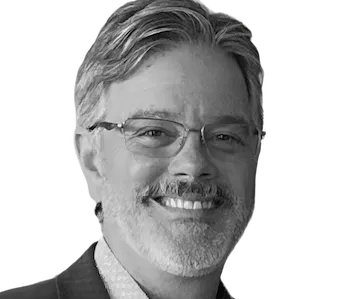
Gregory Hickok
Gregory Hickok is Distinguished Professor of Cognitive Sciences and Language Science at UC Irvine where he serves as Chair of the Department of Language Science. He was the first elected Chair of the Society for the Neurobiology of Language and is an elected Fellow of the American Association for the Advancement of Science. He is the author of The Myth of Mirror Neurons.
Pull this thread
Language is many nested processing routines rather than one faculty, and the dual stream model is the organizing fact.
Know something the rest of us don't?
Most threads on Rorotoko begin with our invitation. Any thread can begin with a proposal: you write it with the same prompts every thread answers, and we review it.
Propose a thread →