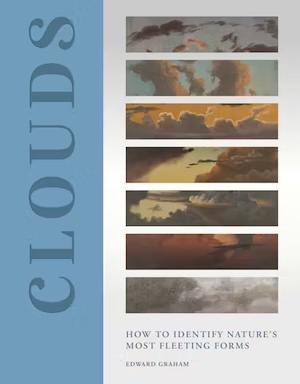
The main concept that we are trying to express is the inner character of clouds, their inherent transient behaviour, that they are not singular independent “snapshots” (such as photos on Instagram), but that they exist as part of a “flux”. Clouds are in constant evolution and modification, they modify themselves continually, morphing into other cloud types and forms – and that this behaviour is best discerned through our perception and expressed through art.
This is because the broad brushstrokes of impressionist art captures movement better than still photography does (the only other proper way to view cloud evolution is through the use of time lapse animation).
This is important, because historically - and indeed still today - clouds are openly discriminated against! We are witness to this discrimination all the time and everywhere! For example, in our everyday language; we say “he’s got his head in the clouds”, “She’s full of nebulous ideas”, etc.. Even Shakespeare discriminated against clouds calling them “airy nothings”. Clouds, to date, have not been treated as serious objects for scientific investigation.
But what happened first during the Enlightenment was people began to realise that there’s more to clouds than just abandoning them to the realm of the emotional world, and our “known unknowns”. Instead, we have learned that they are crucial to life on Earth (bringing us water and essential rains), and may yet just save us from our own peril (their reflectivity may help us buy time in the climate crisis of the 21st century).
Luke Howard in 1802 was the first to give scientific names to the clouds. This was a first essential step in the scientific and objective investigation of clouds, which today includes sophisticated multi-dimensional cloud modelling at leading global meteorological centres, as well as intergovernmental-approved artificial seeding of clouds in attempts to enhance their precipitation across drought-prone areas of the world.