What is the RORO Thread? One sharp micro-interview. Cutting-edge of scholarship. The art we love.
Meredith F. Small
July 1, 2026
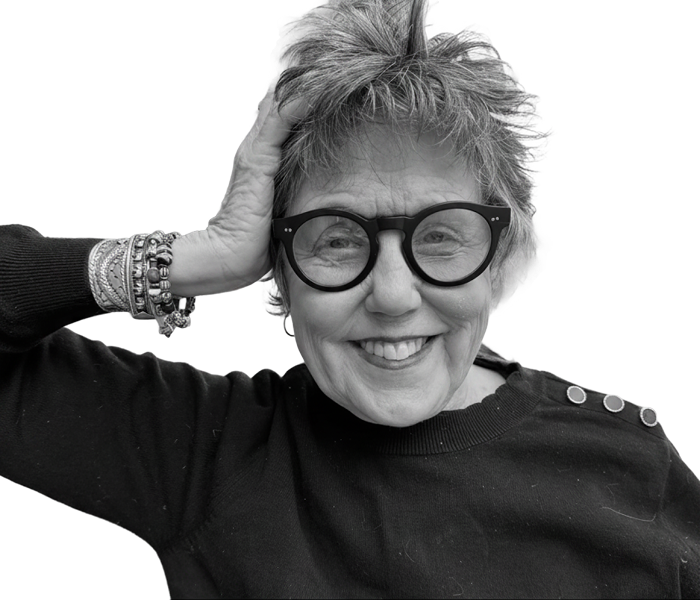
© Francesca Merrick
I have written about human thought and behaviors for over thirty years and taught it for just as long as a university professor. My point to everyone, students and non-students alike, has always been—not everyone is like you, not everyone thinks and acts like you, and there are good reasons for that. Learning about those other ways is enlightening, especially for those from Western culture who tend to think their ways are the best. But the reality is that in a world of 8 billion people, only 1.2 billion live in Western culture, so how do those other 6.8 billion people think about their lives?
I started as an academic trained to observe nonhuman primates to gain clues about the evolution of human behavior. Academics from several disciplines observe monkeys and apes, such as animal behaviorists, psychologists, and ecologists, but anthropologists do it for a specific reason—we want to know if we can trace some patterns of human behavior to our evolutionary cousins. What do we share with nonhuman primates? What makes humans different, if anything? For years, I observed macaque monkeys in the field and captivity and wrote many academic publications. I also looked for a job, which was as difficult then as now—it took me eight years after a Ph.D. to get a tenure-track job. At one point, a fellow academic suggested I write a piece for a nature and science magazine for the money, which I desperately needed, and so I did. They published that article on female money mating behavior, and I realized that I really liked explaining difficult theory to a popular audience. That approach was also echoed in my teaching as I explained evolution, the human fossil records, and cross-cultural behavior to 18-year-olds. Eventually, I started my job in the anthropology department at Cornell University, but instead of hunkering down on my next piece of field work, I kept writing for the popular audience, publishing in Discover, Natural History, New Scientist, and many others. I was painfully aware of getting everything correct because I knew my academic colleagues would judge me for writing for the public, but I saw this as an opportunity and a pleasure. To my surprise, I had a great acceptance rate and a growing reputation as an academic who could write for the public.
I also understood that anthropology is a user-friendly subject with human appeal. As a primatologist friend once said, "People only want to read about other people." I also knew it was imperative that I "get it right" because I wanted the public to have the truth, but also because I knew the eyes of academia were upon me. My department at Cornell ridiculed my popular work, but I didn’t really care about their opinion. When I was up for full professor, I thought I might be rejected because of all this popular writing, but a member of the voting committee later told me, in confidence, that for the first time everyone read everything, and one person said: "She is like Carl Sagan [also of Cornell], but she gets it all correct." And another person said, "Why don’t we all write like this?" And when the American Anthropological Association gave me the "Anthropology in Media Award" and said I was "The Margaret Mead of our generation," I knew there was nothing to worry about.
Through popular writing, I also learned other people’s research and had to understand it completely to write about it with authority. I also had amazing experiences going into various labs and talking with experts. What I learned then informed my lectures in my anthropology courses.
A few months ago, I was at a gathering of new people, and someone asked me what I did. Before I could say, "I’m an anthropologist," an acquaintance blurted out, "She’s a writer." I protested, but on the walk home, I realized that really was the best label at this point in my life and career. I am indeed a trained and experienced anthropologist, but I am also a writer with a particular perspective. For many academics, sitting down to write is a challenge, but for me, it’s a comfortable, happy place.
How We Think: The Hidden Life of Everyday Ideas (June 2026) is the first of three volumes of Meredith Small's collective works of science journalism and essays published by the American Philosophical Society. How We Know: The Improbable Sources of Human Knowledge comes out in June 2027 and How We Behave: The Social Science of Everyday Life arrives in June 2028.
Ongoing Thread. More from Meredith Small to follow.
We don't have paywalls. We don't sell your data. Please help to keep this running!


%20(2).jpg)