
Benjamin Ginsberg
The American Lie
Many of the same Americans who believe in the Easter bunny also think that public opinion is a significant force in political life. Perhaps, not all would accept James Bryce’s famous assertion that popular support “has been the chief and ultimate power in nearly all nations at all times.” Most Americans, however, agree that citizens’ preferences have a good deal of influence over the government and its policies. Nearly 80 percent of those responding to a recent national survey said that the government listened to the people most or at least some of the time. More than 90 percent agreed that elections made the government pay attention to public opinion.
School textbooks, politicians’ pronouncements and even the supposedly cynical mass media contribute to this view of the political potency of citizen sentiment. Newspaper columnists and television commentators, for example, frequently link the power of presidents and other politicians to their popular standing. In 2005, when President George W. Bush’s rating in the polls fell sharply, many pundits asserted that his loss of citizen support would erode the president’s ability to govern. More generally, continual print and broadcast coverage of opinion surveys, the “mood” of the electorate and the meaning of election outcomes certainly conveys the impression that public opinion and voting must be important phenomena. The media devote nearly as much attention to poll results and election analyses as they do to the celebrity gossip with which Americans seem endlessly fascinated.
To be sure, citizens’ perspectives are continually monitored and frequently evaluated by political elites and government decision makers. Popular support is obviously essential to those seeking election or reelection to office. Nevertheless, public opinion, voting and other aspects of popular political involvement are seldom the driving forces of national politics. Public opinion is not an autonomous and immutable force that politicians must discover and obey.
The will of the people is, instead, a rather pliable phenomenon usually created by the very individuals and groups who claim to submit to it. Typically, forces seeking to achieve particular goals in the political arena, be they offices, programs or policies, will endeavor to create a climate of opinion conducive to their efforts. Rather than satisfy citizen opinion, politicians and competing political actors ordinarily attempt to create opinions supportive of their own purposes and preferences. Any resultant consistency between citizen opinion and political or policy outcomes is more a reflection of the common origins of the two phenomena than a tribute to the power of public opinion.
Certainly, public opinion can be a powerful force once formed. The formation of opinion, though, is typically a result of efforts on the part of contending interests, parties and politicians to attract popular support, and mainly reflects these groups’ relative capacity to achieve visibility, to communicate cogent appeals and to offer citizens solidarity and material incentives sufficiently compelling to secure their fealty.
Of course, all citizens cannot always be convinced of all things. Large numbers of Americans, however, have little knowledge of, or firm opinions about, most aspects of government and politics. Consequently, their views are susceptible to frequent manipulation by politicians, advocacy groups and political parties. Lincoln was surely correct when he said that all the people could not be fooled all of the time.
But, even Honest Abe knew that all the people could be fooled some of the time, and that at least some of the people might be duped all the time.
Americans are taught to equate political participation with personal empowerment and individual freedom. Yet, the relationship between politics and freedom is more complex than the civics teachers acknowledge or know. Whatever its other virtues, popular political participation functions as a source of state power.
James Wilson urged his fellow Constitutional Convention delegates to accept widespread popular participation as the price of raising the “federal pyramid” to a “considerable altitude.” But, real freedom does not simply mean a formal opportunity to take part in organized political activity. Real political freedom must include a considerable measure of freedom from politics as well as the freedom to take part in politics.
Freedom implies a measure of personal autonomy, a sphere within which individuals are not followers of movements, causes, candidates or parties and are not subject to policies, initiatives or programs. Nietzsche might have been gazing at Wilson’s pyramid when he cried, “Break the windows and leap to freedom.”
Unfortunately, though, the government and the members of the meddlesome political class, more generally, are seldom content to leave their fellow citizens to their own devices. Officials and politicians not only want to explain things to their benighted fellows but for better or worse–too often for worse–they seem to suffer from some compulsion to interfere in everyone’s lives.
When not merely engaged in their normal rent-seeking endeavors, a gaggle of officials want to seize homes and turn them over to private developers. Other politicians and officials want to redistribute incomes for the benefit of their friends and supporters. Still others endeavor to impose their own moral values on everyone else. And, of course, there are those who insist upon sending other peoples’ children to die on distant shores for reasons that are usually difficult to explain.
The political class can and should continually be subjected to embarrassment, ridicule and harassment. Not only does constant pressure keep the politicians and officials uncertain and off balance, but the exercise reminds the citizenry of the clay feet of their erstwhile idols. This, in turn, helps individuals maintain some critical distance from the state and its rulers and preserve at least a measure of inner freedom. This effort should be understood as defensive politics, an attempt to maintain individual autonomy and freedom from conventional politics. The first rule of defensive politics is always to be cynically realistic. When any politician intones, “ask not,” assume he or she has something to hide.
Editor: Erind Pajo

The American Lie
Benjamin Ginsberg The American Lie: Government by the People and Other Political Fables Paradigm 256 pages, 6 x 9 inches ISBN 978 1 59451 412 8 (hb) ISBN 978 1 59451 413 5 (pb)
Available here →December 4, 2008
20081205-ginsberg-benjamin-american-lie-government-by-people-political-fabl-3
A close-up
The rest of this thread
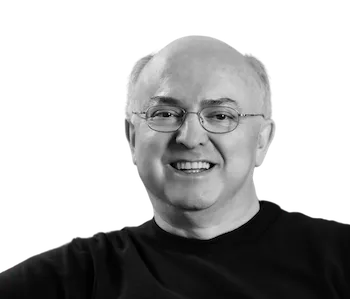
Benjamin Ginsberg
Benjamin Ginsberg is the David Bernstein Professor of Political Science and Director of the Center for the Study of American Government at the Johns Hopkins University. He is the author or co-author of a number of books including Presidential Power: Unchecked and Unbalanced, Downsizing Democracy: How America Sidelined Its Citizens and Privatized Its Public, Politics By Other Means, The Fatal Embrace: Jews and the State, The Consequences of Consent, American Government: Freedom and Power, We The People, and The Captive Public. Ginsberg is a frequent radio and television commentator and his political essays have appeared in such publications as The Washington Post. He lives in Potomac, Maryland, just outside the capital beltway, a location he believes gives him both analytic proximity to and critical distance from Washington politics. Ginsberg received his Ph.D. from the University of Chicago in 1973. Before joining the Hopkins faculty in 1992, Ginsberg was Professor of Government at Cornell.
Pull this thread
Public opinion is manufactured by the very political actors who claim to submit to it.
Know something the rest of us don't?
Most threads on Rorotoko begin with our invitation. Any thread can begin with a proposal: you write it with the same prompts every thread answers, and we review it.
Propose a thread →