
Harold S. Luft
Total Cure
To be meaningful, a proposal to reform the health care system needs to be more than just visionary, it must address the complex issues of how the system will actually work. Total Cure provides such details, discussing how funds flow, converting data to useable information, and describing the ways in which the system can be reconfigured. In essence, the book offers a blueprint both for those in the policy realm who can change the system and for those citizens who want to encourage their leaders to make such changes.
The logic and details in the book demonstrate to the reader that an entirely new way to pay for and organize health care is possible. Blueprints, however, are rarely what attract a client to a new house. Chapter 8, therefore, offers what is analogous to the architect’s rendering of the structure to be created from such a blueprint. Here I describe the experiences of a fictitious couple, Harvey and Louisa. After their children have moved out and established families of their own, Harvey is offered an exciting new position on the other side of the country.
The couple needs to find new physicians, adapt to new employer-based plans, and compare this new system with the old one with which they were familiar. Their children’s experiences illustrate how the SecureChoice options work for those who prefer highly integrated HMOs as well as for others, such as one son with recurrent depression, who are kept from full-time continuous employment. Given their ages, it is not surprising Harvey and Louisa develop new and more complex medical problems and we see how the proposed health care system works for them.
The chapter also provides a picture of how physicians are likely to react to the new freedoms and responsibilities of SecureChoice. The Harvey and Louisa story illustrates the effects of the new system on a typical family, giving the implicit rationale for popular support for a major policy change.
Some will ask, “if this is all so simple, why hasn’t it already been done?” The key is that the proposal doesn’t try to solve all our problems with the limited set of tools we have been using in the past. It adds new tools and seizes new opportunities that had not been available heretofore.
Insurance for hospitalization and chronic illness is critically important for everyone, hence SecureChoice uses a universal pool for those aspects of care. Insurance is not really needed, nor well-designed, for other types of care. People may want help in smoothing out the costs of such care, but that is more like a credit card than insurance. Income-based subsidies address the affordability problems for those people who need help in covering those costs.
Integrated health plans were created to coordinate and manage care, but they are a solution for only a small fraction of the population and practitioners. New health information systems and re-aligned incentives can allow many of those benefits without forcing independent physicians into large groups or restricting the choices of patients. Employment-based insurance developed by historical accident in the years following World War II; subsequent policy changes inadvertently fragmented the insurance market and sapped its ability to foster innovation in practice.
The shift to defined contributions by employers, however, creates the opportunity to build on long-standing compensation structures in a new world in which families have multiple workers, sometimes with several jobs each. The political window of opportunity is opening for changes that are less ideological and combine the collective action potential of government with the flexibility and innovation of well-designed markets. Now is the time to give fundamental reform serious consideration.
Editor: Erind Pajo
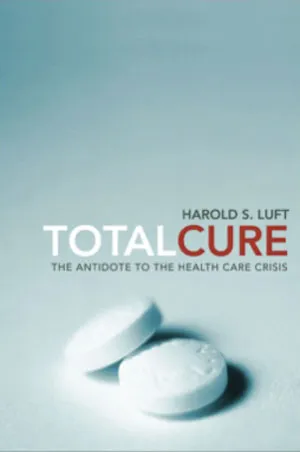
Total Cure
Harold Luft Total Cure: The Antidote to the Health Care Crisis Harvard University Press 298 pages, 5 1/2 x 8 1/4 inches ISBN 978 0674032101
Available here →January 6, 2009
20090106-luft-harold-total-cure-3
A close-up
The rest of this thread
Richard Kite
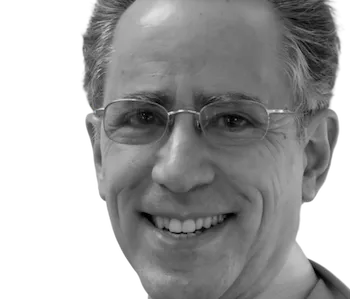
Harold S. Luft
Harold S. Luft, Ph.D., is Director of the Palo Alto Medical Foundation Research Institute and Esselstyn Professor Emeritus of Health Policy and Health Economics and former Director of the Institute for Health Policy Studies, at the University of California, San Francisco. He received his degrees in economics from Harvard. His research has covered HMOs, hospital competition, volume, quality and outcomes of hospital care, risk assessment and risk adjustment, and health care reform. An elected member of the Institute of Medicine, he served on its Council, that of the Agency for Health Care Policy and Research, and of AcademyHealth. He was co-editor of Health Services Research.
Pull this thread
Real health reform is a universal pool for hospitalization and chronic illness, with income-based subsidies for everything else.
Know something the rest of us don't?
Most threads on Rorotoko begin with our invitation. Any thread can begin with a proposal: you write it with the same prompts every thread answers, and we review it.
Propose a thread →