
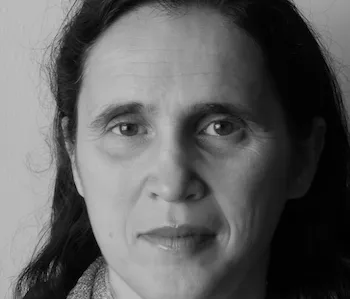
Ariella Azoulay
The Civil Contract of Photography
I began work on this book at the beginning of the second intifada. In hindsight, I can say that observing the unbearable sights presented in photographs from the Occupied Territories formed the main motives for writing this book. When photographs or the work of particular photographers from there are characterized as “partisan,” “abusive”, “subversive,” or “critical,” the assumption is that the photographs show or perform something that is already over and done, foreclosing the option of seeing photography as a space of political relations. In the political space that is reconstructed through the civil contract, photographed persons are participant citizens, just the same as I am.
I employ the term “contract” in order to shed terms such as “empathy,” “shame,” “pity,” or “compassion” as organizers of the spectator's gaze in photographs. Within this political space, the point of departure for the mutual relations between the various “users” of photography, cannot be empathy or mercy. It must be a covenant for the rehabilitation of their citizenship in the political sphere within which we, spectators and photographed persons, are all ruled. When the photographed persons address the spectator, claiming their citizenship in what I call “the citizenry of photography,” they cease to appear as stateless or as enemies—they cease to appear how the sovereign regime strives to construct them.
The civil contract of photography is a social fiction or hypostatized construct in the same sense that Rousseau’s social contract was conceived of as something that has “perhaps never been formally set forth” previously, yet that is “everywhere the same and everywhere tacitly admitted and recognized.” Its theoretical recognition rests on the fact of its historical existence in every act of photography. It has been conceptualized here via its historical emergence as a convention that regulates the various uses of photography and its relations of exchange.
I could not have developed my discussion of watching as a civil act and a rehabilitation of the political without Hannah Arendt’s discussion of action and of the loss of common sense in modernity. The discussions of rehabilitating citizenship under contemporary conditions are greatly indebted to the Declaration of the Rights of Woman and the Female Citizen written by Olympe de Gouges, to Étienne Balibar's essays on citizenship and radical violence, and to Azmi Bishara political thought and praxis.
Editor: Erind Pajo

The Civil Contract of Photography
Ariella Azoulay The Civil Contract of Photography Zone Books 600 pages, 6 x 9 inches ISBN 978 1890951887
Available here →January 23, 2009
20090123-azoulay-ariella-book-civil-contract-photography-2
The wide angle
The rest of this thread
Miki Kratsman
Ariella Azoulay
Ariella Azoulay teaches visual culture and contemporary philosophy at the Program for Culture and Interpretation, Bar Ilan University. She is curator and director of documentary films. She is also the author of Atto di Stato (Act of State, 2008, Bruno Mondadori, in Italian), Once Upon a Time: Photography following Walter Benjamin (2006, Bar Ilan University Press, in Hebrew), and Death’s Showcase (2001, MIT Press), which won the Affinity Award, International Center of Photography. She is co-author, with Adi Ophir, of This Regime which Is Not One: Occupation and Democracy between the Sea and the River (from 1967 onwards, Resling, in Hebrew).
Pull this thread
Photography constitutes a citizenry no sovereign can close, and watching is a duty the governed owe one another.
Know something the rest of us don't?
Most threads on Rorotoko begin with our invitation. Any thread can begin with a proposal: you write it with the same prompts every thread answers, and we review it.
Propose a thread →