
Ariella Azoulay
The Civil Contract of Photography
The Civil Contract of Photography is about the relations between photography and citizenship in disaster contexts. The book proposes a historical and theoretical analysis of the relation between photography and citizenship, and in order to do that, I reread two moments in history: the French Revolution (1789) and the invention of photography (1839).
The Civil Contract of Photography centers around the open-ended relations between photographers, photographed persons and spectators. The book analyzes the way in which, since the onset of photography in the mid-19th century, looking at photographs and making them speak have become a part of a civil practice.
The political theory laid out in this book is founded upon a new conceptualization of citizenship as a framework of partnership and solidarity among those who are governed. It is a framework that is neither constituted nor circumscribed by the sovereign. The theory of photography proposed in the book is founded on a new ontological-political understanding of photography. The book takes into account all the participants in photographic acts, approaching the photograph (and its meaning) as an unintentional effect of the encounter between camera, photographer, photographed subject, and spectator. None of these participants in the photographic act has the capacity to seal off this effect and determine the photograph’s sole meaning.
The civil contract of photography assumes that, at least in principle, the users of photography, possess a certain power to suspend the gesture of the sovereign power which seeks to totally dominate the relations between them as governed—governed into citizens and noncitizens, thus making disappear the violation of citizenship. This is an attempt to rethink the political space of governed populations and to reformulate the boundaries of citizenship as distinct from the nation and the market whose dual rationale constantly threatens to subjugate it.
The book seeks to arouse two dormant dimensions of thinking about citizenship and to recast them as points of departure for a new discussion of this concept. The first of these dimensions consists in the fact that citizens are, first and foremost, governed. The nation-state creates a bond of identification between citizens and the state through a variety of ideological mechanisms, causing this fact to be forgotten. This, then, allows the state to divide the governed—partitioning off non-citizens from citizens—and to mobilize the privileged citizens against other groups of ruled subjects. An emphasis on the dimension of being governed allows a rethinking of the political sphere as a space of relations between the governed, whose political duty is first and foremost or at least also a duty toward one another, rather than toward the ruling power.
Editor: Erind Pajo
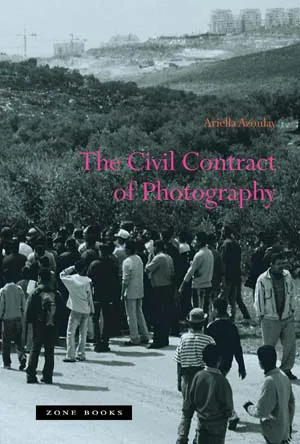
The Civil Contract of Photography
Ariella Azoulay The Civil Contract of Photography Zone Books 600 pages, 6 x 9 inches ISBN 978 1890951887
Available here →January 23, 2009
20090123-azoulay-ariella-book-civil-contract-photography-1-1
In a nutshell
The rest of this thread
Miki Kratsman
Ariella Azoulay
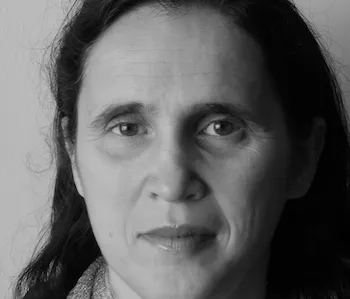
Ariella Azoulay teaches visual culture and contemporary philosophy at the Program for Culture and Interpretation, Bar Ilan University. She is curator and director of documentary films. She is also the author of Atto di Stato (Act of State, 2008, Bruno Mondadori, in Italian), Once Upon a Time: Photography following Walter Benjamin (2006, Bar Ilan University Press, in Hebrew), and Death’s Showcase (2001, MIT Press), which won the Affinity Award, International Center of Photography. She is co-author, with Adi Ophir, of This Regime which Is Not One: Occupation and Democracy between the Sea and the River (from 1967 onwards, Resling, in Hebrew).
Pull this thread
pulls againstpulls alongside
Photography constitutes a citizenry no sovereign can close, and watching is a duty the governed owe one another.
Against IG · US empire is waning, and the security state is the phase in which it turns to war to stay superpower. On: Images of distant suffering do ethical work for those who see them
Against JE · Lincoln's rise was contingent, and the sense of its inevitability is an artifact of how 1860 is taught. On: Historical meaning lies in exceptional events rather than in the texture of ordinary life
Against CD · A victim is believed only insofar as he appears to have mastered his suffering. On: Images of distant suffering do ethical work for those who see them
Against WS · Every cause of the Great Divergence is downstream of one condition, that no empire like Rome ever returned to Europe. On: Historical meaning lies in exceptional events rather than in the texture of ordinary life
Alongside FG · Amateur films and photographs Germans made during the war are evidence in their own right, and exceed their makers' intentions. On: Images of distant suffering do ethical work for those who see them
Alongside EC · American houses were shaped by food, by dwellers rearranging space for storing, preserving, cooking and serving it. On: Historical meaning lies in exceptional events rather than in the texture of ordinary life
Alongside RA · The hunger strike was pioneered by force-fed suffragists, though the men who used it later are the ones lionized. On: Images of distant suffering do ethical work for those who see them
Alongside MS · Multitasking is a million-year-old species capacity, not a modern affliction, and monuments were built out of it from below. On: Historical meaning lies in exceptional events rather than in the texture of ordinary life
Know something the rest of us don't?
Most threads on Rorotoko begin with our invitation. Any thread can begin with a proposal: you write it with the same prompts every thread answers, and we review it.
Propose a thread →