
Robert Engelman
More
I like a book that tells you what it’s about on the very first page. Mine does—in fact on a page numbered with a roman numeral. Open it up to the first page of the preface, ix, and if that interests you, turn the page. What these two pages express is that, despite my own lack of direct insight, my interest in women’s reproductive intentions—“what women want”—was launched by meeting two women, one American, the other Zambian. The American proposed that population problems would fade away if all women could decide for themselves whether and when to become pregnant and give birth. The Zambian offered the luminous thought that “the environment begins in the womb of a woman and ripples out all over the world.” These two ideas formed a guiding vision for my subsequent work on population, the environment and women’s lives, which ultimately led to the writing of More. If those thoughts intrigue a reader—particularly if the reader enjoys stories of real people and educated speculations on why prehistory and history unfolded as they did—I think I can promise a satisfying read. If not, there are lots of other books in the store.
More uses stories and wide-ranging research to move briskly from the origins of humanity to speculation about the human future. Readers short on time or less interested in the past may want to focus on the introduction, the first chapter and the last two. For scholars and researchers, the book contains 23 pages of notes and a 29-page bibliography of written sources. For a random couple of pages in the middle of the book, open on page 176. There I tell the story of Mary Wollstonecraft, a pioneering feminist who died after giving birth to Mary Shelley. (Shelley went on to author Frankenstein.) Wollstonecraft understood, much more than did her better-known contemporary Thomas Robert Malthus, how to successfully slow the unsustainable growth of population. The secret: something women must have whispered among themselves for tens of thousands of years but which Wollstonecraft was among the very first to write down.
The planet on which human beings evolved and thrived is threatened as never before with changes humans themselves are causing—in climate, especially, but also in the loss of species, forests, freshwater resources, fertile soils, and toxic-free ecosystems. Encouraging the end of population growth won’t immediately solve any of these problems. The demographic growth has already gone on too long and helped stoked consumption patterns, technologies and patterns of social inequality that lie more directly than population as such behind the huge risks we face. But how much more likely will our efforts be to move into balance with nature if we encourage an early end to population growth—and indeed live through a short period of gradual population decline? And what other strategies are easily available that accomplish a long-term global good so powerfully by providing an immediate personal one: autonomy to give birth only when a woman and a partner are committed to raising a new human being to adulthood?
I wrote More out of the conviction—strengthened over three decades of exploring these connections—that influencing the trajectory of human population is the most accessible but least understood component of the transition we desperately need to make to a sustainable society. I’m a son, a brother of sisters, a husband, and the father of a daughter. But I confess I didn’t come to an interest in women’s well-being purely out of a sense of gender justice. The more I learned about women’s central position in population change, nonetheless, the more I came to realize that everything I call for in More is worth doing regardless of any influence on human demography or the natural world. It’s simply right to arrive at real equality of the sexes and to assure that women can achieve what men don’t have to ask for: sexuality without the risk of pregnancy. What’s exciting is that this is also a path to a world in which human beings can live in balance with the earth and each other. I hope More makes that an idea worth exploring—and acting on.
Editor: Erind Pajo
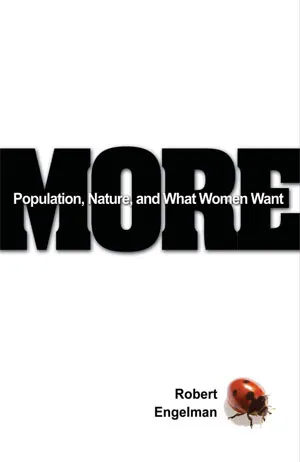
More
Robert Engelman More: Population, Nature, and What Women Want Island Press 320 pages, 6 x 9 inches ISBN 978 1597260190 ISBN 978 1597264433
Available here →March 27, 2009
20090327-engelman-robert-more-population-nature-what-women-want-3
A close-up
The rest of this thread
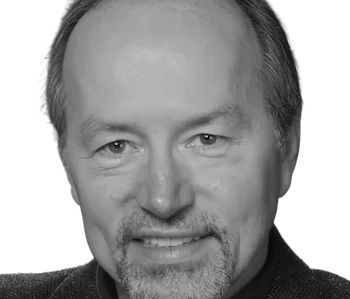
Tom Radcliffe
Robert Engelman
Robert Engelman is vice president for programs at Worldwatch Institute, a globally focused environmental research organization based in Washington, D.C., where he provides strategic direction for research and programs. Prior to joining Worldwatch, Engelman was vice president for research at Population Action International, a policy research and advocacy group in Washington. A former reporter for the Associated Press and several U.S. newspapers, Engelman holds a degree from Columbia University Graduate School of Journalism and has served on the faculty of Yale University as a visiting lecturer. He was founding secretary of the Society of Environmental Journalists and a founding board chair of the Center for a New American Dream, a non-governmental organization working to make U.S. consumption of energy and natural resources a sustainable model for the world. Engelman’s writing has appeared in scholarly and news media including Nature, The Washington Post, and The Wall Street Journal, and his book, More: Population, Nature, and What Women Want, was awarded the 2008 Global Media Award for Individual Reporting on Population by the Population Institute.
Pull this thread
Population growth ends when women decide the timing of their own births, without stopping anyone from having children.
Know something the rest of us don't?
Most threads on Rorotoko begin with our invitation. Any thread can begin with a proposal: you write it with the same prompts every thread answers, and we review it.
Propose a thread →