
Stan Ulanski
The Gulf Stream
I wrote The Gulf Stream for the science and history enthusiasts as much as for those wishing an introduction to one of the last vestiges of wilderness on Earth.In pages 143-149 I discuss the Gulf Stream’s role as the sea highway for exploration and discovery throughout the Atlantic Ocean. In particular, while Columbus discovered the route to the New World, the Spaniard Ponce de Leon discovered the way back. As with most explorers of this period, Ponce de Leon was not averse to enriching himself in the wealth of the New World. On March 3, 1513, he sailed from Puerto Rico in the company of Anton de Alaminos. Ponce de Leon was an adventurer, not a pilot; he relied on Alaminos to be his navigator. During de Leon’s reconnaissance along the Florida coast, he noted in his log “a current such that, although they had great wind, they could not proceed forward, but backward.” This written account confirms that Ponce de Leon, aptly aided by Alaminos, had “discovered” the Gulf Stream.The discovery of this powerful current would play a major role in the Spanish treasure fleets’ success at sailing back to Spain with their riches. In contrast to de Leon’s, the stature of Anton de Alaminos as a skillful navigator would rise markedly over the years. In 1519, outfitted with the fastest ship of the growing Spanish fleet, de Alaminos sailed from the port of Havana. Upon entering the Straits of Florida, Alaminos’s ship was caught quickly in the pull of the Gulf Stream. He must have felt that he was in the midst of an old friend, whom was to be his constant companion on his voyage along the east coast. By the time his vessel had reached the latitude of North Carolina, Alaminos’s meticulous sightings and detailed plotting of the ship's position must have told him that his heading was no longer due north but rather northeast. The Gulf Stream was carrying him back home. Upon de Alaminos’s arrival back in Spain, the Spanish were quick to recognize the significance of his feat; Anton de Alaminos had changed the course of transatlantic navigation forever.With a lust for wealth and buoyed by the success of Alaminos, Spain developed a monopolistic economic system in the New World that was heavily dependent upon its treasure fleets, or flotas. But these galleons, laden with the treasures of the Caribbean and Mexico, would often find the sea route homeward, via the Gulf Stream, a perilous one. The current extracted a steep toll: shipwrecks were common where the Gulf Stream brushes against the reef-strewn Florida Keys, and bands of bandits, known as buccaneers and privateers, roamed the current in search of ships to plunder and loot. Of these pirates, none was more famous than Black Bark, who captured more than four hundred ships in only three years.Powerful and self-contained, touched on all sides by the unpredictable Atlantic, the Gulf Stream is emblematic of wilderness of this planet. Henry David Thoreau argued that wilderness allows humans to attain their closes contact with higher truths and beliefs. If, as a society, we can continue to value wilderness as a retreat and respite from the pressures of the twenty-first century, then how do we protect this watery wilderness? The answer to this question can be elusive. Because, at its core, a wilderness is a region of bewildering vastness. Nonetheless, this is an important question that society must face.The river in the Atlantic has a tenacious hold on the human spirit and mind, and it has been the subject of many a myth, story, or tale. But we have reached a critical junction in the long history of the Gulf Stream: the balancing of the exploitation of its resources, due to social progress and economic growth, with the survival of the natural system and its complex web of life. The Gulf Stream affects and is affected by winds and weather, but also by everything living that it encounters—visitors, sailors, and anglers, as well as flora and wildlife.Just as centuries ago, the Gulf Stream is important today for the irreplaceable habitat it provides for plant and animal species, and for its key part in changing weather patterns and climate of the North Atlantic region. But, surprisingly few people are even aware of it—including residents of and visitors to the Atlantic coast. Hopefully, The Gulf Stream will give readers a greater appreciation of this unique phenomenon.
Editor: Erind Pajo
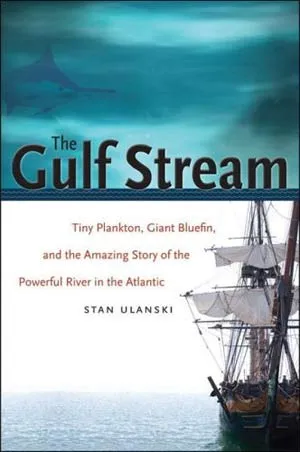
The Gulf Stream
Ulanski, Stan The Gulf Stream: Tiny Plankton, Giant Bluefin, and the Amazing Story of the Powerful River in the Atlantic University of North Carolina Press232 pages, 9.6 x 6.4 inches ISBN 978 0807832172
Available here →April 7, 2009
20090407-ulanski-stan-gulf-stream-plankton-bluefin-river-atlantic-3
A close-up
The rest of this thread
Linda Bell
Stan Ulanski
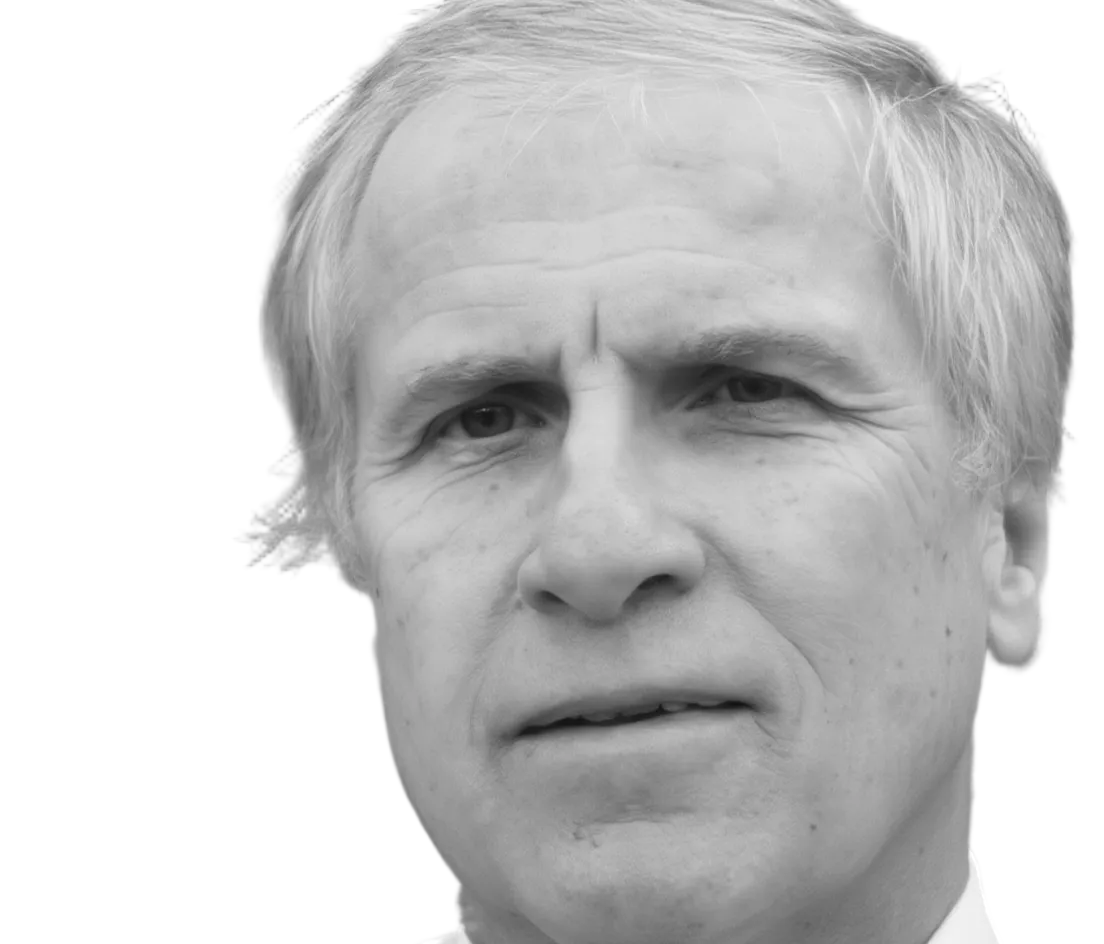
Stan Ulanski is a professor of geology and environmental science at James Madison University in Virginia. After receiving his doctorate from the University of Virginia, he embarked upon his professional career as a research scientist at Battelle Laboratories in Washington. In addition to his interest in ocean currents, such as the Gulf Stream, Ulanski pursues an active research agenda, studying the mechanism of Saharan dust transport across the Atlantic Ocean. He is also the author of The Science of Fly-Fishing, published by the University of Virginia Press.
Pull this thread
The Gulf Stream is wilderness in the same sense as Niagara or the Grand Canyon.
Know something the rest of us don't?
Most threads on Rorotoko begin with our invitation. Any thread can begin with a proposal: you write it with the same prompts every thread answers, and we review it.
Propose a thread →