
Stan Ulanski
The Gulf Stream
I approach the Gulf Stream as a nexus that links many strands from both the scientific and cultural worlds. While plenty of mysteries remain about the Gulf Stream, much more of its story is now known.
The American scientist Matthew Fontaine Maury, the “father of modern oceanography,” was most assuredly cognizant of the Gulf Stream. In 1855, Maury probably came close to getting at its essence when he wrote that there was “a river in the ocean.” From the shores of the Atlantic, no sign of this river of water can be discerned. But just over the horizon, a strong flow signals its presence to even the casual observer. This oceanic river is like no river on land; its size, range, and power dwarf even the mightiest continental river. And although its “banks” are fluid ocean, not soil and rock, it is clearly visible from space. From its tropical origins, the Gulf Stream moves water poleward at a rate hundreds of times the combined flows of the Amazon and Mississippi rivers. Waters in the Gulf Stream can move for surprisingly long distance within well-defined boundaries, marked by distinct changes in current speed, temperature, and water color.
Just as continental river travel was vital to the economic growth of Renaissance Europe, the Gulf Stream played a major role in the colonization of America. Spanish and Portuguese expeditions in the fifteenth and sixteenth centuries discovered the most favorable winds and currents for reaching the New World: one would sail south to the Canaries, turn right at these islands, ride the trade winds and the lower limits of the great ocean gyre across the Atlantic to the land of the Indians, make another right and sail the Gulf Stream northward to America. The sea paths to the Americas blazed by early European explorers would forever transform the New World, allowing for unprecedented migration and exploration.
There was a time when my own knowledge of the Gulf Stream was at best scanty. But that started to change more than three decades ago, when I took my first research cruise. Like the mariners of a bygone period, I sailed into the realm of the Gulf Stream. My measurements yielded one of the defining characteristics of the Gulf Stream: its relatively high temperature, above 80 degrees, at least 20 degrees warmer than bordering waters. But over the years, I have come to view the Gulf Stream as more than a discrete entity to be probed and measured and rather as a vibrant and dynamic force of nature.
Editor: Erind Pajo
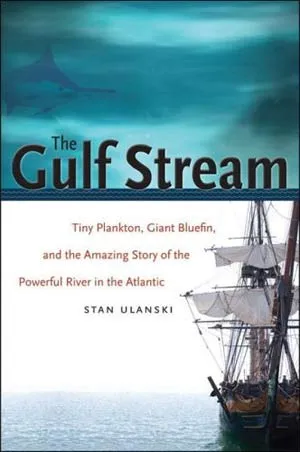
The Gulf Stream
Stan Ulanski The Gulf Stream: Tiny Plankton, Giant Bluefin, and the Amazing Story of the Powerful River in the Atlantic University of North Carolina Press 232 pages, 9.6 x 6.4 inches ISBN 978 0807832172
Available here →April 7, 2009
20090407-ulanski-stan-gulf-stream-plankton-bluefin-river-atlantic-2
The wide angle
The rest of this thread
Linda Bell
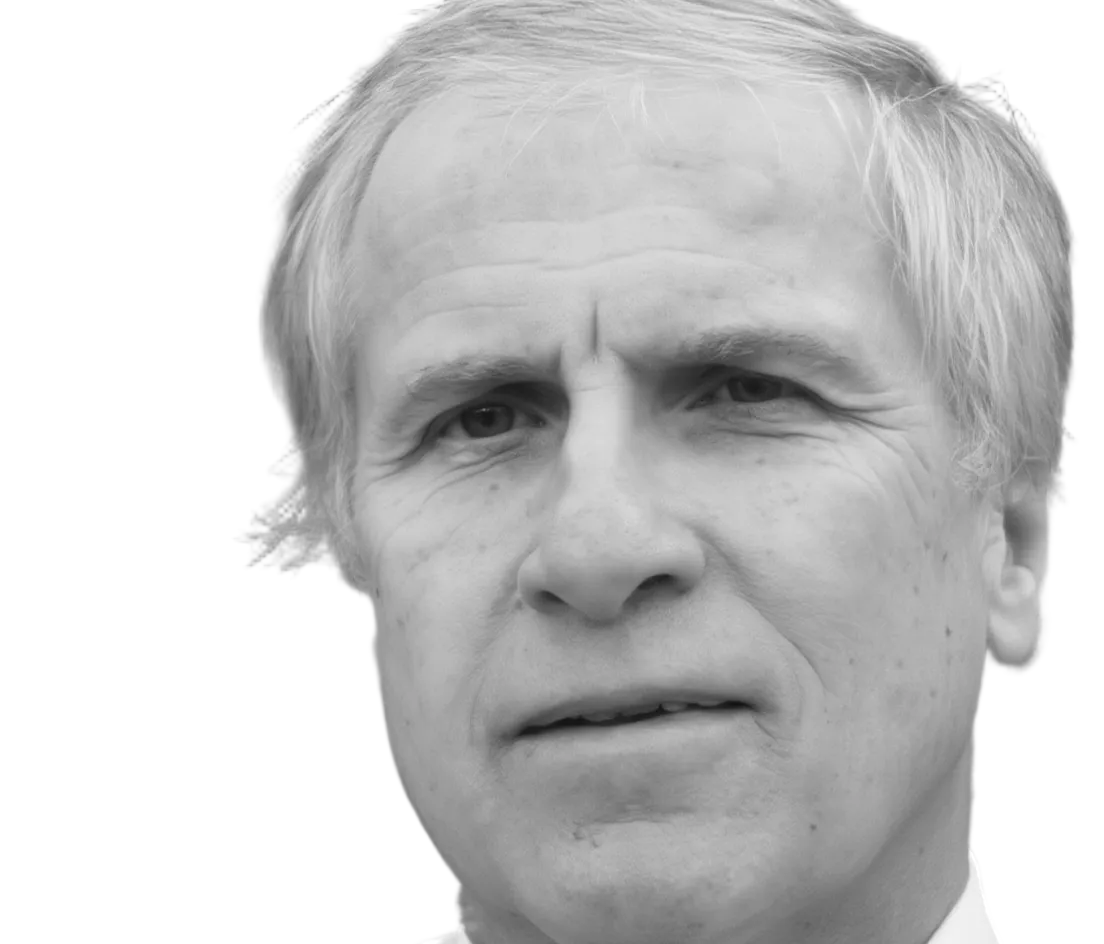
Stan Ulanski
Stan Ulanski is a professor of geology and environmental science at James Madison University in Virginia. After receiving his doctorate from the University of Virginia, he embarked upon his professional career as a research scientist at Battelle Laboratories in Washington. In addition to his interest in ocean currents, such as the Gulf Stream, Ulanski pursues an active research agenda, studying the mechanism of Saharan dust transport across the Atlantic Ocean. He is also the author of The Science of Fly-Fishing, published by the University of Virginia Press.
Pull this thread
The Gulf Stream is wilderness in the same sense as Niagara or the Grand Canyon.
Know something the rest of us don't?
Most threads on Rorotoko begin with our invitation. Any thread can begin with a proposal: you write it with the same prompts every thread answers, and we review it.
Propose a thread →