
Richard Bronk
The Romantic Economist
The Romantics understood what scientists often forget: that, as Wordsworth put it, we ‘half-create’ the world we see. Any particular observation is the joint product of sense data our minds receive and the conceptual structure our minds contribute in making sense of that data. This has important consequences for the nature of science: there is no definitive and objective way of looking at the world, and we never have unmediated access to evidence and data. Rather we can only make sense of the chaos around us by supplying a metaphorical and theoretical framework, a principle of selection.
Scientists (including economists) must operate with the help of models and metaphors. As Coleridge said when arguing with a young scientist who thought he could analyse facts without first having a theory: ‘You must have a lantern in your hand to give light, otherwise all the materials in the world are useless, for you cannot find them, and if you could, you could not arrange them’.But the trouble with lanterns – and with theories and metaphors – is that the light they cast is limited and partial. This means that if you only use one light – one theoretical framework – you will keep stumbling on aspects of reality outside the area illuminated by your chosen set of models. This has been the recent fate of much of the economics and policy-making fraternity. Convinced that the models of neo-classical economics and the Greenspan approach to market regulation and monetary policy were together a sufficient framework of understanding (and template for action), too many economists and central bankers have not been predisposed to see problems that were emerging: their theoretical and conceptual framework had no place for them.
There is never only one right way of looking at the world. Theoretical dogmatism renders us like a horse wearing blinkers, good at focusing straight ahead on one thing but liable to miss what is coming from left field. For this reason, it is crucial that we learn how to experiment with different metaphors, models and theoretical frameworks – different ways of seeing.
Changing the metaphors we use helps us make sense of different aspects of reality. So, for example, by experimenting with organic metaphors from Romanticism or non-linear models from Complexity Theory, economists have a better chance of making sense of the dynamic, self-reinforcing and creative aspects of markets. It is also important to deconstruct the hidden metaphors in so much of our discourse and analysis – in particular, the unconscious structuring impact of the mechanical and equilibrium metaphors that currently litter economics and constrain the way economists see the world.
Editor: Erind Pajo

The Romantic Economist
Richard Bronk The Romantic Economist: Imagination in Economics Cambridge University Press 400 pages, 9 x 6 inches ISBN 978 0521735155 ISBN 978 0521513845
Available here →May 24, 2009
20090522-bronk-richard-romantic-economist-imagination-economics-2
The wide angle
The rest of this thread
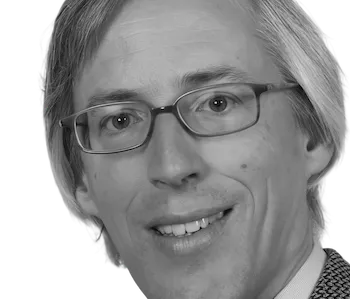
Richard Bronk
Richard Bronk is currently a Visiting Fellow in the European Institute of the London School of Economics and Political Science. Educated at Merton College, Oxford, where he gained an MA in Classics and Philosophy, Richard spent the first seventeen years of his career in the City of London and acquired a wide expertise in international economics, business and politics. His first book, Progress and the Invisible Hand – the Philosophy and Economics of Human Advance, was published in 1998. In addition to writing and lecturing, Richard has also featured recently in a number of BBC radio shows.
Pull this thread
Innovation creates uncertainty that past data cannot turn into measurable risk.
Know something the rest of us don't?
Most threads on Rorotoko begin with our invitation. Any thread can begin with a proposal: you write it with the same prompts every thread answers, and we review it.
Propose a thread →