
Paul Gootenberg
Andean Cocaine
I use a number of lenses on cocaine’s history, but one revealing close-up concerns the actual “technology” of cocaine making.
Usually, the history of cocaine departs from the heroics of modern trained German scientists like Niemann, Merck, and Freud who discovered, made, or toyed with the newfound alkaloid Cocaine Hydrochloride (HC1) in the late 19th century. In Andean Cocaine, I follow the sinuous trail of another form of cocaine, so-called “crude cocaine” or cocaine sulfates. Crude cocaine is a simpler concoction, produced by using kerosene and other cheap local ingredients to reduce coca leaf to an alkaloid-rich cake. It is exported abroad for refining in pharmaceutical labs into medicinal grade HC1—or, now, mainly powder recreational “coke.”
Crude cocaine was actually invented in 1885 by an unknown pharmacist-researcher in Lima, Alfredo Bignon, and promoted by the Peruvian government to make cocaine widely available for export use, which it did. By the 1890s, this technique was adopted to the remote Amazonian coca-growing zones of eastern Peru. It served there as the “appropriate technology” for a highly successful legal cocaine export industry at the turn of the century, led by regional elite businessmen like Augusto Durand and Andrés Soberón. Over decades, their devotion to this regional trade kept backwoods knowledge of cocaine-making alive as the drug faded in other parts of the world.
When cocaine became criminalized in Peru after 1948, this exact same formula (in part passed along by actors like Soberón) transformed into the basis for onsite peasant production of “coca paste” or so-called PBC (short for Pasta Básica de Cocaína). PBC remains the key Andean input into today’s global criminal cocaine enterprise. Thousands of anonymous jungle peasants make it by mashing coca leaf with simple chemicals in makeshift plastic-lined pits, under the gaze of the DEA.So, in contrast to modern corporate Western science, cocaine has a long hidden genealogy of local knowledge, honed by forgotten grassroots actors.
Our historical engagement with cocaine has saddled the United States with festering social problems (such as the world’s highest rates of racial incarceration), a permanent war on drugs against the Andes, and new troubles along our border with Mexico. But knowledge of cocaine’s past has been both too anecdotal and too Eurocentric. Andean Cocaine places cocaine’s history in its genuine Andean context and recovers a lively host of Andean actors. I use new historical materials to analyze how our relationship with the drug was actually forged and rebuilt over the last century. This story offers insights that may help us, one day, to resolve our bad global relationship with the drug.
For educated readers, and for the millions who lived through or partook of the age of cocaine, I promise a fascinating read.
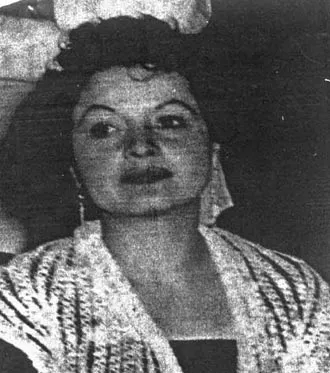
From page 281: Blanca Ibáez de Sánchez, Female Bolivian Drug Trafficker, c.1960. (U.S. National Archives, Record Group 59, Dept. of State, Decimal Files, 411.24342/2-761, “Narcotics Trafficker Blanca Ibáez de SANCHEZ,” 6 April 1961.)
Editor: Erind Pajo
Andean Cocaine
Paul Gootenberg Andean Cocaine: The Making of a Global Drug University of North Carolina Press 448 pages, 9 x 6 inches ISBN 978 0807859056 ISBN 978 0807832295
Available here →June 26, 2009
20090626-gootenberg-paul-andean-cocaine-making-global-drug-3
A close-up
The rest of this thread

Donna Schneiderman
Paul Gootenberg
Paul Gootenberg, a former Rhodes Scholar with a Ph.D. from the University of Chicago, teaches Latin American history at New York’s public Stony Brook University. He lives in Brooklyn and has two beautiful children. Before turning to the considerably more exciting field of global drug history, he published a number of notable academic books in Andean history, including Between Silver and Guano: Commercial Policy and the State in Postindependence Peru (Princeton, 1989).
Pull this thread
Cocaine was a legal Andean export until the 1940s, and US Cold War politics made it a criminal trade.
Know something the rest of us don't?
Most threads on Rorotoko begin with our invitation. Any thread can begin with a proposal: you write it with the same prompts every thread answers, and we review it.
Propose a thread →