
Alex Vernon
On Tarzan
Most likely someone flipping through On Tarzan at a bookstore will first notice the photographs introducing each chapter and the epigraphs. I hope this potential reader sees the humor here. There’s the 1927 publicity shot of Tarzan-actor James Pierce greeting five Boy Scouts of different ages, “from casual youngsters to an upstanding young adult” shaking Pierce’s hand, and behind them all, forming the backdrop, a cluster of dark-skinned, spear-clutching savages—what a hysterically loaded image of white manhood in the making. Or there’s the chapter epigraph taken from Burroughs’ Tarzan and the Lion Man, “Were I not already engaged on other lines of research, and were it possible, I should like to determine the biological or psychological explanation of the profound attraction that the blond female has for the male of all races,” spoken by the character God.
Opposite this page we see Bo Derek as Jane Parker asking her father, “Daddy, is he really a savage?”The book’s epigraphs include a line from Burroughs’ The Son of Tarzan—“Thus did the scent of Numa, the lion, transform the boy into a beast”—followed by one from Philip José Farmer’s A Feast Unknown—“It is, more than almost anything, African in its essence. Let him who would envision the soul of this ancient continent, eat lion sperm.”I like to think this humor colors the entire book. When Boy in MGM’s Tarzan’s Secret Treasure longs to see airplanes and other modern inventions, Jane tells him to “forget about civilization.
Our world here is far more lovely and far more exciting than the outside world I promise you. Now you run and get the caviar from the refrigerator. ”The film Tarzan and the Valley of Gold “gives us the most astonishing convergence of American capitalism, cultural imperialism, and violence I know, with Tarzan as the focal point, when in the Plaza de Toros, a cultural landmark, he crushes a Mexican foe with a giant Coca-Cola bottle.” There’s the bit that reads a scene from the 2005 animated film Madagascar in terms of the of West’s imagined intersections of racism, miscegenation, primitivism, cannibalism, bestiality, and homosexuality.And there’s the next chapter’s addition of incest to the mix, beginning with The Son of Tarzan. In Burroughs’ fourth Tarzan novel, Tarzan’s son Jack and his new friend Akut the ape “flee England aboard a steamer bound for Africa with Akut disguised as Jack’s own grandmother. ˜Outside the[ir] cabin—and none there was aboard who knew what he did in the cabin—the lad was just as any other healthy, normal English boy might have been.’ So inside the cabin he was not normal, doing things nobody knew, such as having sex with a bull ape in drag as his own grandmother”?
The first customer review posted on amazon.com called On Tarzan “a work of seminal and impressive scholarship.” The second called it a “piece of absolute trash” and suggested that the book be burned and Edgar Rice Burroughs, Inc. sue me for libel.With such extreme responses, On Tarzan must do something right.I write academic nonfiction for a professional and mostly exclusive audience, I write familiar essays for a general and mostly inclusive audience, and the potential readership for a book on Tarzan draws from both communities. While Tarzan’s cultural significance demands a serious approach, his inherent ridiculousness heckles such efforts.On Tarzan, then, is a book-length essay, a cultural study informed by academic consideration yet at the same time familiar, speculative, and playful, embodying the ape-man’s own impossible hybridity.
Lauren Slater had a similar vision for her controversial Opening Skinner’s Box: “as an essayist, my interest was not in establishing the facts of a life but in mining the meaning, for me, of the questions that life spawned. An essayist celebrates questions, loves the liminal, and feels that life is best lived between the may and the be of maybe.” On Tarzan succeeds for the same reasons it fails. As a kind of cultural memoir, it performs both historical inquiry and imaginative engagement. The book isn’t always sure when it is being serious, when fun. How verifiable can we take its association of the 1960s heroic reemergence and eventual collapse into parody of Tarzan with the trajectory of the U.S. war in Vietnam?
I teach literature because it matters, but also because it’s fun. I press upon my students the pleasure of inquiry and discovery and articulation. All evidence by which we arrive at opinion and judgment in literary and cultural work is circumstantial. What matters, finally, is what you can do with a text, how you can play it. Serious play, in accord with one’s historical, aesthetic, and hermeneutical conscientiousness, but play nevertheless.After all, young Tarzan loved pulling pranks, and Burroughs had a great and healthy sense of humor too. He probably wouldn't like this book one bit—but he should.
Editor: Erind Pajo

On Tarzan
Alex Vernon On Tarzan University of Georgia Press256 pages, 9 x 6 inches ISBN 978 0820332055
Available here →August 10, 2009
20090810-vernon-alex-on-tarzan-3
A close-up
The rest of this thread
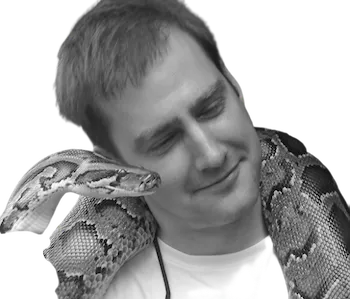
Alex Vernon
Alex Vernon attended the U.S. Military Academy and the University of North Carolina-Chapel Hill. The Eyes of Orion: Five Tank Lieutenants in the Persian Gulf War, won an Army Historical Foundation Distinguished Book Award; Military History magazine dubbed it “the single best book” on the war. His other memoir, most succinctly bred, was called “beautiful and smart and original” by novelist Tim O’Brien. Vernon’s primary work of scholarship on American war literature, Soldiers Once and Still, received a “highly recommended” endorsement from the American Library Association. He is currently an Associate Professor of English at Hendrix College in Conway, Arkansas.
Pull this thread
Tarzan's hold comes from serving competing desires at once, not from a stable meaning.
Know something the rest of us don't?
Most threads on Rorotoko begin with our invitation. Any thread can begin with a proposal: you write it with the same prompts every thread answers, and we review it.
Propose a thread →