
Jerome Kagan
The Three Cultures
The birth of this manuscript was the need for a summer writing project married to the accidental spotting of C. P. Snow’s Two Cultures near the shelf where I was searching for a book in Harvard’s Widener Library. After reading Snow’s 1959 essay the following weekend, it became clear that revisiting Snow’s thesis 50 years later allowed me to organize my thoughts about the state of scholarship in the American academy and to synthesize my unhappiness with the dramatic ascent of the natural sciences in the years following World War 2, which intimidated the other two scholarly communities.
A deep theme in The Three Cultures centers on the different meanings of truth; that is, what does an individual point to when he or she declares, “I believe that idea to be true.”
The correspondence between a statement and a reliable observation is the usual meaning of truth for both scientists and the public. However, mathematicians and some physicists accept the logical consistency of a mathematical argument as a second, different definition. The physicists who call themselves string theorists believe that their equations are true, even though many phenomena assumed by the equations have never been observed.
Many humanists accept the semantic coherence of a text and its correspondence with the readers’ intuitions as a related, but distinctive, definition. Readers of John Rawls’s Theory of Justice or Richard Dawkins’s book on selfish genes regard the texts as capturing the truth, even though many statements lack correspondence with observations and do not use formal arguments. William Styron’s Sophie’s Choice, Dostoevsky’s Crime and Punishment, and Tennessee Williams’s Camino Real have the ring of truth for those whose semantic networks are in accord with those of the authors.
The related concept of “ethically right” belongs to another meaning network that shares the semantic node correct with the concept true. All who are certain that no human should harm or torture an innocent are convinced of the correctness of this belief which, unlike truth, involves a contrast between good and bad.
The final chapter of The Three Cultures is penetrated with personal ethical evaluations of the changes in the ambience of the research university, including the epidemic of a naked seeking of celebrity, the erosion of faculty loyalty to the university or the student body, the surrender by both administration and faculty to the seduction of political correctness, and the faculty acquiescence to demands to account for their time, to publish enough papers to announce that they possess a work ethic and, if possible, to bring overhead money to the college treasurer. Alfred North Whitehead, Max Planck, Niels Bohr, Rita Levi-Montalcini, and Marie Curie would have been puzzled by this new breed of academic scholar.
Editor: Erind Pajo

The Three Cultures
Jerome Kagan The Three Cultures: Natural Sciences, Social Sciences, and the Humanities in the 21st Century | Revisiting C. P. Snow Cambridge University Press 324 pages, 9 x 6 inches ISBN 978 0521518420 ISBN 978 0521732307
Available here →September 18, 2009
20090918-kagan-jerome-three-cultures-natural-science-social-humanities-snow-2
The wide angle
The rest of this thread
Bora Fezga
Jerome Kagan
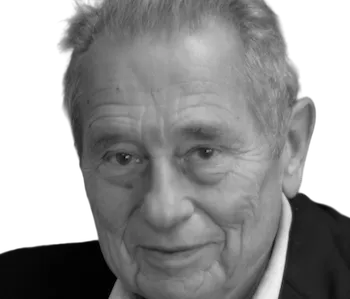
Jerome Kagan is an Emeritus professor of psychology at Harvard University in Cambridge, Massachusetts. He has devoted his career of 55 years to the study of the development of children, with an emphasis on early intellectual development, the growth of a moral sense, and, over the past 25 years, the role of temperament. He is a member of the Institute of Medicine of the National Academy of Sciences, a Fellow of the American Academy of Arts and Sciences, and was awarded Distinguished Scientist Awards from the American Psychological Association and the Society for Research in Child Development. His most recent books include The Long Shadow of Temperament (with Nancy Snidman), A Young Mind in a Growing Brain (with Norbert Hershkowitz), Three Seductive Ideas, What Is Emotion?, An Argument For Mind, and, forthcoming in 2010, The Temperamental Thread.
Pull this thread
Scientific facts cannot settle legal, political or personal questions, which rest on ethics.
Know something the rest of us don't?
Most threads on Rorotoko begin with our invitation. Any thread can begin with a proposal: you write it with the same prompts every thread answers, and we review it.
Propose a thread →