
George Saliba
Islamic Science and the Making of the European Renaissance
This book started almost ten years ago. Initially, I wanted to know what were the conditions under which a civilization could produce science afresh.
I was trained in ancient Semitics, and mathematics, but I was always interested in these rumors that the general reader knows about, that the great invention of science was a really Greek project. And that everything else is either a shadow or a continuation of the classic antiquity.
Growing up, you assimilate these paradigms.
You begin to think that these are the normal things. But then, trained in mathematics, and beginning to read a little bit of what was produced in the Islamic civilization, in science, I grew curious. I grew curious because I began to note that some of the science produced was not a shadow of the Greek project. It was more re-focusing of light, a new way of looking at things, which the Greeks did not know.
I began to also wonder about a fact that many a student of history and general reader would know. That there was this period of fantastical effervescence in the classical Greek tradition, say from the 4th century BC to the 2nd century AD. All the major names that we can think of happen to be in this period, all the major classics, in every discipline you can think of, from Plato to Aristotle to Ptolemy to Euclid to Diophantus to Galen to Dioscorides.
And all comes to an end by the 2nd century. Then nothing happened. And then, all of a sudden, we begin to hear, in the 9th century, of the crazy caliphs of Baghdad who are spurring this and that, translating this and that, incorporating all of the Greek material.
To me, this sounds totally ahistorical. Politicians that I know, or that I read about, usually do not do that. Why would the rulers of Baghdad in the 9th century be any wiser than any of today’s politicians? I wanted to know what triggered that interest in Greek science, after a lapse of seven hundred years. What were the social, economic, the political and personal motivations of the scientists who produced this modern science?
Editor: Erind Pajo

Islamic Science and the Making of the European Renaissance
George Saliba Islamic Science and the Making of the European Renaissance MIT Press 327 pages, 9 x 6 inches ISBN 978 0262195577
Available here →October 23, 2009
20091023-saliba-george-on-islamic-science-making-european-renaissance-1-1
In a nutshell
The rest of this thread
EP
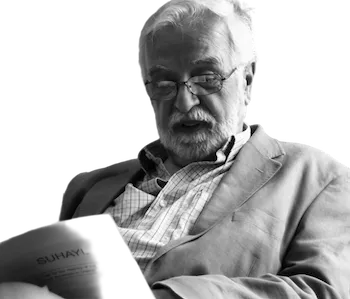
George Saliba
George Saliba is professor of Arabic and Islamic Science at Columbia University. He received his education from the American University of Beirut and the University of California, Berkeley, has been a Distinguished Senior Scholar at the Kluge Center of the Library of Congress, and visiting professor at several universities in the US, Europe and the Middle East. He has lectured at more than two hundred academic venues on four continents, and published close to two hundred articles as well as eight books—including, besides the one featured in the Rorotoko interview, A History of Arabic Astronomy: Planetary Theories During the Golden Age of Islam (NYU Press 1995).
Pull this thread
Islamic science grew from the needs of a new empire and competition among displaced bureaucratic families.
Know something the rest of us don't?
Most threads on Rorotoko begin with our invitation. Any thread can begin with a proposal: you write it with the same prompts every thread answers, and we review it.
Propose a thread →