
Peter S. Wells
Barbarians to Angels
A browsing reader might find the chapters on craft production and trade most revealing. The archaeology shows us that even small communities during the so-called Dark Ages belonged to complex and extensive networks through which goods, technology, and ideas flowed. Craft products ranged from everyday utilitarian items such as the pottery that people used to prepare and eat their meals, to spectacular brooches and belt buckles of silver and gold, with inlay of brilliant red garnet.The archaeological evidence enables us to identify the places where such things were made, the locations from which the raw materials were obtained, and to say how widely such products were distributed in society. Small trade centers all over Europe were actively engaged in both local and long-distance commerce. For example, the wind-swept cliffs of Tintagel on the coast of Cornwall was the site of a commercial center that imported large quantities of fine pottery from northern Africa. The island of Helgö near Stockholm in Sweden was home to a trade center that acquired goods from as far off as India.These are just a few examples of the surprises that await us in examining the archaeological evidence from this period in Europe’s early history.My intention in writing this book was to show an interested reading audience that our ideas about the human past are often very different from what was actually going on at that time.Until recently, people tended to readily accept written texts as reliable information about the past, even when they were written by members of different societies from those that they were describing. The so-called Dark Ages are a particularly good example, because at least since the publication of Edward Gibbon’s Decline and Fall of the Roman Empire, peoples of this period, including those whom we know by names such as Alamanni, Franks, Goths, Huns, and Saxons, have regularly been considered “barbarians.”By looking closely at what those peoples were actually doing, and not just at what Late Roman commentators said about them, we get a very different picture.
Editor: Erind Pajo
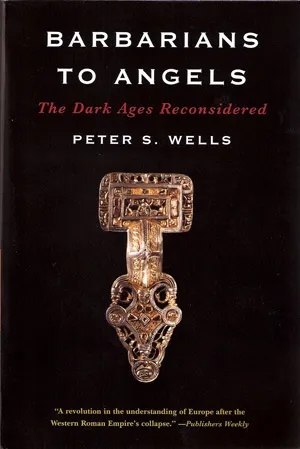
Barbarians to Angels
Peter S. Wells Barbarians to Angels: The Dark Ages Reconsidered W. W. Norton256 pages, 8 x 5 1/4 inches ISBN 978 0393335392
Available here →October 28, 2009
20091028-wells-peter-on-barbarians-to-angels-dark-ages-reconsidered-3
A close-up
The rest of this thread

Peter S. Wells
Peter S. Wells is Professor of Anthropology at the University of Minnesota. Besides the book featured in this Rorotoko interview, his publications include The Barbarians Speak: How the Conquered Peoples Shaped Roman Europe (Princeton University Press, 1999), Beyond Celts, Germans, and Scythians: Archaeology and Identity in Iron Age Europe (Duckworth, 2001), The Battle that Stopped Rome: Emperor Augustus, Arminius, and the Slaughter of the Legions in the Teutoburg Forest (W.W. Norton, 2003).
Pull this thread
The Dark Ages are dark only because the surviving descriptions were written by outsiders.
Know something the rest of us don't?
Most threads on Rorotoko begin with our invitation. Any thread can begin with a proposal: you write it with the same prompts every thread answers, and we review it.
Propose a thread →