
Mark C. Taylor
Crisis on Campus
While radical reform is necessary at every level of higher education, it needs to start with a thorough restructuring of graduate education and, by extension, a redesign of the curriculum for undergraduate education.
Research universities play a vital role in the life or our nation and vitality of our economy. But in far too many cases, the increasingly specialized research has led to a fragmentation of knowledge and the proliferation of courses that are of little or no use to undergraduates.
Even though the cost keeps rising, colleges and universities are not doing an adequate job of preparing students for life and work in the 21st century.Institutions are divided into departments with subfields within subfields and faculty members who cannot or will not communicate with each other. In some areas, specialization is necessary but it has gone too far.We need to redesign the curriculum to create possibilities for research and teaching that cut across disciplinary and cultural boundaries. We also need to do a better job of training our students in new forms of literacy that emerging technologies will require.
Graduate programs today haven’t changed much since the Middle Ages. Students are required to write medieval dissertations that will never be published or read by anyone other than their professors. This is hardly a prescription for success in today’s world.Effective transformation requires a new vision for higher education. It is obvious that the world is becoming ever more interconnected and that the rate of change is accelerating.
And yet, our colleges and universities are mired in the past—they are rigid structures that resist change. The vested interests of tenured faculty make it virtually impossible to bring about the reforms that are necessary.The future of our children and grandchildren depends on creating a global education network that is as flexible and adaptive as the world we live in.
Editor: Erind Pajo
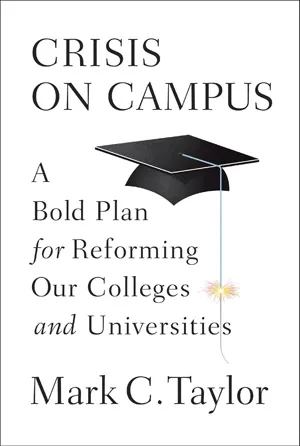
Crisis on Campus
Mark C. Taylor Crisis on Campus: A Bold Plan for Reforming Our Colleges and Universities Alfred A. Knopf256 pages, 5 x 71/2 inches ISBN 978 0307593290
Available here →October 11, 2010
20091030-mark-taylor-on-field-notes-from-elsewhere-reflections-dying-living-3
A close-up
The rest of this thread
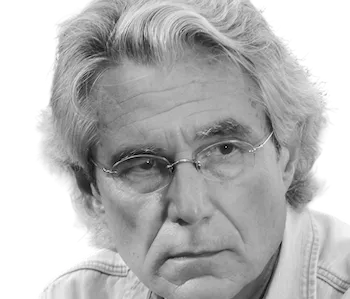
Mark C. Taylor
Mark C. Taylor is a Professor of Religion, Chair of the Department of Religion and Co-Director of the Institute for Religion, Culture and Public Life at Columbia University; Professor of Philosophy of Religion at Union Theological Seminary; and Professor Emeritus of Humanities at Williams College. He received his B.A. from Wesleyan University, Ph.D. from Harvard University and was the first foreigner to be award a Doktorgrad in Philosophy from the University of Copenhagen. His many awards include a Guggenheim Fellowship, the University of Helsinki’s Rector’s Medal and Wesleyan University’s Distinguished Alumni award. In 1995, the Carnegie Foundation named Mark Taylor the National Professor of the Year for his use of technology to advance higher education. Besides the books featured in his Rorotoko interviews (Field Notes from Elsewhere and Crisis on Campus), his most recent books include After God, Confidence Games: Money and Markets in a World without Redemption, and Mystic Bones.
Pull this thread
Tuition is a bubble, and no college can fix American higher education's structural crisis on its own.
Know something the rest of us don't?
Most threads on Rorotoko begin with our invitation. Any thread can begin with a proposal: you write it with the same prompts every thread answers, and we review it.
Propose a thread →