
Mark C. Taylor
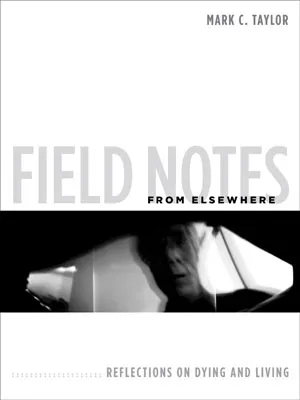
Field Notes from Elsewhere
Field Notes lends itself to browsing, starting and stopping here and there. One of the interesting things about early responses to the book is that people’s interests and concerns draw them to different sections. Instead of trying to summarize various sections that might attract different people, it is possible to get a better sense of the book by reading the chapter from which the book takes its title, “Elsewhere.”
I have been elsewhere. The distance is short though its crossing takes a lifetime. Elsewhere is not far – it is near, ever proximate, never present. It is a place or placeless place that is strange because it is so familiar.
Rather than beyond, elsewhere is between the places I ordinarily dwell or think I dwell. When journeying elsewhere, you do not leave the here-and-now; it is as though elsewhere were folded into the present in a way that disrupts its presence. The everyday world does not disappear when you linger elsewhere – all you care about approaches from a distance that increases as it diminishes. Gradually you begin to realize that nothing is merely itself –everything, everybody is always also something else, someone else, somehow else, somewhere else.
When you are elsewhere, vision, and with it awareness, doubles and, as you recognize this doubling, doubles yet again. Far from confusing, this doubling and doubling of doubling clarifies by disclosing an elsewhere that is always there by not being there – like a looking-glass world into which you can always slip but can never leave. The mind is split, divided, torn not between consciousness and the unconsciousness but within consciousness itself. Two in one, one in two – neither separated nor unified, neither many nor one. Just as the everyday does not disappear when you are elsewhere, so elsewhere does not vanish when you attempt to come back.
Once you have been elsewhere, you can never come back because elsewhere always returns with you. I hope Field Notes will find a wide audience with diverse backgrounds. People’s age and experience will influence how they respond to this book more than to others. Moreover, the response to the book will change over time.Who, then, can I imagine reading this book? Perhaps A mother coping with the birth of a deformed child.
A son dealing with the raging grief of a father who has lost his wife of fifty years.
A young woman responding to the news that she has inoperable brain cancer.
A young man sitting at the bedside of his friend suffering DTs from heroin withdrawal.
Parents struggling with the problem of what to give and what to withhold from their children.
A father playing baseball with his son.
A middle-aged man consoling his lifelong mentor as he struggles to deal with his wife’s Alzheimer’s disease.
A mother dropping off her daughter for the first day of school.
A man looking back over a failed career.
A student trying to understand the betrayal of her teacher.
A couple burying their dead child.
A melancholy youth learning to laugh.
In the chapter titled “Night,” I write:
There is not one night; there are two. The first night is the night that is the opposite of day and is familiar to all of us. At the end of a long day, we welcome this night and look forward to the renewal it brings…. The other night is different; it is, paradoxically, within as well as beyond what we ordinarily know as day and night. Far from familiar, it is forever strange; never reassuring, it is endlessly fascinating…. This night gives me no rest even when I am asleep. We all know this night even if we do not give it a name.
If Field Notes from Elsewhere: Reflections on Dying and Living helps people get through this night beyond night, it will have accomplished its purpose.
Editor: Erind Pajo
Field Notes from Elsewhere
Mark C. Taylor Field Notes from Elsewhere: Reflections on Dying and Living Columbia University Press288 pages, 9 x 6 inches ISBN 978 0231147804
Available here →October 30, 2009
20101011-mark-taylor-on-crisis-campus-plan-reform-colleges-universities-3
A close-up
The rest of this thread
Mark C. Taylor
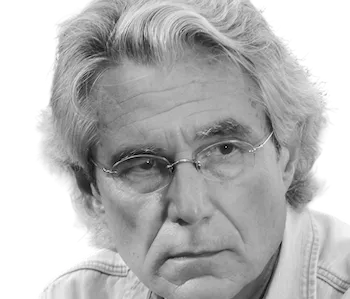
Mark C. Taylor is a Professor of Religion, Chair of the Department of Religion and Co-Director of the Institute for Religion, Culture and Public Life at Columbia University; Professor of Philosophy of Religion at Union Theological Seminary; and Professor Emeritus of Humanities at Williams College. He received his B.A. from Wesleyan University, Ph.D. from Harvard University and was the first foreigner to be award a Doktorgrad in Philosophy from the University of Copenhagen. His many awards include a Guggenheim Fellowship, the University of Helsinki’s Rector’s Medal and Wesleyan University’s Distinguished Alumni award. In 1995, the Carnegie Foundation named Mark Taylor the National Professor of the Year for his use of technology to advance higher education. Besides the books featured in his Rorotoko interviews (Field Notes from Elsewhere and Crisis on Campus), his most recent books include After God, Confidence Games: Money and Markets in a World without Redemption, and Mystic Bones.
Pull this thread
Philosophy is not too abstract to bear on dying.
Know something the rest of us don't?
Most threads on Rorotoko begin with our invitation. Any thread can begin with a proposal: you write it with the same prompts every thread answers, and we review it.
Propose a thread →