
Bethany Moreton
To Serve God and Wal-Mart
For me, the most fascinating parts of this story took place outside the stores: in a stadium of college students cheering for capitalism, a theme park about free enterprise with singing dollar bills, a grade-school classroom that hosted a giant dancing pencil promoting monetarist economics.
When we try to explain the rise of free-market fundamentalism, we usually wind up talking about electoral politics—how the Young Americans for Freedom mobilized for Barry Goldwater’s campaign, for example, or how the Moral Majority used direct-mail technology to empower white evangelicals as a voting block. But these explanations can’t get at how a particular economic vision, hatched in rarefied preserves like the Mont Pelerin Society or the University of Chicago’s economics department, became common sense for most of the country even while it failed to deliver prosperity and security. To understand how deregulation, privatization, and globalization displaced the mid-century vision of industrial democracy, we need to give some credit to the dancing pencil.
And the giant free-enterprise pencil in the grade-school classroom was a Wal-Mart project. In the mid-eighties, the company’s philanthropic foundations adopted a struggling project called Students in Free Enterprise (SIFE), headquartered in Wal-Mart’s backyard and connected, like Wal-Mart, to many of the region’s small Christian colleges. SIFE attracted donations from corporations like Dow Chemical and Coors to establish teams of pro-capitalist college students competing to spread the good news of free enterprise. In practice, the young people often wound up fronting industry propaganda—Dow’s fight against liability, for example—to children, church groups, and their host communities.
Wal-Mart’s support turned it into an international network for recruiting future managers and extending free trade around the globe.
When we look for alternative “grassroots globalization” movements and find Seattle’s turtles and Teamsters, we’re missing the biggest transnational success story of the last half-century—Christian missionaries, often linked directly to the free-market gospel.
To Serve God and Wal-Mart shows how a Christian pro-capitalist social movement grew from the bottom up as well as the top down.
For many people in the old agricultural periphery, the book argues, the gospel of free enterprise answered some of their most pressing needs. It compensated for the loss of the yeoman dream of self-sufficiency; it sanctified mass consumption; it raised degraded service labor to the status of a calling; it offered a new basis for family stability and masculine authority even as neoliberalism undermined both; for some whites it eased the dismantling of official white supremacy.
The generation that moved from the farm to the store, and their children who filled the marketing classes at Christian colleges, crafted an ideology of Christian free enterprise from their experience of a particular historical moment, a particular geography, and a particular religious heritage. To Serve God and Wal-Mart tells this story, often in the words of the people who experienced it.
Their unlikely blending of free market economics and evangelical religion resolved a contradiction at the core of neoliberalism. Since its only unit of analysis is an autonomous individual seeking his own maximum utility, capitalism cannot provide for the regeneration of the very virtues it depends upon. Market logic renders merely irrational the very concerns we put at the center of our existence—art, justice, love, friendship, democracy, even worship itself.
The ideal of Christian service washed commerce in the blood of the lamb.
As much as my own economic ideals differ from the ones Wal-Mart promotes, I came out of this work very hopeful about the potential for common ground. The historical actors imbued with Christian free enterprise were willing to claim economics as a moral issue rather than a technical one. The left has been brow-beaten into timidity about its own tradition of economic justice, trying to deflect the spittle of a Glenn Beck by making small, neutral, technocratic claims where the issues merit real moral courage.
The much broader public that pollsters call the “Wal-Mart Moms” agrees with the American majority on key issues--that the minimum wage must be raised, for example, or that health care should be universally available. If we quit dismissing the areas of disagreement as cultural distractions, we might find much to respect in their underlying motives.

From the author’s collection
Editor: Erind Pajo
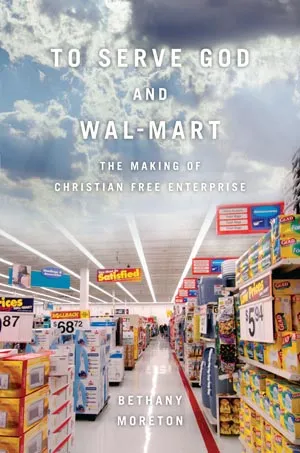
To Serve God and Wal-Mart
Bethany Moreton To Serve God and Wal-Mart: The Making of Christian Free Enterprise Harvard University Press 252 pages, 9 x 6 inches ISBN 978 0674033221
Available here →November 4, 2009
20091104-moreton-bethany-serve-god-wal-mart-christian-free-enterprise-3
A close-up
The rest of this thread
Peter Frey
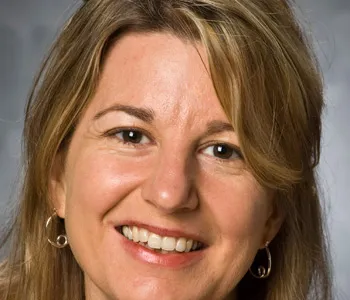
Bethany Moreton
A native of Mississippi, Bethany Moreton completed her Ph.D. in history at Yale in 2006. She spent a year as a Visiting Scholar at the American Academy of Arts and Sciences before taking up her current position as Assistant Professor of History and Women’s Studies at the University of Georgia. In addition to To Serve God and Wal-Mart, she has published articles on globalization, service labor, and conservative Christianity in the U.S. and Latin America. The Center for the Humanities at the University of Michigan named her the 2009 Emerging Scholar. She has assigned her share of the proceeds from To Serve God and Wal-Mart to the Economic Justice Coalition of Athens, Georgia and Interfaith Worker Justice of Chicago.
Pull this thread
The marriage of evangelical religion to free-market economics is a product of the service economy.
Know something the rest of us don't?
Most threads on Rorotoko begin with our invitation. Any thread can begin with a proposal: you write it with the same prompts every thread answers, and we review it.
Propose a thread →